


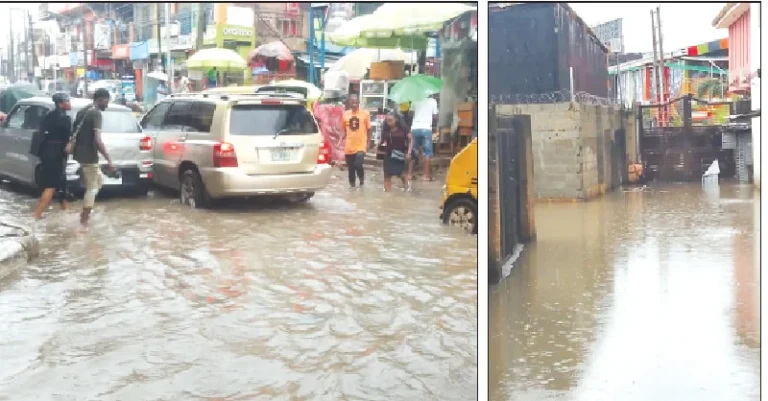
Floodwaters Submerge Homes, Disrupt Power Supply in Lagos
Hours of heavy rainfall on Tuesday triggered widespread flooding across several communities in Lagos State, submerging homes and roads, disrupting movement and causing electricity outages after critical power infrastructure was affected.
The flooding impacted communities including Festac, Gbagada, Ikeja, Ajah, Evans, Olushi, Anikantamo and Adeniji Adele, where residents were seen wading through flooded streets while motorists struggled to navigate waterlogged roads.
Residents in parts of Ikeja said floodwaters entered homes and shops, forcing some families to temporarily relocate over fears that the situation could worsen.
Many attributed the persistent flooding to blocked drainage channels, poor road construction and indiscriminate disposal of refuse.
A resident, Abidemi Raji, said the design of the road in his area contributed significantly to the flooding, noting that water often remained for between 30 minutes and one hour after rainfall had stopped.
He also alleged that a drainage channel linking the area to a neighbouring street had been blocked following the construction of a hotel, worsening the situation.
In the Festac area of Amuwo Odofin Local Government Area, floodwaters submerged major roads and inner streets, disrupting vehicular and pedestrian movement.
A resident, Okeke Mmesoma, described the flooding as a recurring challenge whenever heavy rain falls.
“Anytime it rains heavily, this place gets flooded. It is usually after the rain stops that the water begins to clear. My shoes were soaked this morning on my way to work,” she said.
The heavy rainfall also disrupted electricity supply in parts of Lagos after floodwaters affected facilities at the Oworo 132/33kV Transmission Station.
In a public notice, Ikeja Electric said severe flooding damaged two power transformers and several 33kV feeders serving communities including Ladilak, Bariga, Araromi, Oworo, Pedro, Alapere, Agboyi, Araba, Hospital and Gbagada.
The electricity distribution company said it was working with the Transmission Company of Nigeria to restore power as soon as the damaged facilities were returned to service.
The flooding also extended to neighbouring Ogun State, where residents of Gloryland Estate in Ibafo appealed to the state government for urgent intervention.
Residents said the annual flooding had damaged buildings, disrupted economic activities and forced some families to temporarily vacate their homes during the rainy season.
A member of the Community Development Association, Oladipupo Awoyemi, blamed the flooding on blocked drainage channels connected to the Lagos Ibadan Expressway, as well as indiscriminate construction and refuse dumping.
According to him, the blockage of waterways has worsened the flooding over the years, exposing residents to health risks and disrupting daily activities.
Meanwhile, Lagos State Governor Babajide Sanwo Olu has approved the dredging of 28 additional primary drainage channels as part of efforts to improve flood control across the state.
The Commissioner for the Environment and Water Resources, Tokunbo Wahab, who disclosed the approval in a statement, described Tuesday’s downpour as an extreme weather event that overwhelmed existing drainage infrastructure.
He said temporary flooding was recorded in Victoria Island, Lekki, Ikeja, Gbagada, Mushin, Mafoluku and several other communities.
Wahab explained that Lagos’ coastal geography, characterised by lagoons, rivers and tidal water bodies, naturally slows the discharge of stormwater into the sea during periods of high tide, making temporary flooding inevitable after exceptionally heavy rainfall.
He assured residents that the government was closely monitoring drainage infrastructure and flood prone areas, while emergency response agencies remained on the ground to assist affected communities.
The commissioner also urged residents to desist from dumping refuse into drainage channels, avoid illegal reclamation of wetlands and refrain from building on drainage alignments, warning that such practices contribute significantly to flooding.
He further advised motorists to avoid driving through flooded roads during heavy rainfall and urged residents, particularly those in flood prone communities, to comply with weather advisories and safety guidelines issued by relevant authorities.