


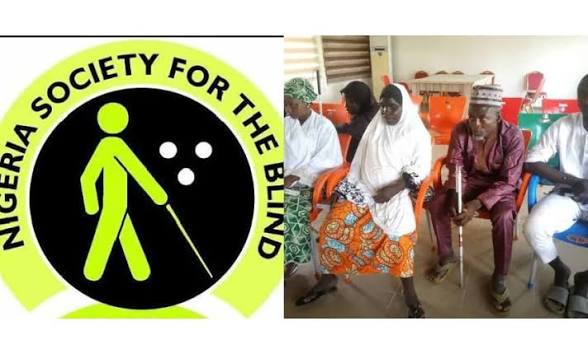
FNSB Raises Concern as Thousands of Blind Nigerians Lack Access to Education, employment opportunities
The Federal Nigeria Society for the Blind (FNSB) has expressed concern that thousands of visually impaired Nigerians still lack access to rehabilitation, education, assistive technology and employment opportunities, calling for greater efforts to promote their independence and inclusion in society.
The Chairman of the Society’s Executive Council, Arit Tunde-Imoyo, made the call during the organisation’s 71st anniversary and Independence dinner held at the MUSON Centre, Onikan, Lagos State.
She said the anniversary was not merely a celebration of the organisation’s longevity but also a reaffirmation of the vision of its founders, who believed that blindness should not condemn anyone to dependence, exclusion or hopelessness.
Tunde-Imoyo recalled that in 1955, five years before Nigeria gained independence, a group of compassionate Nigerians and expatriates established the Society with the conviction that blind persons could be trained, empowered and given opportunities to live productive and independent lives.
She said the Society had transformed lives through its vocational training centre, rehabilitation programmes, advocacy and partnerships, helping people who once depended heavily on others to acquire practical skills, build confidence and take greater control of their lives.
According to her, the achievements recorded over the years reflect the determination of the Society’s founders, whose vision has continued to guide its work.
However, Tunde-Imoyo stressed that much remained to be done to ensure that blind persons across the country could access the support and opportunities they needed to live independently.
She therefore urged individuals, organisations and public institutions to support the Society’s efforts to expand its reach and create more opportunities for blind persons.
“As we celebrate, I invite all of us to become part of the next chapter of this story. Let us build an FNSB that reaches more people, creates greater opportunities and ensures that every person who is blind has the chance to live with dignity, purpose and independence,” she added.
Also speaking, the Executive Secretary of FNSB, Oluwamayowa Oke, said independence for blind persons should go beyond vocational training to include practical opportunities to secure employment, earn an income and participate fully in society.
Oke called for stronger collaboration among employers, governments and the private sector to create more opportunities for blind persons, noting that access to training must be matched with pathways to gainful employment and economic self-reliance.
He said the Society, through its vocational training centre, focused on equipping beneficiaries with the skills, confidence and support needed to live independently and contribute meaningfully to their communities.