


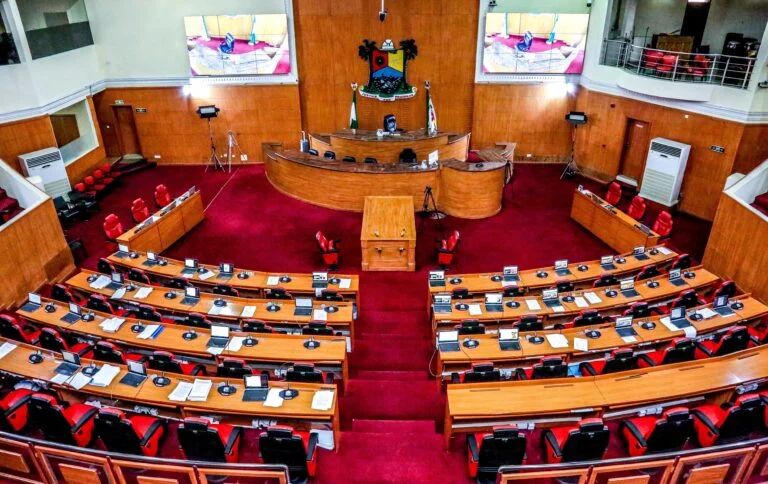
Lagos Assembly Okays State Police, Demands Clear Power-Sharing
The Lagos State House of Assembly has backed the proposed establishment of state police but called for constitutional provisions that would give states greater control over policing and clearly define the relationship between state and federal police authorities.
The Speaker of the House, Mudashiru Obasa, raised the concerns on Tuesday during plenary while lawmakers considered the Constitution of the Federal Republic of Nigeria, 1999 (Sixth Alteration) Bill, 2026, transmitted to state Houses of Assembly by the National Assembly.
Obasa described the proposed amendment as a step towards addressing Nigeria’s security challenges but argued that the provisions did not sufficiently resolve questions about the control and administration of state police.
“While the proposed amendment represents a step in the right direction, there is still room for improvement to ensure that future administrations can strengthen the provisions and grant states greater authority in managing their security systems,” he said.
The Speaker noted that the demand for state police had persisted through successive National Assemblies, from the fifth to the 10th, as governments continued to explore ways to improve security and protect lives and property.
He said the current proposal represented progress because the long-standing demand was finally receiving constitutional attention. However, he cautioned that retaining substantial powers at the federal level could undermine the purpose of establishing state police.
Obasa also called for clear constitutional provisions defining the functions and responsibilities of the proposed state police, warning that differences in the powers assigned to federal and state authorities could create an imbalance in the country’s policing structure.
The development comes as state Houses of Assembly consider the constitutional amendments required to establish a State Police Service, with nearly 25 states already expressing support for the proposal.
He commended President Bola Tinubu, the leadership of the National Assembly and state legislatures for advancing the amendment process, urging lawmakers at all levels to address the outstanding concerns before the process was concluded.
Obasa also used the debate to advocate for parliamentary policing, arguing that legislative institutions required dedicated security arrangements to protect their independence.
He cited previous incidents in which state legislative complexes were allegedly demolished or locked at the instance of governors, arguing that dedicated parliamentary police could help prevent such occurrences and protect lawmakers from executive interference.
According to him, safeguarding legislative institutions was necessary to strengthen democratic governance and preserve the independence of the legislature.
“Protecting the legislature is essential to strengthening democratic institutions, preserving the independence of the legislative arm of government, and sustaining democracy in Nigeria,” he said.
Obasa subsequently directed the Clerk of the House, Adenike Oshinowo, to formally communicate the Lagos Assembly’s resolution to the National Assembly.