


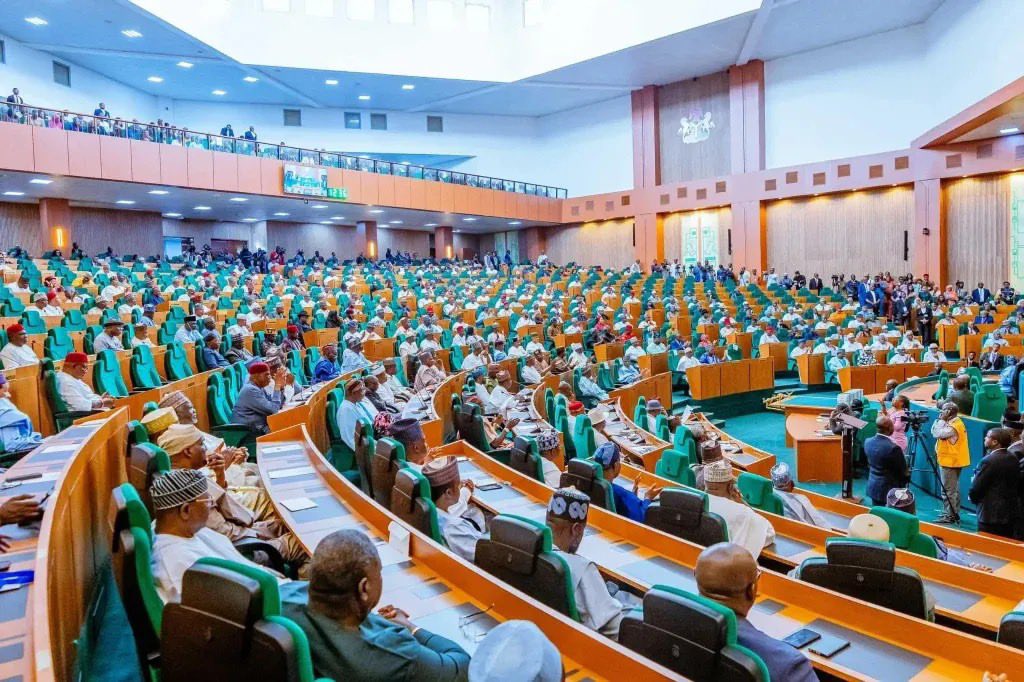
Reps Probe Exclusion Of 5,000 NOUN Law Graduates From Nigerian Law School
The House of Representatives has commenced efforts to resolve the prolonged exclusion of law graduates of the National Open University of Nigeria from admission into the Nigerian Law School for professional training and Bar examinations.
The intervention followed a petition by more than 5,000 affected graduates under the aegis of the Backlog of Law Graduates of the National Open University of Nigeria, who appealed to the National Assembly to intervene in the dispute that has prevented them from proceeding to the Nigerian Law School and qualifying for Call to Bar.
The House Committee on Public Petitions subsequently invited NOUN and the Nigerian Law School, under the Council of Legal Education, to appear before it and explain the circumstances surrounding the prolonged dispute.
However, neither institution appeared at the committee’s investigative hearing held on Wednesday, September 16, 2026.
While NOUN submitted a letter explaining the absence of its Vice-Chancellor, the Nigerian Law School also wrote to the committee, citing official engagements and requesting that another date be fixed for its appearance.
The petitioners, represented by officials of their association, told the committee that they had completed their LLB programmes and should not be made to suffer the consequences of disagreements between government institutions.
Speaking with journalists after the hearing, the association’s Public Relations Officer, Chibueze Obochi, said the affected graduates had exhausted other avenues for resolving the matter before seeking the intervention of the National Assembly.
Obochi cited Section 18(1) of the 1999 Constitution, as amended, which provides for equal educational opportunities, arguing that the graduates should not bear the consequences of disagreements between NOUN and the regulatory authorities.
He said, “We should not be made victims of inter-agency rivalries. We were not part of any agreements or disagreements between NOUN and CLE and Nigerian Law School. We are Nigerian citizens and we are innocent of whatever must have transpired.”
Obochi also challenged the interpretation of a list of 1,883 NOUN law graduates submitted to the relevant authorities in 2019, arguing that the description of the figure as graduates produced “so far” did not mean it represented the university’s entire eventual output.
He maintained that the expression “so far” indicated that other students who had not yet completed their programmes could subsequently become eligible.
He also argued that the suspension of admissions into the LLB programme in 2015 should not invalidate the status of students who had already been admitted and were pursuing their studies at the time.
According to him, the affected graduates possess matriculation numbers and other documents showing when they were admitted into the university.
“We are of the opinion that justice and fairness shall prevail over this matter. And what was done to our seniors should also be extended to us. So, as we stated earlier, we have done LLB and we are proud of the programme we did and the certification thereupon,” he added.
In its earlier submission to the committee, NOUN welcomed the intervention of the House, saying it appreciated efforts to find what it described as an equitable and lasting resolution to the dispute.
The university traced the matter to 2015, when an accreditation team from the National Universities Commission, led by Prof. Nsongurua Udombana, visited the institution as part of the accreditation exercise for its LLB programme.
NOUN said that while it was awaiting the outcome of the accreditation exercise, the Council of Legal Education published its position rejecting the admission of NOUN law graduates into the Nigerian Law School.
The university subsequently suspended further admissions into the LLB programme in 2015 and said it had not admitted new students into the programme since then.
According to NOUN, the decision was intended to prevent the number of affected students from increasing while regulatory issues surrounding the programme remained unresolved.
The university said that between 2015 and 2019, its management held discussions with the CLE and other stakeholders in an effort to resolve the eligibility of its law graduates for admission into the Nigerian Law School.
In 2019, NOUN said it formally appealed to the CLE for the admission of its law graduates and submitted a list containing 1,883 graduates.
It later discovered that 90 graduates had inadvertently been omitted from the list, bringing the actual number at the time to 1,973.
NOUN further stated that the Body of Benchers considered the matter in 2020 and approved a Special Remedial Programme for its law graduates instead of direct admission into Bar Part II, which is the route applicable to graduates of other Nigerian universities.
The university said it subsequently submitted another batch of 2,226 law graduates who had completed their studies between 2019 and May 2022 for consideration for admission into the Nigerian Law School.
However, NOUN said the CLE rejected the subsequent submission, citing, among other reasons, an alleged understanding that the 2019 list represented the total number of NOUN law graduates and an allegation that the university continued admitting students into the LLB programme after 2015.
NOUN rejected the allegation, insisting that it stopped admitting students into the programme in 2015 and did not resume admissions thereafter.
It explained that the graduates included in the later submission were students who had been admitted before the 2015 suspension but completed their programmes at different times.
The Nigerian Law School also failed to appear before the committee.
In a letter signed by its Director-General, Dr Olugbemisola Odusote, the institution acknowledged the committee’s invitation for the September 16 hearing but said it could not attend because of an official assignment involving relevant officials.
The Law School expressed regret over its inability to attend and requested that another date be communicated to it, while assuring the committee of its willingness to cooperate with the investigation and appear at a rescheduled hearing.
The petition was laid before the House on July 21, 2026, by the Chairman of the House Committee on Media and Publicity, Hon. Akin Rotimi.
Rotimi subsequently expressed his commitment to ensuring that the grievances of the affected graduates were addressed.
He stressed the need for a fair and lasting resolution, arguing that graduates who had completed their academic programmes should not remain in prolonged uncertainty over their eligibility for professional legal training.
He also assured the affected graduates that he would support efforts to resolve the issues surrounding their admission into the Nigerian Law School and ensure that their concerns received the attention of the relevant authorities.
The dispute centres largely on the regulatory status of NOUN’s LLB programme and the eligibility of its graduates for professional legal training.
While NOUN maintains that it stopped admitting students in 2015 and that those who graduated afterwards were students admitted before the suspension, the CLE’s position, as presented in NOUN’s submission to the committee, includes the contention that the 2019 list was understood to represent the university’s total number of law graduates and that admissions continued after 2015.