


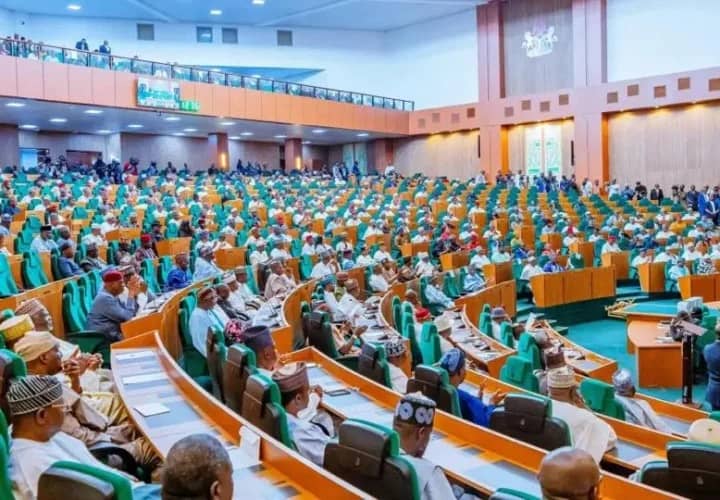
The House of Representatives has called for the provision of safer boats, compulsory use of life jackets and stricter enforcement of water transportation safety standards in riverine communities following a boat accident in Bayelsa State that claimed 29 lives, including two children.
The lawmakers also urged the Federal Government to intensify search and rescue operations, provide relief materials to affected communities and introduce subsidised modern boats to reduce the risks associated with water transportation.
The resolutions followed a motion of urgent public importance moved by Rodney Ambaiowei, representing Southern Ijaw Federal Constituency, during plenary on Tuesday.
Presenting the motion, Ambaiowei said more than 150 people, mostly indigenes of Southern Ijaw, were involved in the accident on November 20, 2026, while travelling from Ayama community to Ukubie for a condolence visit.
He explained that the boat capsized at the river junction between Oweikorogha and Otuan, throwing all its occupants into the water.
According to him, rescue operations commenced immediately, with the Bayelsa State Government, security personnel and other relevant agencies joining efforts to save the victims.
As of November 22, he said, 51 people had been rescued alive with varying degrees of injuries and discomfort, while 29 others, including two children, had been confirmed dead.
The rescued victims were taken to medical facilities in Southern Ijaw Local Government Area and government hospitals in Yenagoa for treatment, while search operations continued for missing persons and possible survivors.
Ambaiowei expressed concern over the number of people still unaccounted for, stressing the need for an expanded search and rescue operation to establish the full extent of the tragedy.
He said the incident had plunged families and residents of Southern Ijaw, particularly Ukubie and neighbouring communities, into mourning.
The lawmaker attributed the vulnerability of riverine communities to the poor condition of boats used for transportation, noting that many vessels were old, overworked and frequently overloaded because of their scarcity.
He also lamented the widespread absence of life jackets, floaters and other essential safety equipment, as well as the failure to enforce their use, despite waterways serving as the major means of transportation in the constituency.
Ambaiowei noted that many communities had limited access to motorable roads, leaving residents heavily dependent on waterways for their daily movement, notwithstanding ongoing road construction projects by the Bayelsa State Government.
He warned that failure by the National Emergency Management Agency (NEMA) and other relevant agencies to intensify rescue operations and provide relief materials could worsen the hardship facing affected families.
The lawmaker added that fishing, which serves as a major source of food and income for many residents, had also been disrupted by the tragedy.
He commended President Bola Tinubu for dispatching Vice-President Kashim Shettima to the affected communities to sympathise with bereaved families, noting that the Federal Government had also donated ₦250 million to the victims.
Contributing to the motion, lawmakers called for a comprehensive review of water transportation in riverine communities, arguing that government interventions had largely focused on road transportation at the expense of people who depend on waterways.
The House Minority Leader, Fred Agbedi, said the tragedy had exposed the difficulties confronting riverine communities and called for the introduction of subsidised modern boats, similar to the Federal Government’s intervention in road transportation through Compressed Natural Gas buses.
Agbedi said, “This incident brings to the fore what people in riverine communities are suffering. I think it is an opportunity for us to address these challenges.
“I am aware that the Federal Government is providing CNG buses, which are more economical. But whenever we talk about mass transit, there is no provision for river craft.
“In this century, people are still using dugout boats with weak roofs that could collapse on passengers. If the government provides modern vessels for transportation at subsidised rates, as it does with mass transit and CNG buses, I am sure incidents like this could be prevented.”
He described the motion as an opportunity to address the longstanding neglect of riverine communities, insisting that federal transportation policies should also accommodate residents of areas with little or no access to roads.
He urged the Federal Government to include modern boats in its transportation interventions and future budgetary provisions to make movement to remote riverine communities safer and more affordable.
Similarly, Shina Oyedeji urged the government to stop paying lip service to safety standards, describing the accident as a wake-up call for authorities to strengthen the regulation of water transportation.
He questioned the training and certification of boat operators and called for regular inspection of vessels and other transportation facilities.
Oyedeji said the country needed to begin enforcing appropriate safety standards, warning against adopting practices from other countries without considering Nigeria’s peculiar circumstances.
He also urged the House committee responsible for safety standards to examine the incident and ensure that relevant regulations were properly enforced.
“Safety standards must be taken seriously in Nigeria,” he added.
The Deputy Majority Whip, Isiaka Ibrahim, said responsibility for safety on inland waterways rested with both federal and state governments, noting that creeks and offshore waters were on the concurrent legislative list.
He called for an investigation into the accident and urged lawmakers to examine the safety standards observed by boat operators, particularly in comparison with those adopted by multinational companies operating in Nigeria’s offshore waters.
Ibrahim maintained that the safety measures employed by multinational companies in offshore operations could serve as a reference for improving safety practices in the country’s creeks.
He cautioned against relying on swimming ability as a substitute for basic safety precautions, particularly the use of life jackets.
“I know how to swim. I have been swimming for 40 years. But you do not know the condition of the boat, the water, its depth or what may have happened to the boat.
“We ignore life vests and life jackets, and then we talk about accidents. This motion should provide an opportunity to learn from what has happened and address the causes,” he said.
However, the House Leader, Professor Julius Ihonvbere, argued that while federal intervention was important, communities, maritime associations, local governments and state authorities must also be held accountable for safety failures.
He said television footage of the incident showed passengers boarding boats without life jackets, describing the practice as unacceptable and calling for tougher penalties against those who violated safety regulations.
Ihonvbere questioned how passengers could board boats without life jackets, insisting that preventing such tragedies required collective responsibility involving community associations, maritime organisations, local government councils, state governments and relevant federal agencies.
He also maintained that familiarity with waterways or swimming experience should not be an excuse for disregarding safety requirements.
The House Leader further questioned the responsibility for inspecting watercraft, describing the condition of some boats operating in riverine communities as unacceptable.
He called for stronger enforcement of safety regulations at jetties and other boarding points, warning that recurring accidents would continue unless authorities and community-level institutions took responsibility.
He stressed the need for appropriate penalties and strict enforcement to ensure compliance, adding that the responsibility for preventing such incidents should not rest solely on the Federal Government.
The House unanimously adopted the motion and mandated its Committee on Emergency and Disaster Management to work with NEMA and the Bayelsa State Government to investigate the immediate and remote causes of the accident and recommend measures to prevent future occurrences.
It also urged NEMA, the Niger Delta Development Commission (NDDC), the Nigerian Inland Waterways Authority (NIWA) and the South-South Development Agency to provide additional relief materials to affected communities to cushion the impact of the tragedy and the loss of livelihoods.
The lawmakers further called for the urgent provision of safer boats, life jackets, floaters and other essential water transportation safety equipment to riverine communities, alongside measures to ensure their compulsory use.