


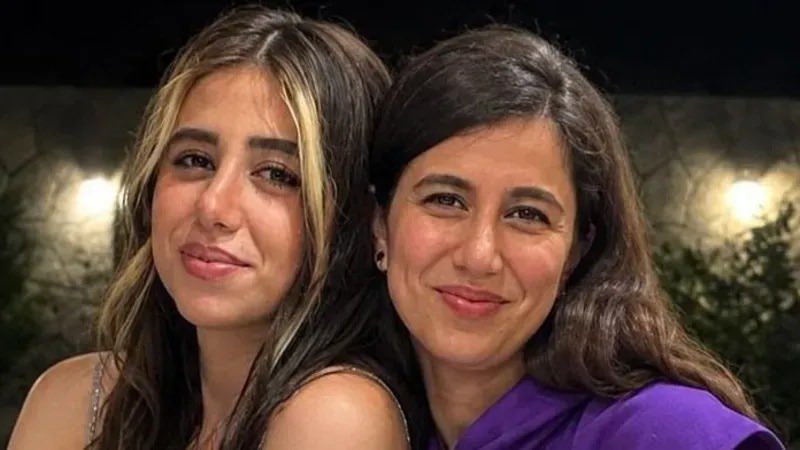
A 21-year-old Iranian woman, Taraneh Rahimi, has reportedly been sentenced to death, while her twin sister, Romina Rahimi, has received a 25-year prison sentence over their alleged involvement in anti-government protests in Iran.
The sisters were arrested in late January 2026 following demonstrations that spread across the country over economic hardship and opposition to Iran’s clerical leadership.
According to the BBC on Thursday, their cousin, Masoud Nourmohammadi, who spoke to BBC Persian, alleged that the sisters were subjected to severe beatings and other forms of mistreatment while in detention.
Nourmohammadi said Taraneh had experienced difficulty walking after her legs were allegedly beaten, while an untreated head injury reportedly resulted in an ear infection that affected her balance.
He further alleged that when the sisters’ mother first visited them in prison, their faces were so swollen and bruised, and their hair had been pulled out, that she could only identify them by their voices.
The cousin also claimed that Taraneh signed a confession after interrogators allegedly threatened to sexually assault Romina in front of her if she refused to cooperate.
The sisters have denied the allegations against them, while their family maintains that their confessions were obtained through torture and intimidation.
According to information cited by the BBC, Taraneh was convicted of moharebeh, an offence under Iran’s Islamic Penal Code that carries the death penalty. A sentencing document partly reviewed by the broadcaster reportedly stated that the charge involved drawing a bladed weapon with the intention of endangering people’s lives.
However, Nourmohammadi disputed the allegation, insisting that there was no evidence that Taraneh possessed a bladed weapon or committed the offence.
Her twin sister, Romina, was sentenced to 25 years in prison for aiding and abetting moharebeh, according to Mai Sato, the United Nations Special Rapporteur on human rights in Iran.
The sisters were among defendants tried over demonstrations in Isfahan, where a member of Iran’s Islamic Revolutionary Guard Corps was killed during the unrest.
Their lawyers have reportedly filed complaints alleging torture and sexual abuse during interrogation. However, the family has expressed concerns about the investigation, claiming that it is being overseen by an official accused of involvement in the alleged abuses.
The case comes amid growing international concerns over the use of capital punishment against women and individuals accused of participating in protests in Iran.
According to Sato, six women have been sentenced to death in connection with the January protests, while three other women have reportedly received death sentences in separate cases involving allegations of blasphemy, espionage and corruption on Earth.
Human rights organisations have criticised the prosecutions, describing some of the cases as politically motivated. Amnesty International has also warned of a significant increase in executions and death sentences involving protesters and government critics.
Sato said at least 39 people had already been executed in connection with the January protests.
However, Iran’s Embassy in London has rejected allegations of torture and disputed claims that the death penalty is increasingly being used against peaceful protesters.
The embassy maintained that death sentences connected to the January unrest involved serious criminal offences, including intentional murder and moharebeh, while insisting that peaceful protest remains a legitimate and protected right under Iranian law.
Iranian authorities have blamed the United States and Israel for encouraging the unrest, accusing armed groups and rioters of contributing to the violence.
The demonstrations began in late December 2025 following economic grievances before spreading into widespread protests against Iran’s leadership. The unrest became the country’s largest demonstrations against the clerical establishment since the 1979 Islamic Revolution.
The subsequent security crackdown reportedly left thousands dead. The United States-based Human Rights Activists News Agency (HRANA) said it had identified more than 7,000 people killed during the crackdown, although it believed the actual figure could be significantly higher.
Iranian authorities, however, put the death toll at 3,117, including members of the security forces.
Despite the uncertainty surrounding the sisters’ future, their family continues to hope that their sentences will be overturned.
Nourmohammadi described Taraneh as a young woman who loves horses and dreams of establishing her own horse-breeding centre. He said relatives continue to remind her of the ambition to give her hope while she remains in detention.
Romina, meanwhile, enjoys music and often asks relatives to play songs for her during telephone conversations.
For their family, these small gestures have become an important source of encouragement as the twin sisters face an uncertain future.