


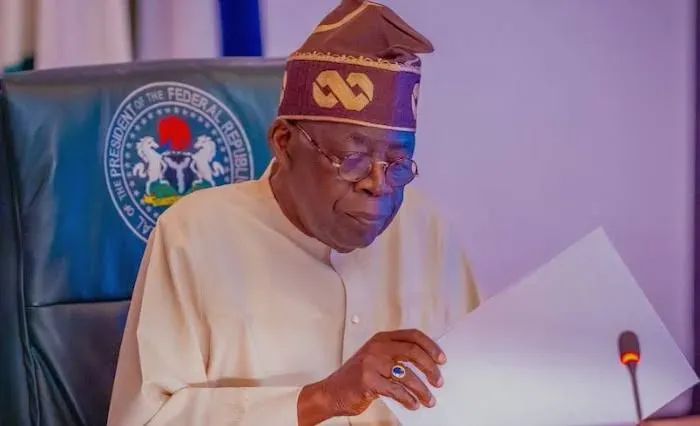
The directive was disclosed in a statement issued on Monday by the Assistant Director, Information and Public Relations Department of the ministry, Nwachukwu Christian.
Tinubu, represented by the Speaker of the House of Representatives, Tajudeen Abbas, gave the directive on Monday at the closing ceremony of the conference held at the State House Conference Centre, Abuja.
The President directed the Minister of Youth Development, Ayodele Olawande, to collaborate with relevant ministries, departments and agencies, state governments, the private sector and development partners to develop an implementation framework with clear priorities, assigned responsibilities, realistic timelines and measurable indicators.
He also emphasised the need for young Nigerians to participate actively in the implementation and monitoring of the resolutions, stressing that their involvement must go beyond consultations and deliberations.
Tinubu said the real test of the conference would be determined by what happens after its conclusion, warning against allowing the recommendations to become another government report without practical implementation.
“The real test of this conference begins after today. I do not want the recommendations of this conference to become another report gathering dust on government shelves. I want them to become a guide for action.
“You must not be invited to the table only when decisions are being discussed. You must also have a place at the table when those decisions are being implemented,” he said.
Acknowledging the challenges confronting Nigerian youths, including unemployment, rising living costs, limited access to education and business opportunities, and insecurity, the President reaffirmed his administration’s commitment to expanding opportunities through economic reforms and strategic investments.
He identified the Nigerian Education Loan Fund, the Three Million Technical Talent programme, YouthCred and the Nigerian Youth Academy as some of the initiatives introduced to support young people.
However, he stressed the importance of ensuring that skills acquisition translated into employment, innovation attracted investment and young entrepreneurs gained improved access to financing.
Earlier, Olawande disclosed that the conference had produced an 18-point action agenda covering six priority areas following nationwide virtual consultations and physical deliberations involving youth representatives from across Nigeria and the diaspora.
The minister explained that the conference was designed to strengthen the participation of young Nigerians in national decision-making, assuring that the ministry would work towards translating the recommendations into policies, programmes and opportunities.
“For the first time in the history of this country, the youth can feel the government, see the government, and touch the government,” Olawande said.
He added that the recommendations would be pursued through relevant executive, legislative and judicial channels, with the ministry engaging stakeholders to secure the necessary institutional support.
In his keynote address, the Minister of Finance and Coordinating Minister of the Economy, Taiwo Oyedele, urged young Nigerians to take a more active role in shaping the country’s economic future and strengthening investor confidence.
Oyedele cautioned that negative perceptions and distorted narratives about Nigeria could discourage investment, weaken economic confidence and limit employment and business opportunities for young people.
“A factory that is not built means jobs that are not created,” he said, urging participants to embrace constructive engagement, innovation and practical solutions to the country’s challenges.
He emphasised the need to translate economic progress into tangible benefits for Nigerians through increased investment, production, job creation and shared prosperity.
The National Youth Conference was convened by the Tinubu administration to bring together young Nigerians at home and in the diaspora to deliberate on national issues and develop recommendations on youth participation in governance, economic development and nation-building.
Tinubu first announced plans for the month-long conference during his Independence Day address in October 2024, describing it as a platform to address the diverse challenges and opportunities confronting young Nigerians.
The physical phase of the conference was declared open by Olawande on Wednesday, November 4, 2026, with delegates drawn from all federal constituencies across the country.
It followed a three-week virtual conference held between October 2 and 21, 2026, involving participants across the country’s six geopolitical zones.