


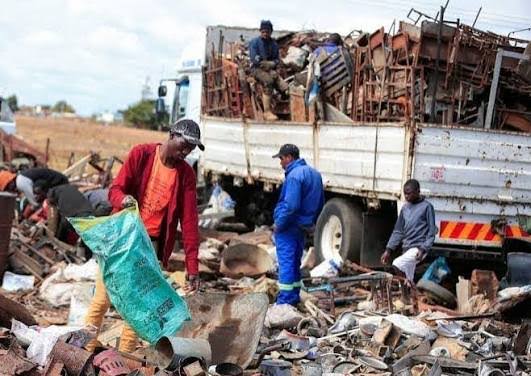
The Federal Government has intensified efforts to regulate Nigeria’s scrap metal industry, targeting the illegal trade in stolen metals and the vandalism of critical infrastructure, including electricity cables, railway components and manhole covers.
The proposed regulatory framework will require scrap metal operators to obtain appropriate licences, verify the sources of materials and maintain transaction records to prevent stolen metals from entering the recycling market.
The Minister of Steel Development, Shuaibu Audu, disclosed this in a statement issued by the ministry’s Head of Press and Public Relations, Maureen Tine-Iulun, on Tuesday.
Audu, who was represented by the Director of the Metallurgical Raw Material Development and Investment Promotion Department, Ime Eprikpo, at a stakeholders’ engagement in Lagos, said the proposed Scrap Metal (Collection, Trading, Recycling and Regulation) Regulations, 2026, would establish an organised and transparent scrap metal value chain.
The proposed regulations are also expected to improve the supply of locally sourced raw materials to steel manufacturers, formalise the operations of informal scrap dealers and strengthen environmental and occupational safety standards.
According to the statement, the government’s initiative is aimed at sanitising the industry, protecting critical national infrastructure and strengthening the steel and metals manufacturing sector.
Speaking at the two-day stakeholders’ engagement on the validation of the proposed regulations, Audu expressed concern that poorly regulated scrap metal activities had encouraged the theft and vandalism of public and private infrastructure, resulting in economic losses, disruption of essential services and increased maintenance costs.
He, however, said the government was determined to address the problem without undermining the livelihoods of thousands of Nigerians who depend on scrap metal collection and trading.
“Our objective is not to suppress legitimate commercial activity. Rather, it is to establish a system in which lawful businesses can operate with greater clarity and confidence, while activities involving stolen materials, unsafe practices or environmental harm are addressed through appropriate regulatory and legal measures,” Audu stated.
The minister described scrap metal as an important raw material for steel production, foundry operations and other manufacturing activities, noting that an organised recycling industry could reduce material wastage, create jobs and support Nigeria’s industrialisation drive.
He maintained, however, that the sector’s economic potential could only be fully realised through effective regulation, lawful sourcing, safe handling and reliable supply arrangements.
According to him, the proposed regulations would introduce a structured licensing and supervisory system for operators, regulate collection and aggregation centres, ensure transaction traceability and strengthen monitoring and enforcement.
He added that the framework would also improve environmental protection and occupational safety while discouraging the illegal acquisition and sale of stolen metallic materials.
Audu specifically identified the theft of electrical cables, railway components, manhole covers and other metallic installations as a major threat to national infrastructure.
He explained that the consequences extended beyond the financial value of stolen materials, as such activities disrupted public services, endangered lives and increased the cost of maintaining infrastructure.
The minister called for stronger identification and verification of scrap suppliers, proper documentation of transactions and improved collaboration among regulatory authorities, security agencies and law enforcement bodies.
Addressing concerns raised by informal operators, Audu said the proposed regulations would provide opportunities for small-scale scrap collectors and traders to formalise their businesses through requirements proportionate to the size and risks of their operations.
He stressed that the government did not intend to impose unnecessary restrictions on small businesses but would ensure that large-scale aggregation, processing and recycling facilities operated under appropriate licensing and safety standards.
He urged stakeholders to scrutinise the draft regulations and identify areas requiring clarification, particularly those relating to implementation, operational requirements and compliance costs.
Audu assured participants that their submissions would be considered before the regulations were finalised, adding that the ministry would collaborate with relevant institutions to strengthen enforcement capacity, improve public awareness and enhance data collection across the industry.
In his address, the ministry’s Permanent Secretary, Nura Abba Rimi, represented by the Director of the Metallurgical Inspectorate and Environmental Protection Department, Christopher Wanje, said an effectively regulated scrap metal industry was essential to developing a competitive domestic steel sector.
He said the proposed regulations would help curb the illegal trade in stolen metals, protect public and private infrastructure and ensure that the economic benefits of recycling contributed to national development.
“Our objective is not to stifle legitimate businesses or discourage investment, but to establish a transparent, accountable and sustainable operating environment in which genuine entrepreneurs can thrive, investors can have confidence, and the steel industry can access reliable raw materials to support increased domestic production and value addition,” Rimi stated.
The National President of the National Association of Scrap and Waste Dealers Employers of Nigeria, Ogbu Luke Uchechukwu, described the stakeholders’ engagement as a landmark development for the steel industry.
He said the validation exercise went beyond reviewing a policy document, describing it as an important step towards establishing an organised, regulated and economically viable scrap and waste industry.
The proposed regulations come amid the Federal Government’s efforts to strengthen local manufacturing and develop Nigeria’s steel industry, with scrap metal recycling offering opportunities to recover valuable materials, reduce waste and improve the supply of raw materials to local manufacturers.