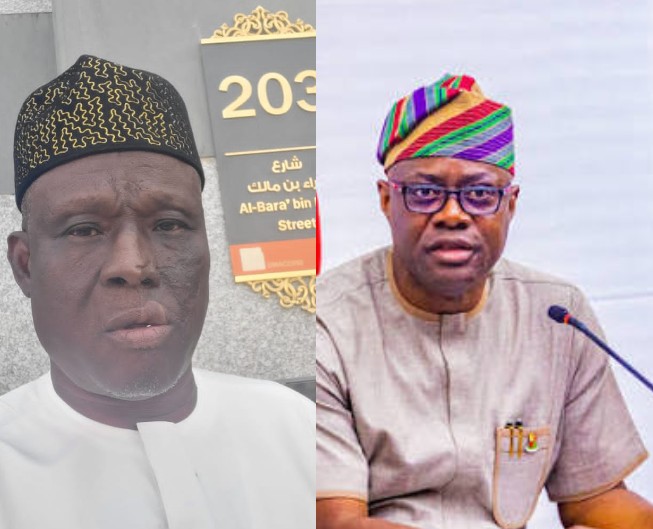

Seyi Makinde and the Expiry Date of Power || By Alhaji Abass Oloko
Governor Seyi Makinde must remember a fundamental lesson of politics: no public office lasts forever, and political influence can diminish when relationships with influential stakeholders deteriorate.
As Oyo State approaches the 2027 transition, questions are emerging about Makinde’s political relationships, his confrontations with the ruling All Progressives Congress (APC) at the federal level and the possible consequences for his political future.
Makinde has been an outspoken critic of President Bola Ahmed Tinubu and the APC on several political issues. Although criticism is legitimate in a democracy, political disagreements must not become unnecessary personal hostility.
A politician who closes doors to influential stakeholders may find it difficult to build the alliances required for future political ambitions.
Tinubu has remained a major force in Nigerian politics for decades, building alliances and navigating political transitions.
If Makinde harbours presidential ambitions, as some political observers speculate, his strained relationships with key political figures could become a significant challenge. National politics requires broad consultations, strategic alliances and the ability to work across political divides.
The recent birthday of the Olubadan of Ibadanland, Oba Rashidi Ladoja, has also drawn attention to the relationship between Makinde and the traditional institution.
Ladoja is a former Oyo State governor and a longstanding political figure with extensive experience and networks.
The absence of a publicly reported birthday congratulatory message from Makinde attracted attention in some political circles, raising questions about the state of relations between the two men.
Beyond a birthday message, the issue concerns the importance of courtesy, consultation and mutual respect between political leaders and traditional institutions.
Given Ibadan’s history of interaction between traditional authority and partisan politics, perceived tension between the governor and the Olubadan could generate further political speculation.
Another development is the reported contact between Imo State Governor Hope Uzodimma and Oba Ladoja for political consultation.
If accurate, the development suggests that experienced political stakeholders in Oyo State remain relevant to consultations beyond the state.
The development nevertheless raises questions about whether Makinde has sufficiently maintained relationships with influential figures whose experience and networks could matter beyond his tenure.
May 29, 2027, will mark the end of Makinde’s second term as governor, in accordance with the constitutional limit on tenure.
As that date approaches, the consequences of his political relationships and disagreements will become increasingly important. Will he retain meaningful political connections after leaving office, or will unresolved disputes limit his influence?
History shows that holding public office does not guarantee lasting political relevance. Politicians who fail to maintain relationships and manage disagreements can find themselves isolated when the power and privileges of office disappear.
Makinde’s political future will depend partly on how he manages his relationships with traditional rulers, political elders and stakeholders across party lines.
Maintaining such relationships does not require abandoning political convictions or joining the APC. However, persistent hostility and avoidable estrangement could make future alliances more difficult.
President Tinubu’s position as Nigeria’s leader and a prominent South-West political figure also makes the management of political relationships an important consideration for anyone seeking influence in national affairs. Disagreement is part of democracy, but it should not automatically shut the door to dialogue and cooperation.
Ultimately, public office is temporary, and political alliances are rarely permanent. A leader who fails to recognise this reality risks discovering that the influence associated with office does not necessarily survive its expiration.
As the May 29, 2027, transition approaches, Makinde must confront the political implications of his relationships and decisions.
The central question is whether the alliances he has maintained will sustain his relevance after office or whether political differences will leave him with fewer options.
Because when the music stops, and it will stop, it is the relationships you nurtured that will play the next song for you.
Politics has a way of reminding people that you may own the office today, but you do not own the people forever.
Alhaji Abass Oloko
A Respected Ibadan Mogaji
An Influential Political Figure in Oyo State