


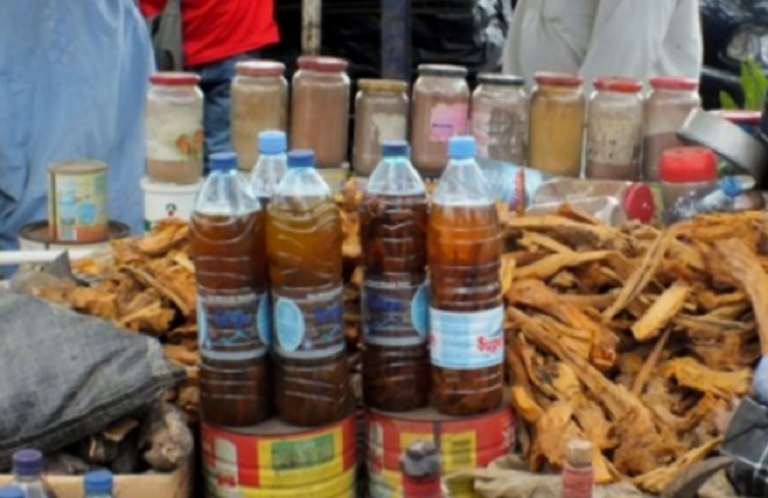
Just In: Ondo ‘Monkey Tail’ Death Toll Rises To 49, 170 Affected
The death toll from suspected consumption of toxic alcoholic and herbal concoctions popularly known as “Monkey Tail” in Ondo State has risen to 49, while about 170 people have reportedly been affected by the incident.
The latest figure represents an increase from the 38 deaths earlier recorded in Odigbo Local Government Area of the state.
The state Commissioner for Health, Dr Banji Ajaka, disclosed the latest figures on Wednesday night, saying eight additional deaths were recorded in Irele Local Government Area.
Ajaka said health authorities had deployed response teams to Irele and other affected communities to conduct surveillance, manage cases and trace the source of the suspected toxic substance.
He, however, said the government had yet to establish whether the suspected poisoning originated from a single source or multiple sources.
“So, all the people that have been affected altogether now is about 170, those that have been admitted and those that have died.
“We are always fast about it wherever and whenever we hear reports of the issue. Our teams are already in Irele as I’m talking to you now,” the commissioner said.
Ajaka said the state government was working with relevant agencies, including the National Agency for Food and Drug Administration and Control, National Drug Law Enforcement Agency, Department of State Services, Nigeria Police Force and Nigeria Security and Civil Defence Corps, as part of efforts to investigate the incident.
He added that the outbreak had also been discussed at a national meeting involving state health commissioners and officials of the Nigeria Centre for Disease Control and Prevention.
According to the commissioner, investigations would continue until the source of the suspected poisonous substance was identified.
Ajaka had earlier linked the deaths to the consumption of locally produced alcoholic and alcoholic-herbal substances.
The latest development follows an earlier outbreak reported in Odigbo Local Government Area, where 29 deaths were initially recorded.
Affected communities in the area include New Town, Odole, Okele, Orita Odigbo, Araromi-Obu and Oniparaga.
In response to the outbreak, the state government banned the production and sale of locally brewed alcoholic and alcoholic-herbal drinks in Odigbo as a precautionary measure.
The police also arrested Oloruntoba Babatunde, popularly known as “Meko,” over alleged involvement in the production of substances suspected to contain methanol.
The police spokesperson, Jimoh Abayomi, said the suspect was assisting the command with its investigation.
Abayomi added that 14 other persons had also been arrested for allegedly violating the ban on the sale of herbal products.
He said the bodies of the deceased were undergoing medical and forensic procedures as investigations continued into the circumstances surrounding the deaths.
Meanwhile, the development has triggered concern in the affected communities, with some residents combining medical intervention with prayers and traditional spiritual measures.
In Araromi-Obu, Pastor Segun Ajiboye led residents in prayers for the recovery of those affected and an end to the deaths.
“We are asking God to intervene in our community and put an end to all these deaths. We do not want to witness another death among our people, most especially the youths,” Ajiboye said.
The traditional ruler of Odigbo Kingdom, Rufus Akinrimade, also said the palace had commenced spiritual cleansing and prayers following the deaths.
The monarch, however, urged residents not to ignore the possible health risks associated with consuming unregulated alcoholic substances.
“Yes, we are embarking on spiritual cleansing and prayers, but I think mainly it is caused by carelessness and a lackadaisical attitude.
“We realised it was caused by taking different alcoholic substances, locally made alcohol. We don’t know the source,” Akinrimade said.
He urged residents, particularly young people, to avoid consuming alcoholic or herbal preparations whose contents and production processes were unknown.
Government Warning
The Commissioner for Information and Orientation, Idowu Ajanaku, had earlier said the substance linked to the deaths was not a contaminated commercial beverage but a locally produced gin.
Speaking on Channels Television, Ajanaku said the government’s preliminary investigation indicated that the drink was manufactured around Odigbo Local Government Area.
“It is not a contaminated beverage. It is a local gin being manufactured somewhere around Odigbo Local Government Area,” he said.
Ajaka said the authorities would continue surveillance and investigations in the affected communities to identify the source of the suspected toxic substance and prevent the situation from spreading to other parts of the state.