


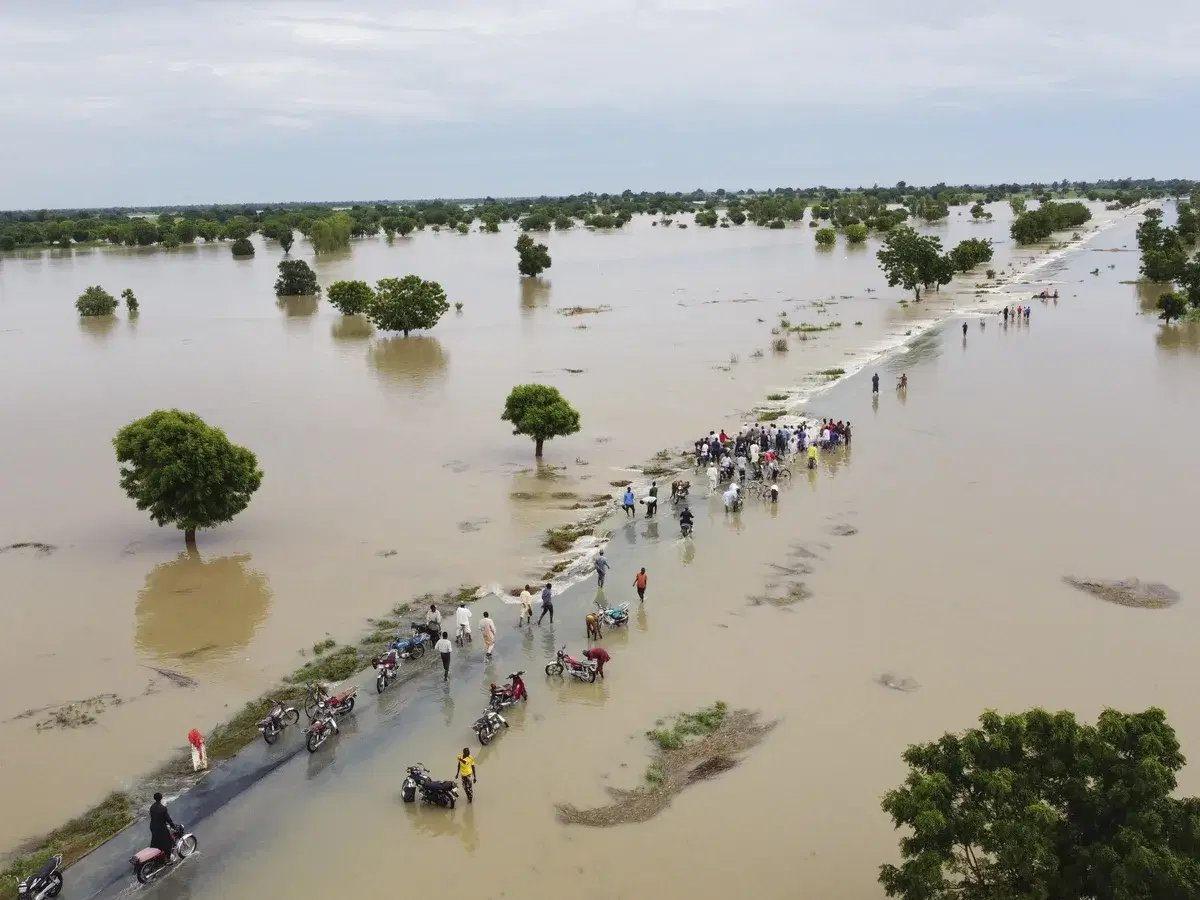
17 States to Experience Flooding from July 21 to 27
The Nigeria Hydrological Services Agency (NIHSA) has warned that 17 states across the country are at risk of flooding between July 21 and July 27, 2026, urging governments and residents in vulnerable communities to take immediate precautionary measures to avert loss of lives and property.
The warning was contained in NIHSA’s National Flood Advisory (Alert No. NFA-2026-200), which forecasts a medium flood risk across the affected states. According to the agency’s Director-General and Chief Executive Officer, Arc. Umar Mohammed, the states include Bauchi, Edo, Imo, Kaduna, Plateau, Benue, and 11 others.
Mohammed explained that hydrological monitoring indicates that water levels at critical stations, including Saminara on the Karam River, Waya Dam Site on the Waya River and Amber on the Amber River, have exceeded both watch and warning thresholds. He added that 16 gauging stations across the country are currently recording elevated river levels, increasing the likelihood of localized flooding along major river channels and floodplains.
He warned that communities located along the affected waterways face imminent flooding and called on state governments, local authorities and residents to act swiftly by implementing flood preparedness measures, including evacuation where necessary.
The advisory showed that the potential impact could be significant. In Bauchi State alone, about 1,841 communities, 145 schools, 101 health facilities and eight markets are exposed to flood risks. In Edo State, 148 communities, 131 schools, 123 health facilities, four markets, seven religious centres and seven hectares of farmland are vulnerable.
Similarly, 415 communities, 423 schools, 198 health facilities, 49 markets, 111 religious centres and 75 hectares of farmland in Imo State are at risk. In Plateau State, the agency identified 205 communities, 137 schools, 44 health facilities, 16 markets, 81 religious centres and 64 hectares of farmland as vulnerable, while Kaduna and Benue states also face varying levels of flood exposure.
NIHSA advised the National Emergency Management Agency (NEMA), State Emergency Management Agencies (SEMAs), local government authorities and community leaders to immediately activate emergency response plans. The agency recommended the evacuation of residents from flood-prone areas, pre-positioning of relief materials, activation of early warning systems and continuous public sensitisation.
The agency also urged residents to avoid walking or driving through flooded roads and fast-flowing water, clear blocked drainage channels and culverts, and regularly monitor NIHSA’s flood advisories for updates as the rainy season intensifies across the country.