


Why I Refused to Pay #300m Ransom, Told Abductors to Kill My Brothers if They Like — Zamfara Governor
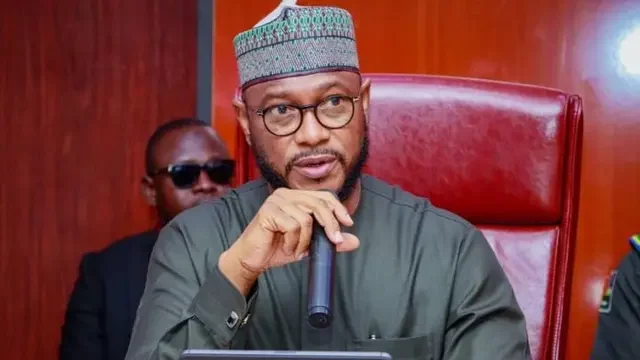
Zamfara State Governor, Dauda Lawal, has revealed why he refused to pay the N300 million ransom demanded by kidnappers who abducted his brothers in 2019, insisting that negotiating with criminals only encourages more kidnappings.
Speaking on Thursday at the ARISE News and THISDAY Town Hall Conference on National Security in Abuja, the governor said he stood by his conviction despite the risks involved, telling the abductors they could kill his brothers if they wished because he would not pay a ransom.
“My own brothers were kidnapped in 2019, and these criminals demanded about N300 million. I told them, ‘I’m not going to pay a dime. If you like, go and kill them,'” Lawal recounted.
According to him, the kidnappers eventually released his brothers after about three months in captivity, reinforcing his belief that paying ransom only strengthens criminal groups and fuels further abductions.
“Once we continue paying ransom, we are encouraging them to kidnap more people. I will never negotiate with criminals or pay ransom, no matter what happens,” he said.
The governor made the remarks while renewing his call for the establishment of state police, arguing that governors cannot be held accountable for insecurity when they lack operational control over security agencies.
He lamented that although governors are constitutionally regarded as chief security officers of their states, they have no authority to direct police operations.
“People call us chief security officers, yet we don’t have the command and control structure to determine what happens or issue instructions to security agencies. How then do you hold us accountable?” he asked.
Lawal described security as the foundation of governance, stressing that meaningful development cannot be achieved without adequate protection of lives and property.
He also highlighted Zamfara State’s investment in security, disclosing that his administration currently funds more than 95 per cent of security operations in the state.
According to him, the government has procured over 500 operational vehicles for security agencies, as well as 35 Armoured Personnel Carriers and Mine Resistant Ambush Protected vehicles to strengthen the fight against banditry. He added that the state had also acquired surveillance and combat drones to support security operations.
The governor maintained that strengthening security institutions through improved funding, better welfare, modern technology and enhanced training would be more effective than negotiating with criminal groups.
The conference also featured governors, lawmakers and security experts who expressed differing views on the proposed creation of state police.
While Governors Chukwuma Soludo of Anambra, Caleb Mutfwang of Plateau and Dapo Abiodun of Ogun backed the proposal, they stressed the need for sustainable funding, institutional safeguards and independent oversight to prevent abuse.
Senate Leader Opeyemi Bamidele defended the National Assembly’s handling of the state police bill, saying extensive public consultations had been conducted over the past two and a half years before its passage.
However, Senator Adams Oshiomhole and Senator Natasha Akpoti-Uduaghan warned that without adequate checks and balances, state police could be abused by political office holders.
Minister of Defence Christopher Musa also supported reforms to the policing system but advocated a phased implementation of state police alongside improvements in the welfare and operational capacity of the Nigeria Police Force.