


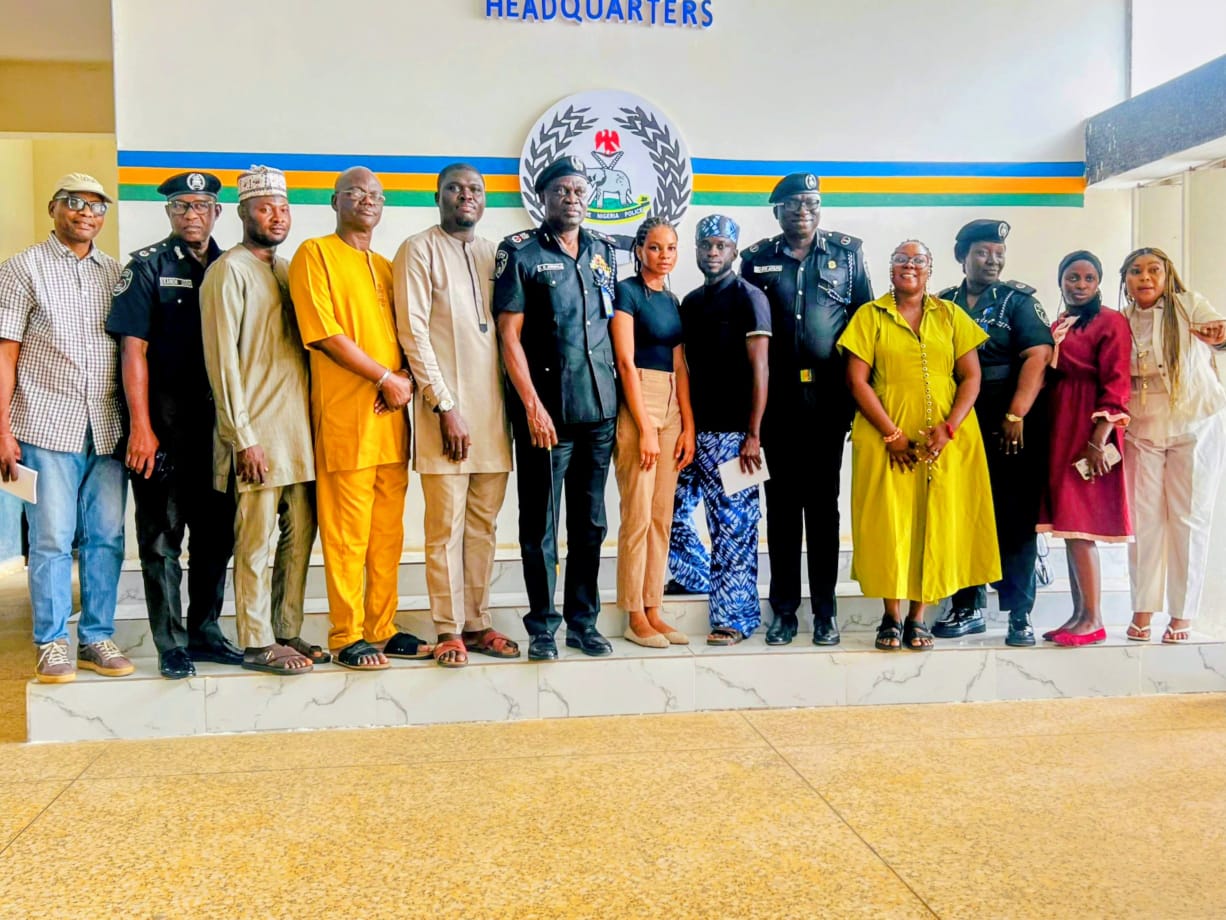
Oyo CP hosts ESGBV Media Corps, reels out ways to secure effective prosecution, justice for survivors
The Oyo State Commissioner of Police, CP Abimbola Ayodeji Olugbenga, has disclosed that inadequate logistics, financial constraints, difficulties in securing medical evidence and societal attitudes towards sexual and gender-based violence (SGBV) remain among the challenges confronting effective investigation, prosecution and the delivery of justice to survivors in the state.
The Commissioner made the disclosure on Monday while hosting members of the Sexual and Gender-Based Violence (ESGBV) Media Corps in Oyo State, where he addressed the realities of policing, the difficulties involved in prosecuting sensitive criminal cases and the need for stronger collaboration between the police, media and other stakeholders.
He also revealed that the command had established specially designated gender desks at police stations across the 33 local government areas of the state as part of efforts to strengthen its response to sexual and gender-based violence, improve access to police intervention and enhance the protection of survivors.
Accompanied by other top management of the state Police Command, Olugbenga, who spoke extensively on his experience handling cases of rape, defilement, child trafficking and other serious offences in different designations held in the past till date, stressed that the fight against SGBV required not only effective policing but also responsible journalism, institutional support, public enlightenment and a deliberate effort to dismantle harmful cultural practices that encourage silence and impunity.
He appealed to media practitioners to verify information with the command before publication, warning that one-sided reports and unverified allegations could undermine ongoing investigations and create misconceptions about the efforts of law enforcement agencies.
The Commissioner emphasised that the police operate within a system faced with significant logistical and financial challenges, which affect both crime prevention and the investigation of reported offenses due to inadequate funding.
He explained that officers were often expected to investigate cases, prepare reports, trace suspects, secure evidence and ensure that matters were properly handled, even when the necessary logistical resources were not readily available.
According to him, these challenges become particularly pronounced in cases of rape and defilement, where timely medical examinations and expert evidence are often critical to effective prosecution of offenders. He noted that survivors and their families sometimes struggle to pay for medical procedures required to support investigations, while the police may not have sufficient resources or an accessible mechanism to cover such expenses.
The Commissioner said such gaps could delay investigations, weaken the evidence available to prosecutors and make it more difficult to secure justice for survivors. He stressed that the difficulties facing the police should not be interpreted as a lack of commitment to justice, but rather as realities requiring stronger institutional support and cooperation from relevant stakeholders.
He said, “The fact remains that we have our challenges. But if you don’t understand how we operate, you will take us to the slaughterhouse.”
Olugbenga further explained that logistical challenges affect crime prevention beyond SGBV cases, as police officers require operational resources to respond to emergencies, investigate criminal activities and maintain security across the state.
He called for greater understanding of the realities of policing and stronger support for law enforcement agencies to enable them discharge their responsibilities effectively.
The Commissioner highlighted the importance of medical reports and expert opinions in the prosecution of rape and defilement cases. He explained that while the police could investigate allegations and gather evidence, certain medical procedures were necessary to establish relevant facts before the court of competent jurisdiction.
He likened the importance of medical evidence in sexual offences to the determination of the cause of death in murder cases, stressing that expert opinion was essential to the judicial process. According to him, the inability of survivors to access timely medical services could affect the strength of cases presented for prosecution.
He said some families, instead of ensuring that victims received necessary medical attention, allowed financial difficulties, cultural pressure or negotiations with suspects to interfere with the process.
The Commissioner condemned the practice of settling serious sexual offences through monetary compensation, warning that such arrangements could undermine justice and expose survivors to further harm.
He recalled instances where family members refused to report cases of defilement because the alleged offender was a father or close relative saying cultural beliefs and fear of sending family members to prison had contributed to the concealment of serious offences that could lead to justice for survivors.
The Commissioner urged families to report such cases and cooperate with investigations, stressing that the protection of children and vulnerable persons must take precedence over considerations that encourage silence.
As part of efforts to improve the police response to sexual and gender-based violence, the Commissioner disclosed that specially designated gender desks had been established at police stations across the 33 local government areas of Oyo State for immediate response to such crimes.
He said the initiative was aimed at ensuring that survivors had access to appropriate police intervention and that complaints involving women, children and other vulnerable persons received the attention required.
The gender desks, he noted, form part of the command’s broader strategy to strengthen the handling of SGBV complaints, improve coordination with relevant institutions and support the investigation of cases involving sexual abuse, rape, defilement and other forms of gender-based violence.
He stressed the importance of collaboration between the police, medical practitioners, legal practitioners, civil society organisations and the media in addressing the challenges associated with SGBV.
The Commissioner recalled his experience working with the International Federation of Women Lawyers (FIDA), explaining that collaboration with the organisation had helped address some of the difficulties faced by survivors who could not afford medical procedures.
He said such partnerships remained important because the police could not independently resolve every challenge confronting survivors in the course of investigation and prosecution.
The police boss also condemned the practice by some media organisations in the state of exposing the faces and identities of survivors of sexual and gender-based violence, warning that such broadcast could further traumatise victims and violate their fundamental human rights.
He urged media practitioners in the state to be guided by professional ethics and the provisions of the law when reporting cases involving survivors, particularly children and other vulnerable persons.
According to him, the media had a responsibility to inform the public without compromising the dignity, privacy and safety of survivors.
He warned that exposing survivors’ identities could subject them to ridicule, discrimination, intimidation and further psychological trauma, while discouraging other survivors from reporting cases of sexual and gender-based violence.
The Commissioner appealed to journalists to exercise restraint and ensure that their reports did not compound the suffering of survivors.
He also urged the media to engage the police command whenever clarification was required on the status of a case, rather than relying solely on incomplete reports or information circulating on social media.
He said the command remained willing to engage journalists and provide necessary clarification on investigations, particularly where public interest was involved.
Olugbenga expressed concern over the impact of stigmatisation and gender stereotypes on survivors of sexual and gender-based violence, noting that such attitudes continued to affect society’s response to the problem.
He observed that survivors were often subjected to blame, shame and social isolation, while cultural beliefs and misconceptions sometimes prevented families from reporting cases or cooperating with investigations.
The Commissioner said some families preferred to conceal cases involving rape and defilement because of the fear that the accused person might be disgraced or sent to prison, particularly where the suspect was a family member.
He condemned such attitudes, stressing that the protection of survivors and the pursuit of justice must take precedence over considerations that encourage silence and cover-ups.
He said the society must move away from the culture of blaming victims and develop a stronger commitment to protecting survivors, holding offenders accountable and preventing the recurrence of sexual and gender-based violence.
The Commissioner called for greater public education and advocacy to challenge harmful beliefs and encourage survivors to seek help and report cases to the appropriate authorities.
Speaking from his years of experience in policing, the Commissioner explained that his understanding of SGBV had evolved through investigations, professional training and exposure to different communities across the country.
He said he had encountered different cultural perspectives on criminal offences and observed how societal attitudes often influenced the reporting and prosecution of cases.
According to him, some members of society considered certain offences unimportant or treated them as private family matters, while others recognised the seriousness of such offences and the need for sanctions.
He noted that the challenge was not limited to the existence of laws but also involved the willingness of victims, families and communities to report cases and cooperate with investigations.
The Commissioner said the traditional communal approach to child upbringing had also weakened in many communities, creating difficulties in maintaining discipline and promoting moral responsibility.
He recalled that in the past, members of a community could correct a child who acted against accepted cultural values, regardless of whether the child belonged to them.
However, he observed that changing social attitudes had affected the traditional system of communal parenting, sometimes leading to situations where parents attacked teachers or others who attempted to correct their children.
He said the development had implications for morality and the wider effort to prevent criminal behaviour.
The Commissioner stressed that while society must adapt to changing times, serious offences such as rape and defilement must never be treated lightly.
The Commissioner also recounted the command’s efforts to combat child trafficking, disclosing that the police had recovered 17 children allegedly linked to a trafficking network.
He explained that the operation involved efforts to trace suspects, investigate the circumstances surrounding the sale of children and recover victims who had been taken away from their biological families.
He said the command had continued to pursue the recovery of children and the arrest of suspects involved in the alleged offences.
Olugbenga recalled a case involving a nine-day-old baby whose mother was allegedly deceived into believing that the child had died after birth.
According to him, the perpetrators allegedly substituted the baby with a dead body, which the family was preparing to bury, before the police uncovered the truth and recovered the child.
He said the baby was eventually reunited with the biological mother, describing the recovery as part of the command’s responsibility to protect children and secure justice for victims.
The Commissioner stressed that child trafficking was a serious criminal offence and should not be treated as an ordinary commercial activity.
“It is not like selling bread or selling Coca-Cola along the street,” he said, underscoring the gravity of trafficking in children and the responsibility of law enforcement to protect vulnerable persons.
He also disclosed that the publicity generated by the media around the recovery of the children had encouraged some persons who had acquired children through the suspects to return them.
He said the command would continue to investigate the matter and pursue the recovery of other children who might still be in the custody of those involved in the alleged trafficking network.
The Commissioner stressed that the command would not compromise the prosecution of serious criminal offences, particularly cases involving defilement, rape and child trafficking.
He recalled directing officers to ensure that suspects in such cases were not released without due process and that matters were properly charged before the court.
He said the police had a responsibility to protect survivors, investigate allegations and ensure that offenders faced the law where sufficient evidence existed explaining that advocacy and prosecution were both necessary in the fight against SGBV.
He described advocacy as the “carrot” and prosecution as the “stick,” saying both approaches were required to discourage criminal activities and encourage those already involved to abandon such practices saying: “When we combine these two together, we will win the war.”
According to him, public enlightenment could prevent people from becoming involved in SGBV-related crimes, while prosecution would ensure that offenders faced the consequences of their actions.
He stressed that those deeply involved in criminal activities must be made to face the law, adding that the possibility of imprisonment could serve as a deterrent to others while calling for continued engagement between the police and the media to improve public understanding of investigations and prosecution.
He assured the press that the command would continue to engage with media practitioners and other stakeholders to improve its handling of SGBV cases and ensure that survivors received the necessary protection and support.
He said the police would remain committed to carrying out their responsibilities and doing everything within their powers to secure justice for survivors and protect vulnerable members of society.
“Don’t just publish one way. Find out from us. Verify before you share,” he said.
He added that the command would continue to engage with the media and other stakeholders, stressing that the fight against sexual and gender-based violence required collective responsibility.
Earlier in his opening remark, Henry Odeh, who spoke on behalf of the ESGBV Media Corps on the Advocacy visit highlighted strategic efforts of the National Agency for the Prohibition of Trafficking in Person (NAPTIP) in collaboration with the European Union and International IDEA, in order to end the menace within the Nigerian society and Oyo state in particular.
He commended the Oyo state Police Command under the leadership of CP Olugbenga for its robust relationship with the media, stressing the need for stronger ties for improved reporting while protecting survivors and holding offenders to full account.