
Nigeria Generates ₦50 Billion From Sporting Activities in 2025, Won 373 Medals
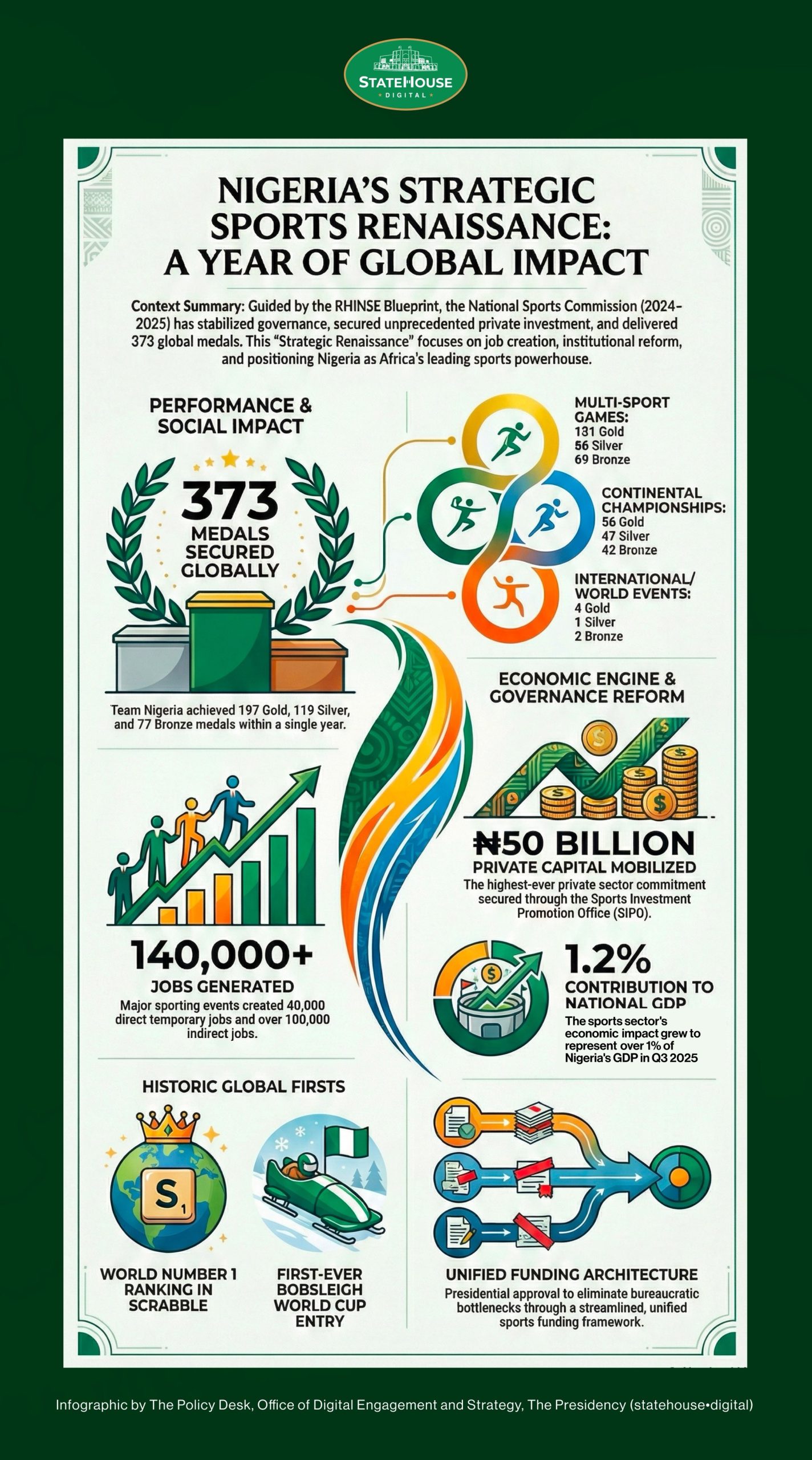
Nigeria generated an estimated ₦50 billion from sporting activities in 2025, marking a watershed moment in the country’s sports and economic history.
The revenue, driven by competitions, sponsorships, broadcast rights, private investments and allied commercial activities, signals the emergence of sports as a structured revenue-yielding sector rather than a cost centre for government.
Data from the National Sports Commission show that the earnings were made possible through reforms guided by the RHINSE Blueprint, which stabilised governance and opened the sector to private participation.
The creation of the Sports Investment Promotion Office (SIPO) played a central role in attracting capital, commercial partnerships and event-based revenues that collectively pushed sports earnings to historic levels.
The financial gains translated directly into economic activity across the country. In 2025 alone, over 140,000 jobs were generated through sporting events, leagues and international competitions hosted or participated in by Nigeria.
These included about 40,000 direct temporary jobs and more than 100,000 indirect jobs in hospitality, transportation, media production, merchandising and facility management.
The impact of the ₦50 billion sports revenue was also reflected in national economic indicators. Sports contributed 1.2 per cent to Nigeria’s Gross Domestic Product by the third quarter of 2025, highlighting the sector’s growing relevance to economic diversification efforts.
Analysts note that this level of contribution places sports alongside other emerging non-oil growth sectors.
Beyond revenue, the improved funding environment strengthened Nigeria’s competitive performance globally.
Team Nigeria won 373 medals across international competitions in 2025, including 197 gold, 119 silver and 77 bronze medals.
Officials attribute the success to better-funded athlete preparation, expanded participation in global events and improved administrative efficiency.
The year also produced historic sporting firsts that expanded Nigeria’s global brand.
The country attained world number one ranking in Scrabble and made its first-ever appearance at the Bobsleigh World Cup, achievements that opened new commercial opportunities and attracted international attention to Nigeria’s evolving sports ecosystem.
With ₦50 billion generated in a single year, stakeholders say Nigeria’s sports sector has entered a new phase defined by revenue, reform and results.
As funding structures are further strengthened and commercial opportunities expanded, experts believe sports could become one of Nigeria’s most reliable engines for growth, jobs and global influence in the years ahead.