

Federal Government to Deduct #3.6 Trillion from Federation Account as Electricity Subsidy, States React
The Federal Government has proposed a N3.6tn deduction from the Federation Account to fund electricity subsidies between 2026 and 2028, a move aimed at spreading the financial burden across the federal, state, and local governments.
The proposal, contained in the Medium-Term Expenditure Framework and Fiscal Strategy Paper (MTEF–FSP) for 2026–2028, represents a major shift in how electricity subsidies are financed. It is designed to address the mounting subsidy-related debt that has strained liquidity across Nigeria’s power sector, while improving fiscal transparency by making subsidy obligations explicit.
An analysis of the document shows that electricity subsidies have been listed under “Other FAAC Deductions” in the Federation Account Revenue – Main Pool, VAT, and Stamp Duty. According to Table 6.2 of the MTEF, the subsidy is pegged at N1.2tn annually for 2026, 2027, and 2028.
The document states: *“Transfer to NBET (Electricity Subsidy) is estimated at N1.2tn in the 2026 budget proposal and projected to remain at N1.2tn each in 2027 and 2028.”*
This approach aligns with earlier statements by the Director-General of the Budget Office of the Federation, Tanimu Yakubu, who said President Bola Tinubu had directed that electricity subsidies be made explicit, tracked, and fairly shared across all tiers of government.
Speaking at a sensitisation workshop on the 2026 post-budget preparation process, Yakubu said electricity subsidies could no longer remain an open-ended obligation borne solely by the Federal Government.
“When tariffs are held below cost, a gap is created. That gap is a subsidy, and a subsidy is a bill,” he said. “From 2026, we will stop pretending that this bill can be left to the Federal Government alone, especially where the policy choice or political benefit is shared.”
Yakubu added that the President had instructed that existing electricity sector laws be applied to ensure subsidy sharing is transparent and enforceable, warning that unfunded subsidies often return as arrears, liquidity crises, or hidden liabilities.
Currently, electricity subsidies are funded through federal budgetary allocations, largely channelled to the Nigerian Bulk Electricity Trading Plc (NBET). NBET purchases power from generation companies and sells it to distribution companies at regulated tariffs that are often below cost, with government subsidies covering the shortfall.
However, this model has placed increasing pressure on federal finances. By the end of 2025, total outstanding sector debt is projected to reach about N6.5tn, up from roughly N4tn earlier in the year, due largely to unfunded subsidy obligations and low payments to power producers.
Under the new framework, N1.2tn will be deducted directly from the Federation Account before revenues are shared among the three tiers of government. Energy policy expert Habu Sadeik explained that this makes the subsidy a first-line deduction from gross FAAC revenue.
“What the government has done is provide for a deduction at source from gross FAAC revenue to NBET amounting to N1.2tn,” Sadeik said, noting that the approach is similar to the funding model used for the Presidential Metering Initiative.
He explained that any deduction from the FAAC pool effectively reduces what states and local governments eventually receive. “If total FAAC revenue in a month is N1tn and N200bn is deducted upfront, then every tier of government has indirectly contributed,” he said.
According to Sadeik, the planned deduction replaces the previous system where electricity subsidies were handled solely through federal budgets, which were often inadequate. He noted that only about N450bn was budgeted for electricity subsidies in 2024 and N900bn in 2025—figures far below actual obligations.
The Executive Director of PowerUp Nigeria, Adetayo Adegbemle, described the proposal as consistent with the principles of federalism. He said shared responsibility would improve accountability and reduce inefficiencies in the sector.
“Under this arrangement, the Federal Government, states, and local governments will all contribute to the cost of electricity subsidies,” he said, adding that states with established electricity markets under the amended Electricity Act may be exempt.
Although Adegbemle reiterated his preference for the eventual removal of electricity subsidies, he said the new framework would significantly ease the burden on the Federal Government while improving transparency.
The Minister of Power, Adebayo Adelabu, through his media aide, Bolaji Tunji, said the ministry supports the initiative, describing it as a step in the right direction for the sector.
While implementation details remain unclear, the implications for subnational governments are significant. With projected FAAC revenue of N41.06tn in 2026, upfront subsidy deductions will reduce funds available for states and local governments, potentially forcing governors to reassess spending on infrastructure, education, and healthcare.
Reacting to the development, the Forum of State Commissioners of Power and Energy in Nigeria said it would study the proposal before taking a formal position. Its chairman, Prince Eka Williams, said the forum would rely on expert analysis to fully understand the policy’s implications.
“We have to look at the pros and cons carefully,” he said. “Once experts have reviewed it properly, we will make our position known.”
Federal Government to Deduct #3.6 Trillion from Federation Account as Electricity Subsidy, States React

Byadmin
Feb 4, 2026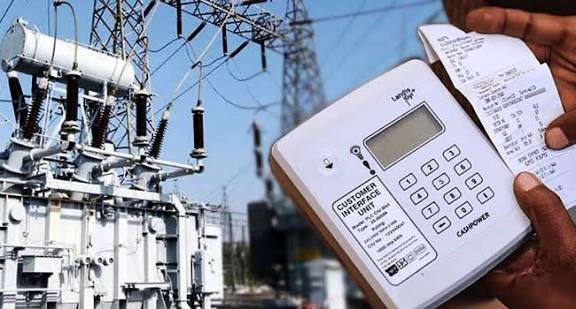
There is no need for subsidy for any one in Nigeria. The money can be shared to every household to let everyone pay for full cost of electricity consumption.
Subsidy money in Nigeria another level of corruption like the one for petroleum.