


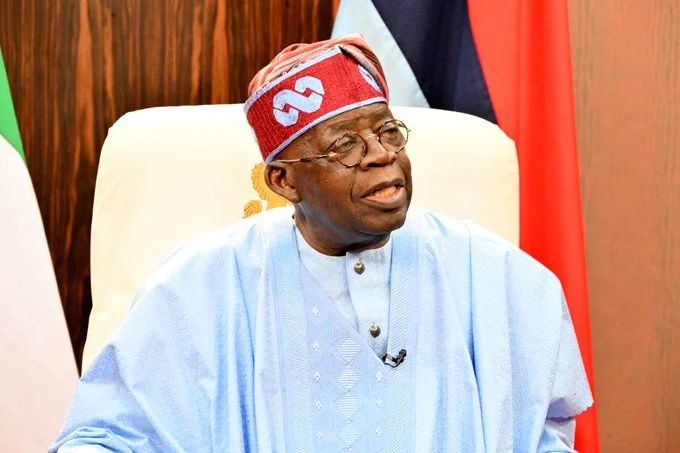
Tinubu orders ‘comprehensive reform’ of Nigerian football after NFF shake-up
President Bola Tinubu has ordered a “comprehensive reform” of Nigerian football following the recent leadership shake-up at the Nigeria Football Federation (NFF).
The directive, announced on Thursday by Bayo Onanuga, Special Adviser to the President on Information and Strategy, is aimed at addressing Nigeria’s repeated failures to qualify for major regional, continental and global football competitions.
According to Onanuga, Tinubu attributed the continued struggles of Nigerian football to “structural weaknesses within the system”, noting that other sports had recorded meaningful progress since the reset of the sports sector under the re-established National Sports Commission (NSC).
“The reform must respond to a longstanding need to strengthen governance, administration, stakeholder representation, development pathways, domestic competitions and accountability across Nigerian football,” Tinubu said.
The President further stressed that football remains Nigeria’s most popular sport and one of the biggest beneficiaries of public support, investment and national attention, but has continued to underperform because of structural deficiencies within the system.
“Football, Nigeria’s most popular sport and the greatest beneficiary of public support, investment and national attention, has continued to struggle basically due to structural deficits within the system,” he said.
Tinubu directed Shehu Dikko, Chairman of the NSC, to work with the NFF secretariat to facilitate a broad and consultative reform process aimed at repositioning the administration and development of football in the country.
The President also directed that the process should include appropriate consultations with the Federation Internationale de Football Association (FIFA) and the Confederation of African Football (CAF) to ensure that the proposed reforms do not expose Nigeria to sanctions over alleged government interference in football administration.
The directive came only a few hours after Ibrahim Gusau confirmed his resignation as NFF president, while the federation’s General Secretary, Muhammad Sanusi, also stepped down from his position.
The leadership changes followed a difficult period for Nigerian football, with the country’s senior men’s and women’s national teams suffering major setbacks under the outgoing administration.
The Super Falcons failed to qualify for the FIFA Women’s World Cup for the first time since the competition began in 1991, while the Super Eagles also missed out on the 2026 FIFA World Cup despite Africa securing 10 qualification slots for the tournament.
The setbacks were not limited to the senior national teams, as Nigeria’s men’s U-17 and U-20 teams also failed to qualify for their respective FIFA World Cup competitions.
The development has heightened calls for fundamental changes in the administration, funding, grassroots development, domestic competitions and overall management of football in the country.
TheCable reports that the NFF leadership was under pressure to resign following interventions by senior officials of the federal government, including those within the NSC and the presidency.
Gusau was elected NFF president in 2022, with his tenure originally expected to run until next month. An elective congress had been scheduled for September 27.
However, the future of the planned congress remains uncertain amid reports that a normalisation committee may be constituted to oversee the affairs of the federation pending the completion of the reform process.