


93% of Nigerian Inmates Are State Offenders, Many Shouldn’t Be in Jail — Tunji-Ojo
The Minister of Interior, Dr. Olubunmi Tunji-Ojo, has revealed that 93 per cent of inmates in Nigeria’s custodial centres are state offenders, with many imprisoned for minor offences that do not warrant incarceration.
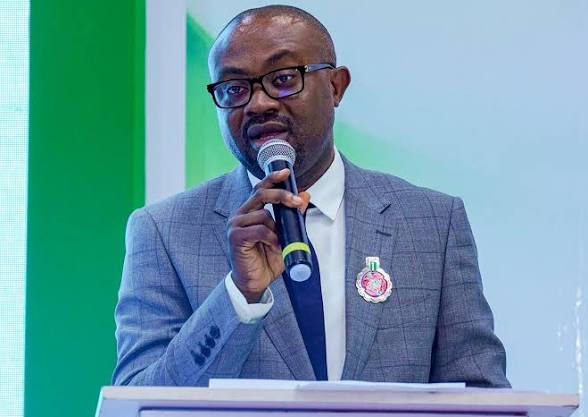
Speaking on Wednesday at the Regional Conference on the Classification of Prisoners and the Use of Technology in Prisons in Africa in Abuja, jointly organised by the United Nations Office on Drugs and Crime (UNODC) and the African Correctional Services Association (ACSA), the minister said only seven per cent of inmates are serving time for federal offences.
According to Tunji-Ojo, the Federal Government has taken deliberate steps to decongest correctional facilities by identifying inmates jailed over minor fines and compensation judgments.
He recalled that shortly after assuming office, he directed the Nigerian Correctional Service to provide records of inmates imprisoned over fines or compensation below ₦500,000.
The minister said the review uncovered more than 4,000 inmates who fell into the category, describing their continued detention as economically unreasonable. He noted that the government spent far more feeding such inmates than the value of the fines they owed.
“We were able to clear that, and in one day, we decongested our correctional centres by five per cent,” he said, adding that correctional authorities across Africa must review whether overcrowding is driven by offenders who should not be incarcerated in the first place.
Tunji-Ojo also disclosed that recidivism in Nigeria’s correctional facilities dropped significantly, from about 13,000 cases in 2023 to 1,000 last year, attributing the improvement to expanded access to education and vocational training for inmates.
He said 62 inmates are currently pursuing postgraduate studies, 261 are enrolled in undergraduate programmes, 1,125 are in formal education, while 9,582 inmates are participating in vocational and non-formal rehabilitation programmes. The country also has 18 National Open University study centres operating within correctional facilities.
The minister further stated that Nigeria has recorded no jailbreak or attack on any correctional facility in the last three years, crediting improved data management and collaboration among security agencies. He cited the case of an escaped inmate who was rearrested after attempting to obtain a Nigerian passport, with biometric data shared between the Nigeria Immigration Service and the Nigerian Correctional Service exposing his identity.
Also speaking, the Controller General of the Nigerian Correctional Service, Sylvester Ndidi Nwakuche, said the implementation of the Nigerian Correctional Service Act, 2019, has strengthened inmate classification, improved rehabilitation programmes, enhanced record management and promoted greater collaboration among correctional institutions across Africa.
He stressed that technology and information sharing remain critical to improving security and accountability within correctional systems.