


More Heavy Rains, Floodwaters Coming for 12 Weeks; Lagos, Others Should Brace Up After Ignoring Flood Forecasts– NiHSA Warns
…Agency says flood forecasts ignored as Lagos, other states brace for worse flooding in August, September
The Nigeria Hydrological Services Agency (NiHSA) has warned that the recent flooding witnessed in Lagos and other parts of the country marks only the beginning of what could be a prolonged and more severe flood season.
Director-General and Chief Executive Officer of NiHSA, Umar Mohammed, said the agency had accurately predicted the flooding weeks before it occurred, but lamented that its forecasts and early warnings were largely ignored by relevant authorities.
Speaking through the agency’s Head of Geographic Information System (GIS) and Remote Sensing, Emmanuel David Tuna, Mohammed said the current flooding could persist intermittently for about 12 weeks, with the worst impacts expected between August and September.
“This is something we foresaw. We saw it coming,” he said.
“As we speak, if nothing is done, this is just the beginning of the rainy season. Between July and September, flooding could become much worse than what we are witnessing now.
“We expect the situation to peak around August and September.”
The NiHSA boss also raised concerns about the possible contamination of drinking water in flood-affected communities, warning that prolonged flooding could pollute boreholes and other water sources, thereby increasing public health risks.
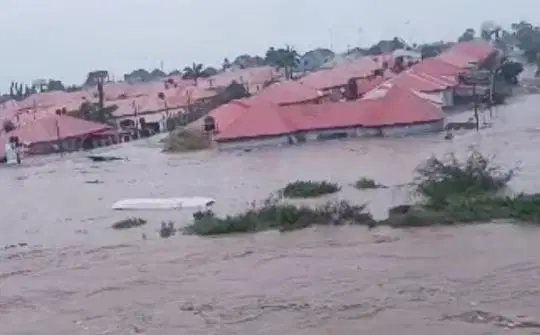
The warning comes after torrential rainfall that lashed Lagos for more than 12 hours last week, submerging roads and residential areas, disrupting commercial activities and bringing vehicular movement to a standstill across several parts of the state.
Many parents reportedly kept their children at home over safety concerns, while residents struggled to evacuate floodwaters from their homes.
Among the worst-hit areas were the Lagos-Oshodi Expressway, Abeokuta Expressway near Oshodi Bus Stop, Lekki-Epe Expressway, Victoria Island, Agege, Ikeja, Oworonshoki, Gbagada, Funsho Williams Avenue, Iwaya in Yaba, Lagos Mainland and several coastal communities.
Videos circulating on social media also showed motorists and residents stranded in floodwaters while appealing to the Lagos State Government for urgent intervention.
Mohammed attributed Lagos’ recurring flooding to its unique geographical features, explaining that the state is vulnerable to three different forms of flooding—urban, riverine and coastal (tidal).
“Lagos is a coastal state with several factors that influence flooding. It is a highly urbanised city, has major rivers passing through it and is located beside the Atlantic Ocean.
“This means urban flooding, river flooding and coastal flooding can all occur simultaneously, making the situation more devastating,” he explained.
According to him, some parts of Lagos are at or below sea level, making it difficult for floodwaters to drain naturally.
“Our field assessments showed that some areas are at sea level while others are even below it. Many drainage channels were already filled with stagnant water before the rainy season started.
“We also discovered that several drains were blocked with sand, plastics and other debris, preventing water from flowing freely. Instead of acting as drainage channels, many now function like stagnant ponds.”
He added that the overflowing Ogun River is further worsening the situation by emptying into parts of Lagos already overwhelmed by urban flooding.
“The Ogun River does not flow directly into the ocean. It branches into several tributaries within Lagos, and these tributaries are feeding into already flooded urban areas, increasing the intensity of flooding.
“If high tides from the Atlantic Ocean were to combine with the current situation, the flooding would be far more devastating because the water would have nowhere to drain.”
Mohammed warned that with the ground already saturated, subsequent rainfall could leave many communities underwater for several days or even weeks.
“The ground is already saturated, and floodwaters have nowhere to go. If more rain falls before the existing water drains away, flooding could persist for days or even one to two weeks in some locations.”
The NiHSA boss lamented that the agency’s annual flood outlook and early warning advisories are often ignored despite being based on scientific forecasts.
“We warned about the conditions in Lagos well before the floods occurred. Unfortunately, our predictions and warnings were disregarded.
“We have a serious challenge with cooperation from state governments. Most times, because flooding has not yet started, they do not see any impending danger and our warnings are not taken seriously.”
Mohammed also disclosed that NiHSA had begun assessing the quality of drinking water before the floods in anticipation of contamination.
“We carried out pre-flood water quality assessments because we knew prolonged flooding could affect boreholes and other drinking water sources.
“Our team is already preparing to conduct post-flood assessments to determine the extent of contamination and identify the sources of pollution.”
Despite the grim outlook, he said floodwaters are expected to begin receding gradually from October, although intermittent flooding may continue until then.
“We expect flooding to continue on and off between July and September. By October, the rains should begin to subside, although some flooding may still occur.
“The situation is expected to improve significantly by November, which is when we believe communities can begin to feel relatively safe again.”
He added that NiHSA will continue issuing weekly flood forecasts and hydrological advisories to guide governments and residents throughout the remainder of the rainy season.