


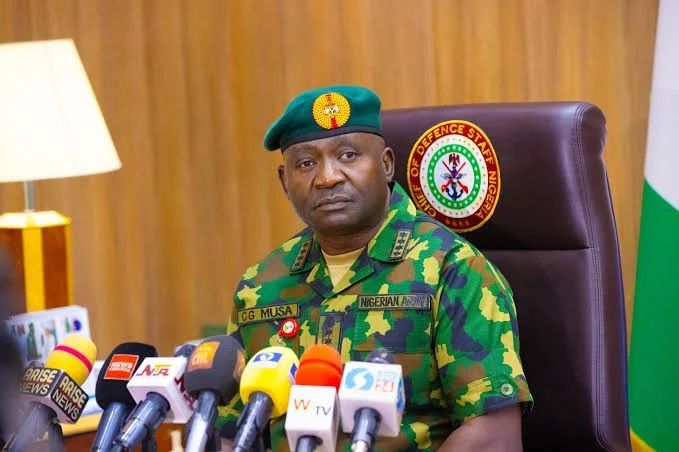
Defence Minister Blames Israel-Iran, Russia-Ukraine Wars for Arms Shortage
The Minister of Defence, Christopher Musa, has attributed the growing difficulty in procuring military equipment to the ongoing conflicts involving Israel, Iran, the United States, Russia, and Ukraine, warning that the situation is affecting Nigeria’s efforts to strengthen its security capabilities.
Musa made the disclosure on Saturday while delivering a keynote address at the Nigerian People’s Strategic Conference and Defence Exhibition 2026 in Abuja.
According to the minister, the global conflicts have disrupted the international arms market, making it increasingly difficult for countries like Nigeria to acquire the equipment needed to combat insecurity.
“With the war in Ukraine, Russia, Iran, the U.S. and Israel, it has been extremely difficult getting equipment. Most times, they make advance payments because they have the resources and produce most of these items. By the time others approach the market, the equipment has already been booked, making procurement difficult,” he said.
Musa stressed that Nigeria’s long-term solution lies in developing its indigenous defence manufacturing capacity.
“The only solution is for us to produce what we need,” he added.
The Defence Minister commended local defence manufacturers and innovators for their contributions to national security and called for increased government support and patronage of locally produced military hardware.
National Database Critical to Security
Musa also lamented the absence of a comprehensive national database, describing it as a major obstacle to effective law enforcement and crime prevention.
He urged the National Assembly to support the establishment of a nationwide database covering all Nigerians, saying it would significantly enhance the operations of security agencies, particularly the police.
“I want to appeal to the National Assembly on the issue of a database. We must develop a database for every Nigerian. The capacity exists to do that.
“It is only with such a system that the job of security agencies will become easier. The police are struggling because they do not have a database to track and trace criminals,” he said.
Despite the challenge, Musa praised the Nigeria Police Force for its efforts in crime detection and prevention.
“I commend them because they are performing magic. Some of the crimes they solve are extremely difficult to unravel without a database,” he added.
Security Agencies Need Citizens’ Support
The minister emphasised that security agencies cannot effectively tackle criminality without timely information from members of the public.
“Security agencies are not magicians. If they do not receive support and information at the right time, it becomes extremely difficult to curtail criminal activities,” he stated.
He cited the vandalism of public infrastructure, including roads, rail facilities, and solar-powered streetlights, as examples of crimes that often go unchecked because residents fail to report suspicious activities.
Governors Must Tackle Poverty, Illiteracy
Musa also called on state governors to ensure that increased federal allocations translate into meaningful development at the grassroots level.
According to him, poverty, unemployment, and illiteracy remain major drivers of insecurity across the country.
“The tendency is to place everything at the doorstep of the Federal Government. But significant resources are being released monthly to state governments. It is important that these funds reach the people and are used to address poverty and illiteracy, which fuel insecurity,” he said.
The minister further advocated proper regulation of the Civilian Joint Task Force and other community-based security outfits, warning that arming unvetted groups could create additional security challenges.
Kalu Advocates State Police
Also speaking at the event, Deputy Speaker of the House of Representatives, Benjamin Kalu, reaffirmed the National Assembly’s commitment to supporting security agencies through legislation, oversight, and funding.
However, Kalu maintained that military operations alone cannot solve Nigeria’s security challenges and called for broader reforms within the country’s security architecture.
He highlighted the recent passage of the State Police Bill by the House of Representatives as a major milestone in efforts to improve grassroots security.
“On June 11, 2026, a significant milestone was achieved in the House of Representatives. The State Police Bill, which I proudly sponsored, successfully passed through the House after decades of debate and repeated attempts by previous assemblies,” Kalu said.
He argued that Nigeria’s highly centralised policing structure is no longer adequate for a nation of more than 220 million people.
The deputy speaker also urged greater private-sector involvement in addressing security challenges, noting that businesses, technology firms, and financial institutions have important roles to play in combating emerging threats and strengthening national security.