


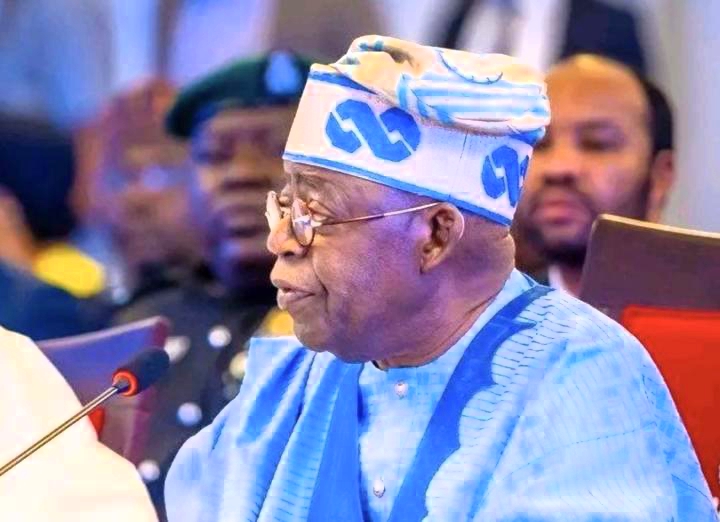
Tinubu: Nigeria to Spend $11.6bn on Debt Servicing in 2026
President Bola Ahmed Tinubu has disclosed that Nigeria will spend an estimated $11.6 billion on debt servicing in 2026, warning that the current global financial system continues to place African economies at a disadvantage.
Speaking at the Africa Forward Summit in Nairobi, Kenya, Tinubu said nearly half of Nigeria’s projected revenue for 2026 would be used to service debt obligations, limiting investments in key sectors of the economy.
According to the president, the high cost of debt repayment is depriving Nigeria of critical investments in industries capable of driving growth and job creation.
“Every single dollar that leaves our treasury to pay punitive interest rates is a dollar that did not go into our steel sector, textile mills, agro processing, or digital industries,” Tinubu said.
“It is a dollar that did not train a young Nigerian engineer or provide affordable power for our factories.”
Tinubu argued that despite reforms and fiscal adjustments undertaken by many African countries, international creditors and rating agencies still classify African economies as high risk borrowers.
“Our industrial base is being starved of the lifeblood it needs, long term, affordable finance, while creditors and rating agencies continue to treat African sovereigns as permanent high risk borrowers, regardless of fiscal performance,” he said.
The president maintained that the global financial architecture is undermining Africa’s industrialisation efforts by making access to affordable capital increasingly difficult.
“How can an African manufacturer compete with rivals in Europe, Asia, or North America when borrowing costs in our countries are five to ten times higher?” he asked.
“How can we build cross border industrial value chains under the African Continental Free Trade Area when infrastructure financing gaps continue to widen because of the same institutions meant to close them?
“The answer is simple: we cannot. The current international financial system has effectively become an instrument of industrial disarmament for Africa.”
Tinubu also highlighted several economic reforms introduced by his administration, including the removal of petrol subsidies, exchange rate unification, banking sector recapitalisation, and Nigeria’s exit from the Financial Action Task Force (FATF) grey list.
According to him, the reforms were “sovereign decisions, not externally imposed conditions,” and have helped improve investor confidence, strengthen external reserves, and reduce the country’s debt to GDP ratio.
He said Nigeria’s debt to GDP ratio is projected to decline to 32.3 percent in 2026, while external reserves are expected to rise to $45.5 billion.
Tinubu added that Nigeria is not seeking charity from the international community but a fair financial system that supports Africa’s industrial growth and economic competitiveness.
“We are asking for a system that enables Africa to industrialise, process its own minerals, refine its crude oil, manufacture pharmaceuticals, and compete fairly in the global marketplace,” the president said.