


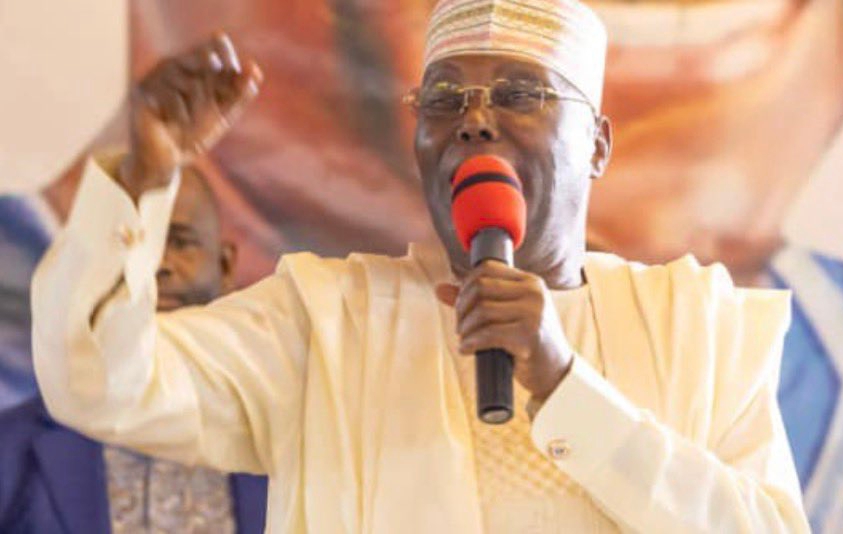
Atiku Faults Tinubu’s Fuel Price Comparison, Says It ‘Distorts Reality’
Former Vice-President Atiku Abubakar has criticised remarks by President Bola Tinubu comparing Nigeria’s fuel prices with those of other countries, describing the analysis as misleading and detached from citizens’ realities.
In a statement issued on Saturday by his senior special assistant on public communication, Phrank Shaibu, Atiku said the president’s position “is not only misleading—it is a grave distortion of the lived reality of Nigerians.”
Tinubu had earlier stated that Nigeria remains economically better off than many African countries despite rising global fuel prices.
‘A Narrow and Misleading Comparison’
Reacting to the claim, Atiku argued that the president’s comparison focused too narrowly on fuel prices while ignoring more critical economic indicators such as purchasing power, income levels, and the overall cost of living.
“It is both curious and troubling that the President would isolate fuel prices as a metric of economic comfort while ignoring far more important indicators,” he said.
“This selective reasoning suggests either a misunderstanding of economic realities or a deliberate attempt to deflect attention from policy shortcomings.”
Atiku further dismissed comparisons with countries like Kenya and South Africa as fundamentally flawed.
“Yes, petrol prices in Nigeria may appear lower than in countries like Kenya or South Africa,” he noted. “But this comparison collapses when viewed within the broader economic context.”
According to him, Nigeria has become more expensive to live in than Kenya despite lower fuel costs.
Income Gap and Cost of Living
The former vice-president highlighted the disparity in earnings between both countries, arguing that income levels significantly influence affordability.
“Kenya’s GDP per capita is nearly double that of Nigeria,” he said. “A minimum wage earner in Nairobi takes home the equivalent of about ₦170,000—more than twice Nigeria’s ₦70,000.”
He added that while Kenyans may pay more for fuel, their higher earnings cushion the impact, unlike in Nigeria where citizens face mounting financial pressure.
“In effect, a Kenyan earns more and pays more, while a Nigerian earns far less and struggles under intense economic strain,” he said.
Structural Challenges in Nigeria
Atiku also criticised Nigeria’s wage structure, describing it as rigid and unresponsive to regional economic differences.
“While Kenya operates a tiered wage system that reflects variations in cost of living, Nigeria maintains a uniform national minimum wage,” he said. “This fails to account for significant disparities across cities and regions, thereby worsening the burden on millions, especially in urban areas.”
He stressed that affordability is determined not just by price, but by the relationship between income and expenditure.
“On that measure, Nigerians have never had it worse,” he added.
Call for Empathy and Accountability
The former vice-president expressed disappointment with what he described as the administration’s handling of the economic situation, urging greater honesty and empathy in governance.
“At a time when citizens expect clarity, compassion, and decisive leadership, the government has chosen the path of statistical convenience,” he said.
“A government that relies on selective comparisons while citizens grapple with rising poverty, inflation, and declining living standards risks appearing out of touch and indifferent.”
He concluded by stressing that Nigerians are not interested in comparisons but in tangible relief.
“Nigerians are not asking for comparisons, they are demanding solutions. Nigerians deserve honesty. Nigerians deserve better.”