


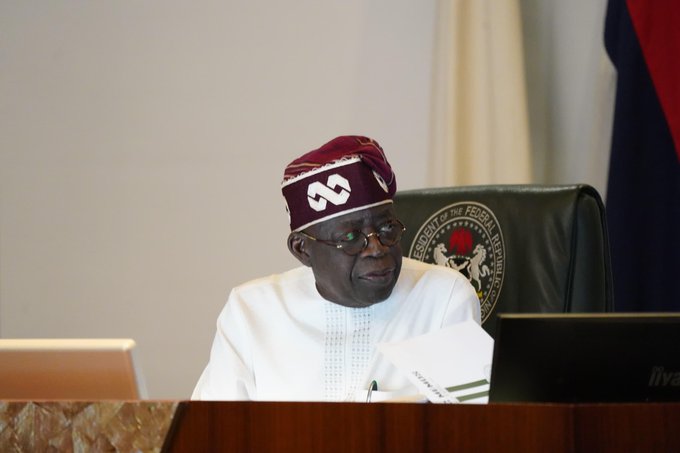
President Bola Tinubu has proposed a reduction of N3.147 trillion in the 2026 Federal Government budget, bringing the total expenditure down from N68.323 trillion to N65.176 trillion.
The proposal is contained in a letter transmitting the 2026 Appropriation Repeal and Re-enactment Bill and the revised Federal Government Fiscal Framework to the National Assembly for consideration.
The Senate on Tuesday passed the proposed amendment Bill for second reading, advancing legislative consideration of the President’s request to review the budget in line with existing government obligations and available resources.
Under the revised fiscal framework, the Federal Government’s projected revenue, including receipts from Government-Owned Enterprises (GOEs), stands at N33.720 trillion, while aggregate capital expenditure is estimated at N26.232 trillion.
Despite the proposed reduction in total expenditure, the fiscal deficit remains unchanged at N31.457 trillion, representing 5.64 per cent of the country’s Gross Domestic Product (GDP).
In his communication to the National Assembly, Tinubu explained that the proposed adjustments were designed to align the 2026 budget with existing government commitments, improve the credibility of capital expenditure and strengthen budget implementation.
The President said the review would also accommodate certain expenditures incurred by the Nigerian National Petroleum Company Limited (NNPCL) on behalf of the Federation, address under-provided debt-service obligations, recognise issued capital warrants and supplementary commitments, and provide for refunds to Ministries, Departments and Agencies (MDAs) and special accounts.
According to him, the revised capital provisions for MDAs consist largely of allocations already covered by issued warrants, while additional capital and overhead provisions have been introduced to accommodate priority national interventions.
He identified the completion of critical road projects, protection of agricultural production, reduction of production costs, improvement of farm yields and access to markets, as well as interventions to address water-related vulnerabilities, as key priority areas.
In his letter to the House of Representatives, read by Speaker Abbas Tajudeen, Tinubu urged lawmakers to give the proposal expeditious consideration to facilitate the orderly implementation of the revised budget and settlement of outstanding obligations.
He said, “The proposal aligns the 2026 Budget with existing obligations and available resources. It regularises some NNPCL expenditures incurred on behalf of the Federation, addresses underprovided debt-service obligations, recognises issued capital warrants and supplementation commitments, and provides for refunds to Ministries, Departments and Agencies (MDAs) and Special Accounts.”
The President further maintained that the adjustments would ensure that government resources were channelled towards existing commitments and critical projects while promoting fiscal discipline and improving the execution of the capital budget.
The Senate considered the proposal following the presentation of the presidential communication by Senate President Godswill Akpabio, who acknowledged the importance of the proposed adjustments to the implementation of the 2026 fiscal plan.
Before approving the Bill for second reading, the Senate directed the Chairman of its Committee on Appropriations, Senator Solomon Adeola, who is also the All Progressives Congress (APC) governorship candidate in Ogun State, to suspend campaign activities for one week to enable the committee to scrutinise the proposal and submit its recommendations.
The Senate also adjourned plenary sittings until December 1 to allow the committee sufficient time to examine the President’s request.
The proposed repeal and re-enactment of the Appropriation Act is expected to establish a revised legislative framework for government expenditure, with further consideration of the Bill to continue at the National Assembly.