


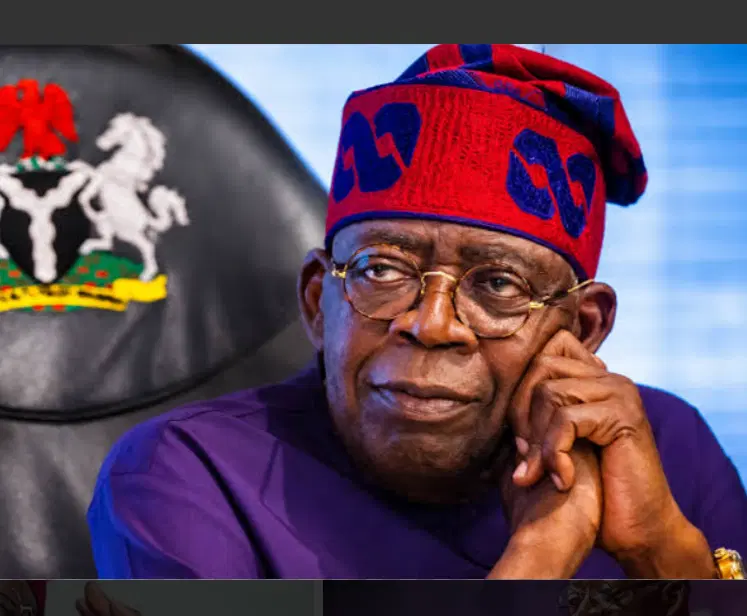
President Bola Tinubu has challenged Nigerians to assess his administration based on its records and performance rather than political promises, declaring that his government has ended a 22-year delay in implementing the Minimum Pension Guarantee Scheme.
Tinubu spoke on Tuesday at the official launch of the scheme at the Old Banquet Hall, Presidential Villa, Abuja. He was represented at the event by the President of the Senate, Senator Godswill Akpabio.
The President said his administration had moved beyond promises by establishing a statutory safety net to ensure that contributors under the Contributory Pension Scheme (CPS) enjoy a guaranteed minimum income in retirement.
At the ceremony, Tinubu also unveiled PensionCare, a pension industry-funded healthcare initiative designed to provide low-income retirees with access to essential medical services at no cost.
Describing the two initiatives as major milestones in Nigeria’s social protection system, the President said workers who had devoted decades to national service deserved financial security and access to healthcare after retirement.
“Please judge me by my record in this election,” he said, challenging his political opponents to explain what they had done while in positions of authority to guarantee minimum pensions, provide healthcare protection and improve the welfare of retirees.
Tinubu said the Minimum Pension Guarantee Scheme would take effect immediately and be administered by the National Pension Commission (PenCom) in accordance with the Pension Reform Act.
He recalled that the minimum pension guarantee was provided for under Section 71 of the Pension Reform Act 2004 and reinforced by Sections 82 and 84 of the 2014 Act, but had remained unimplemented by successive administrations for more than two decades.
According to him, the failure to implement the provision had left retirees without the minimum income protection envisaged by the law.
“From this day, there is a floor beneath the Nigerian retiree. No one who contributed under the Contributory Pension Scheme will ever be allowed to fall below, not because this government is generous, but because it is your right,” he said.
The President urged future administrations to sustain the policy, describing the minimum pension guarantee as a binding social contract between the Nigerian state and its workers.
On PensionCare, Tinubu said the initiative was designed to address the burden of medical expenses among retirees, particularly low-income pensioners who often struggle to afford treatment in old age.
He explained that the programme would provide eligible beneficiaries with essential healthcare services without charge, adding that the first cards would be distributed in the coming months.
The President said medical expenses had remained a major challenge for retirees, noting that a single illness could consume years of savings and place additional financial pressure on family members.
Tinubu also disclosed that the Federal Government had issued a N758 billion bond to clear longstanding pension arrears as part of efforts to address outstanding obligations to retired workers.
He said the government had approved a consequential adjustment of N32,000 monthly for federal pensioners whose earnings were below the national minimum wage, bringing their pensions to that level or above.
The President further stated that legacy pensioners under the Nigeria Social Insurance Trust Fund, who previously received as little as N18,000 monthly, now collect N206,000.
He added that pension enhancements had also been introduced under the Contributory Pension Scheme, describing the development as unprecedented in the country’s history.
Recalling the difficulties faced by pensioners under previous arrangements, Tinubu condemned the practice of requiring elderly retirees to queue under harsh weather conditions to prove they were alive before receiving their entitlements.
He said some pensioners had died while waiting for their benefits, describing the situation as unacceptable treatment of people who had spent between 30 and 40 years serving the country.
The President linked the pension interventions to his administration’s broader economic reforms, particularly the removal of petrol subsidy and the unification of foreign exchange rates.
He maintained that the decisions, though difficult, were necessary to restore economic stability and redirect public resources towards productive investments and social development.
According to him, funds previously spent on petrol subsidy had been redirected to states, strengthening their capacity to invest in infrastructure, education, healthcare and the settlement of pension liabilities.
Citing a World Bank report published in October 2026, Tinubu said state revenues increased by approximately 93 per cent in real terms between 2023 and 2025, while the share of state budgets allocated to capital projects rose from 46 per cent to 61 per cent.
He commended governors across the country, irrespective of political affiliation, for using increased revenues to execute development projects and improve citizens’ welfare, including that of retired workers.
The President also highlighted other interventions introduced by his administration, including the Nigerian Education Loan Fund (NELFUND), the National Credit Guarantee Company and the Nigerian Consumer Credit Corporation (CREDICORP).
He said the initiatives were designed to expand access to education and affordable credit, particularly for young people, women, small business operators and Nigerians previously excluded from formal financial services.
Tinubu also criticised opposition calls for the restoration of petrol subsidy, arguing that reversing the policy would reduce the additional revenue available to states and undermine ongoing infrastructure and pension interventions.
He challenged political opponents who had previously held public offices to present their records on pension protection and workers’ welfare.
“They had the power. They had the workers. They had the laws. Where is their record of performance?” he asked.
The President urged employers in both the public and private sectors to remit workers’ pension contributions promptly, warning that withholding such funds amounted to depriving employees of their financial security in old age.
“Every naira you withhold is stolen from somebody’s old age. It is not your money; it never will be,” he warned.
He also encouraged young workers to enrol in pension schemes early, stressing that regular contributions during their productive years would help guarantee financial independence and dignity in retirement.
Tinubu assured Nigerian workers that his administration would continue to strengthen policies aimed at protecting their interests after years of service, adding that the new pension guarantee and healthcare initiative marked a departure from decades of unfulfilled promises.