


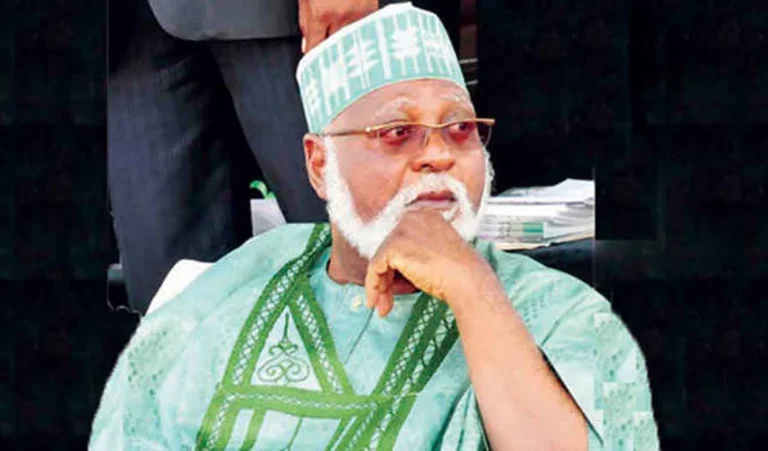
The National Peace Committee (NPC), chaired by former Head of State, General Abdulsalami Abubakar (retd.), has raised concerns over political violence, intimidation and misinformation ahead of the 2027 general elections, reporting 109 alleged breaches of the National Peace Accord across 26 states and the Federal Capital Territory within 10 weeks.
In its monitoring report covering August 19 to October 27, 2026, the committee identified political violence and thuggery as the leading violations, with 33 incidents, followed by misinformation and disinformation, which accounted for 29 cases. Attacks on political activities and campaign assets recorded 19 incidents, while intimidation and threats accounted for 15.
Kaduna recorded the highest number of incidents with nine, while Edo, Enugu and the FCT recorded seven each. Other states identified in the report included Cross River, Kogi and Borno. The committee particularly highlighted Enugu, Oyo, Edo and Cross River over recurring reports of armed disruptions and political violence.
Among the incidents documented were the reported obstruction of the convoy of former Anambra State governor and NDC presidential candidate, Peter Obi, near Makurdi, Benue State, on September 8; armed disruptions of political gatherings in Enugu; the disruption of PDP consultations in Calabar South, Cross River State; and the reported shooting of an ADC supporter in Igueben, Edo State.
In Oyo State, violence during a political procession in Ibadan between October 14 and 17 reportedly claimed one life, while an APC ward member was also reportedly killed days later.
The report further raised concerns over alleged threats by political office-holders, the use of religious affiliations to influence political choices and the circulation of fabricated political content. It documented 29 misinformation and disinformation incidents involving recycled campaign videos, fabricated newspaper headlines, forged documents and false attribution of political statements.
The committee urged political parties to condemn violence, distance themselves from armed groups and discipline members found responsible for violations.
Meanwhile, INEC Chairman, Prof. Joash Amupitan (SAN), has urged members of the 2027 Election Petition Tribunals to prioritise substantive justice and avoid excessive reliance on technicalities when determining electoral disputes. Speaking at a three-day workshop in Abuja, he said the country’s political stability after the elections would depend partly on the fairness, transparency and integrity of the judicial process.
The event also featured the unveiling of the Second Edition of the Judicial Electoral Manual, 2026, by the Chief Justice of Nigeria, Justice Kudirat Kekere-Ekun.
Amupitan identified electronic evidence, voter accreditation, result transmission and artificial intelligence-generated disinformation as emerging challenges in election petitions.
He urged tribunal members to verify the authenticity of digital materials in accordance with Section 84 of the Evidence Act.
The President of the Court of Appeal, Justice Monica Dongban-Mensem, disclosed that 375 judicial officers had been nominated to serve on the 2027 Election Petition Tribunals, comprising 138 returning members and 237 newly nominated members.
In another development, INEC has warned political leaders and media organisations against promoting the slogan, “Rig and Die”, saying it could endanger electoral officials, voters, party agents and observers.
The commission’s National Commissioner and Chairman of its Information and Voter Education Committee, Mohammed Haruna, gave the warning at a media forum in Enugu, stressing that suspected electoral malpractice should be addressed through lawful channels rather than threats or violence. He urged journalists to verify information, avoid sensational reporting and distinguish unofficial election figures from results formally declared by INEC.
Haruna also expressed concern over low voter turnout, recalling that only 26.72 per cent of registered voters participated in the 2023 presidential election.
He urged journalists to intensify voter education, investigate vote buying and counter misinformation, including deepfakes and fabricated social media content. He further assured Nigerians that INEC personnel found compromising the electoral process would face appropriate legal consequences.
However, the African Democratic Congress (ADC) has questioned what it described as INEC’s unequal response to inflammatory political statements, citing an alleged threat attributed to Edo APC Chairman, Jarrett Tenebe, involving the use of AK-47 rifles against those unwilling to support President Bola Tinubu. The party’s National Publicity Secretary, Mallam Bolaji Abdullahi, asked whether the commission had referred the allegation to security agencies for investigation, arguing that threats involving firearms deserved attention.
INEC National Commissioner Haruna, however, clarified that he did not condemn protesters who recently visited the commission, explaining that he received them and requested their complaints in writing.
The developments have heightened concerns over political violence, voter intimidation and misinformation as parties intensify activities ahead of the 2027 elections.
The Peace Committee has called for independent verification of reported incidents, transparent investigations, equal protection for lawful political gatherings and accountability for violations, while urging political actors, security agencies, INEC and the media to work towards ensuring peaceful campaigns and credible elections.