


Poison For Sale How Social Media Is Turning Nigeria’s Skincare And Wellness Craze Into A Public Health Hazard
|| By Tomi Falade
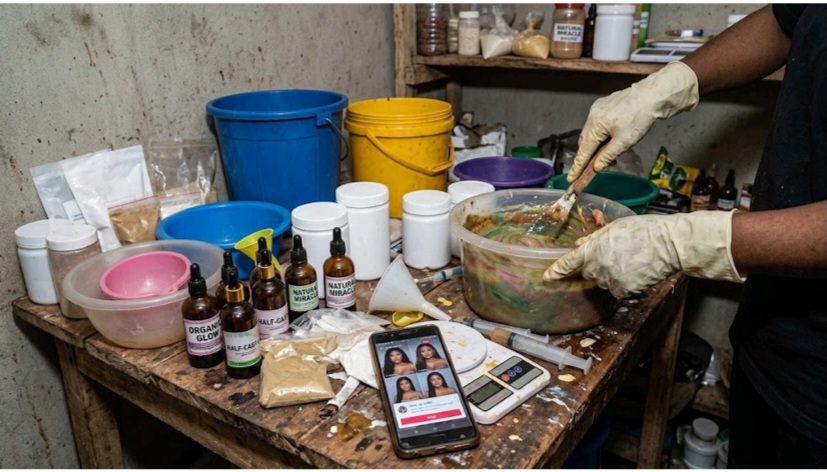
From skin-lightening creams promising dramatic results in days to herbal teas advertised as quick solutions for weight loss, fertility problems and other health concerns, unverified skincare and wellness products are flooding Nigerian social media platforms.
Vendors are using Instagram, TikTok, Facebook and X to market products whose ingredients, safety and effectiveness may be difficult for consumers to verify, raising concerns about the potential risks to public health.
The appeal of these products often lies in their promises of quick results, attractive before-and-after pictures, influencer endorsements and claims that they are “100 per cent natural.” However, such claims do not necessarily establish that a product is safe or effective.
For many Nigerians, the demand goes beyond appearance. People struggling with persistent skin conditions, weight concerns, fertility challenges and other health problems may be drawn to affordable remedies, particularly when conventional healthcare appears expensive or difficult to access.
Yet, using products without knowing their ingredients or possible side effects can expose consumers to serious health risks.
Risks Behind Skin Lightening Products
A study published in Scientific Reports examined 10 skin-lightening cosmetics purchased from retail outlets in Ilorin, Kwara State. The researchers detected mercury in all 10 samples, with three exceeding international safety limits.
The study also found that only six products were registered with the National Agency for Food and Drug Administration and Control (NAFDAC), while their packaging did not disclose the presence of mercury, arsenic or hydroquinone.
Although the small sample does not represent the entire cosmetics market, the findings highlight concerns about the possible presence of hazardous substances in some skin-lightening products.
Mercury exposure can damage the kidneys and nervous system, making the use of unverified creams a potential health hazard.
For Ajoke Mustapha, a Lagos-based legal practitioner, the pressure to lighten her skin came from an unexpected source: her family.
Mustapha said she returned to Lagos after spending time in Abuja following law school. After losing her first job and spending three months searching for another, she decided to return home, where her cousin was preparing for a wedding.
She said her family reacted with concern over what they perceived as a darker complexion, prompting her mother and cousin to search Instagram and TikTok for products that could lighten her skin within five days.
“When my mum saw me, she screamed. Not out of excitement, but because of how ‘dark’ she said my skin looked,” Mustapha recalled.
She said her mother and cousin purchased several products from online vendors, one of whom reportedly claimed to have prepared a fresh batch in her kitchen.
Mustapha said she used the products for four days before noticing uneven lightening and skin irritation.
“I was definitely getting lighter, but in patches, and my skin felt raw. I realised I was actively peeling off my epidermis … that can never be healthy. I threw it all away and went back to just moisturiser and sunscreen before Instagram vendors turn me to broiler chicken,” she said.
Her experience illustrates the potential consequences of using products without reliable information about their composition and safety.
The Myth That Herbal Products Are Always Safe
Beyond cosmetics, social media vendors are also promoting herbal mixtures, fertility tonics, detox drinks, libido boosters and weight-loss teas, sometimes claiming they can address several unrelated health conditions.
However, the fact that a product is described as natural does not automatically make it safe. Herbal ingredients contain active compounds that may cause side effects, interact with medications or pose risks to people with certain medical conditions.
Products prepared without proper quality controls may also contain contaminants or inconsistent concentrations of active ingredients.
Pharmacist Adeolu Joseph expressed concern about the willingness of some Nigerians to rely on unverified online health claims rather than seek appropriate medical advice.
“Many Nigerians are lax about what they ingest. People walk into retail pharmacies expecting over-the-counter prescriptions without a single diagnostic test. But what we see on social media is far worse,” he said.
Joseph recounted an encounter with a customer who reportedly believed that a herbal mixture obtained through a social media contact, when combined with vitamin C, could treat cancer.
He warned that such claims could discourage patients from seeking evidence-based treatment and expose them to additional risks.
Joseph also expressed concern about vendors promoting creams for conditions such as back pain and skin tags without reliable evidence that the products were suitable for those purposes.
“People need to be careful and protect themselves as much as they can from indiscriminate ingestion of substances,” he said.
Questions Over Regulatory Enforcement
NAFDAC is responsible for regulating relevant products, including cosmetics and herbal medicines, to ensure they meet applicable safety and quality requirements.
Consumers are advised to check product registration details through the agency’s official channels rather than rely solely on vendors’ claims or promotional materials.
However, the growth of social media commerce presents enforcement challenges, particularly where sellers operate informally, provide limited information about their products or distribute them across state boundaries.
The report by Independent Newspaper Nigeria said it contacted NAFDAC for comments on the issue but had not received a response before publication.
The absence of a response does not establish that the agency is inactive, but questions remain about how effectively existing regulations are being enforced against the online sale of potentially unsafe products.
The Price Of A Promised Miracle
Consumers should not have to conduct complicated investigations simply to establish whether a skincare product or herbal preparation is safe to use.
Large social media followings, positive testimonials and attractive packaging are not substitutes for credible safety assessments or evidence of effectiveness.
Products promising dramatic changes within a few days, claiming to cure multiple unrelated illnesses or offering treatment without appropriate medical assessment should be approached with caution.
Consumers should check registration information, examine ingredient labels and consult qualified healthcare professionals when considering products intended to treat medical conditions. Those who experience adverse reactions should discontinue use and seek appropriate medical attention.
As online beauty and wellness marketing continues to expand, the central question remains whether consumers can establish what these products contain, whether their claims are supported by evidence and whether they have been assessed for safety.
For anyone considering the next miracle cream, slimming tea or herbal mixture advertised online, verifying the product before use could help prevent avoidable harm.
Source: Independent