
Developing: Ransom Controversy Deepens As Parents Of 20 Prospective Corps Members Face 15 Year Jail Term Debate for Openly Confirming Payment; Will Government Imprison Helpless Parents Who Paid To Save Their Children?
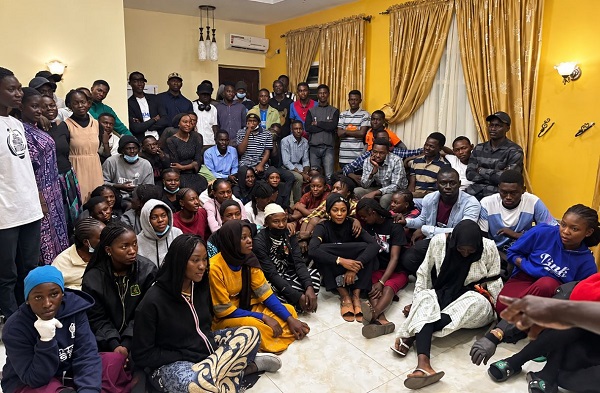
Conflicting accounts have emerged over the release of 20 prospective members of the National Youth Service Corps (NYSC) abducted in Imo State, with parents reportedly confirming in television interviews that they paid ransom, while the state’s Commissioner of Police, Audu Bosso, said he was unaware of any payment.
One of the mothers, Alirat Wahab, reportedly told News Central Television that her family raised ₦6 million after kidnappers demanded money for the release of their son.
According to her account, the abductors initially demanded ₦50 million for each of the 20 victims before negotiations reduced the amount sought from her family.
“We only had ₦5.5m at the time, but they insisted on ₦6m,” she reportedly said.
Her husband also claimed that the parents pooled resources, obtained loans and solicited financial assistance from relatives, friends and sympathisers to meet the kidnappers’ demands.
However, Bosso attributed the victims’ release to sustained search-and-rescue operations by security agencies, maintaining that he had no knowledge of any ransom payment.
The prospective corps members were abducted on October 1 along the Owerri-Onitsha Road while travelling from Ibadan, Oyo State, to their respective NYSC orientation camps in Abia and Akwa Ibom states. They were later freed from the Amakohia-Ubi forest in Imo State.
The conflicting accounts have prompted the Human Rights Writers Association of Nigeria (HURIWA) to call for an independent investigation into the circumstances surrounding the victims’ release.
HURIWA’s National Coordinator, Comrade Emmanuel Nnadozie Onwubiko, urged the Federal Government, the Imo State Government and the Nigeria Police Force to clarify whether ransom was paid and reconcile the parents’ accounts with official statements.
The association also called on President Bola Ahmed Tinubu and Imo State Governor Hope Uzodimma to explain their positions, adding that they should apologise if an investigation established that official statements had created a misleading impression about how the victims regained their freedom.
HURIWA maintained that the alleged ransom payment and the security operation were not necessarily mutually exclusive, urging authorities to establish what happened before the victims were released.
What The Law Says About Ransom Payment:
The controversy has also revived debate over a proposed amendment to Nigeria’s terrorism legislation that sought to prescribe a minimum of 15 years’ imprisonment for anyone who paid ransom to secure the release of a kidnapped person.
However, the specific provision was not included in the final Terrorism (Prevention and Prohibition) Act, 2022. Therefore, the proposed 15-year penalty should not be presented as an established punishment under that Act for merely paying ransom.
Any criminal liability would depend on the applicable law and the circumstances established by investigators and the eventual pronouncement of the Court.
HURIWA has called for a detailed account of the operation, including whether security agencies knew about any ransom negotiations or payments before the victims were released.
The association warned that failure to clarify the conflicting accounts could further undermine public confidence in security institutions amid growing concerns over kidnapping.
Developing: Ransom Controversy Deepens As Parents Of 20 Prospective Corps Members Face 15 Year Jail Term Debate for Openly Confirming Payment; Will Government Imprison Helpless Parents Who Paid To Save Their Children?

Byadmin
Oct 10, 2026