


Contractors Risk EFCC Action Over Abandoned Federal Projects — FG
The Federal Government has warned contractors who collect mobilisation funds but fail to return to project sites that they risk prosecution and recovery action by anti-graft agencies.
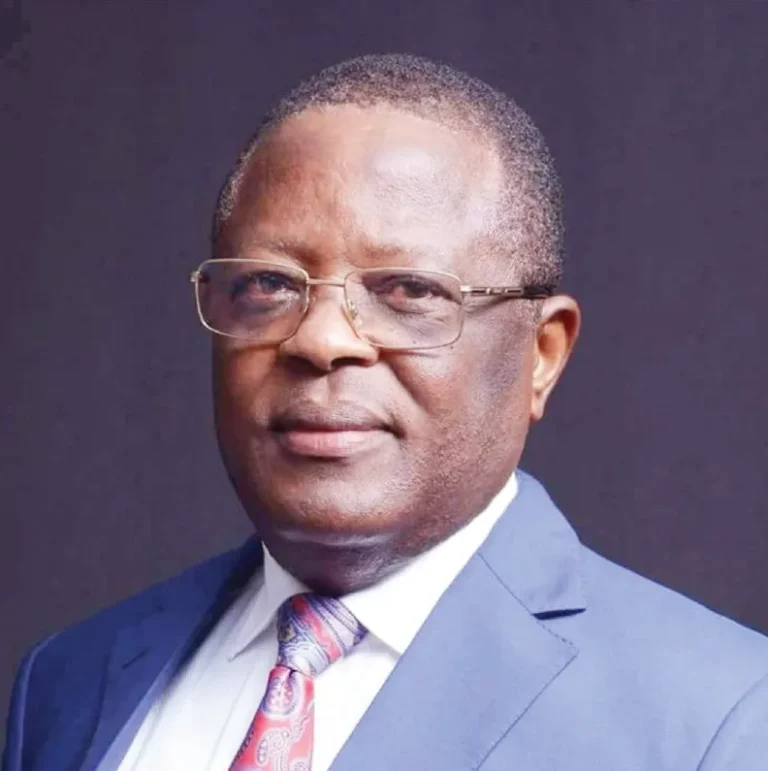
Minister of Works, David Umahi, issued the warning on Wednesday in Abuja while briefing journalists, saying the government would no longer tolerate contractors who sit on public funds or prioritise state government projects after receiving payments for federal projects.
Umahi said the Economic and Financial Crimes Commission and the Independent Corrupt Practices and Other Related Offences Commission would be deployed to recover public funds from contractors who failed to execute projects for which they had been paid.
He said several projects had been rescoped and re-phased to make them more realistic and improve their execution, stressing that contractors who had received funds must deploy the money to their respective project sites.
“With all the money that the contractors have in their hands, they must exhaust it to earn more money. So, we have rescoped the project; we have rephased it.
“From next week, any contractor that has got their money and is not on site, we are going to call for the EFCC so that we can recover the money. I have noticed that contractors handling federal projects, some of them are more serious with state projects than they are with the federal projects. But I have made you know a commitment that situation must stop,” Umahi said.
The minister also warned contractors against relying on political connections or lobbying stakeholders to evade their contractual responsibilities.
“We put up announcements to ensure that this thing ends up. So, instead of doing your projects, you are calling stakeholders to intervene. So, if you have the money of the Federal Government, no matter who is behind you, you will either meet us with the EFCC or you meet us in your bank to recover the money,” he said.
Umahi further announced a tougher monitoring regime involving the EFCC, ICPC, civil society organisations and student groups, with increased site visits and supervision of federal projects.
“So, it’s going to be aggressive: site visitation and supervision. We’ve alerted the EFCC, ICPC, and civil society organisations. Students are doing their own,” he said.
The minister listed several projects he said had either been completed or were nearing completion, including 70km of the Kano-Maiduguri Road, the 43km Keffi-Mararaba Road, the 15km Lafia bypass and the 7.9km Bonny Island Road.
Others include the Obajana Junction concrete pavement on the Lokoja-Benin corridor, Danbatta-Demesu Road, Gombe-Bauchi Road rehabilitation, the Azare axis linking Jigawa and Bauchi, Apapa five-span bridge, Eke-Obinagu 23-span flyover in Enugu, the 75-metre Tizm Bridge and the 24km Sagamu Interchange-Iperu Junction Road.
Umahi also defended the Federal Government’s infrastructure record in the South-East, saying the region was now receiving significant Federal projects compared with previous administrations.
He said the projects demonstrated what he described as the integration of the South-East into the national development agenda under President Bola Tinubu.
“Have I not run through all the projects that the President is doing in the Southeast? Have I not told you that the present administration has fully integrated the people of the Southeast?
“I was a party chairman. I was a deputy governor. I was governor. And no single project of the Federal Government came to the Southeast. And today, we are having a barrage of projects.
“We may not be the first, second, or third in terms of the volume of projects in the regions. But we are not the last. And if we are not the last, it’s something that will beat our chest. That says, apparently, right, that the President has done what other previous administrations could not do.
“And that is full integration of the people of Southeast. This is very important. And so when I talk, I talk with facts,” Umahi said.
He urged residents of the region to support what he described as a new relationship with the Federal Government, calling for cooperation across political and regional lines.
The minister stressed that the government’s increased infrastructure spending would only produce the desired results if contractors executed the projects for which public funds had been released.