


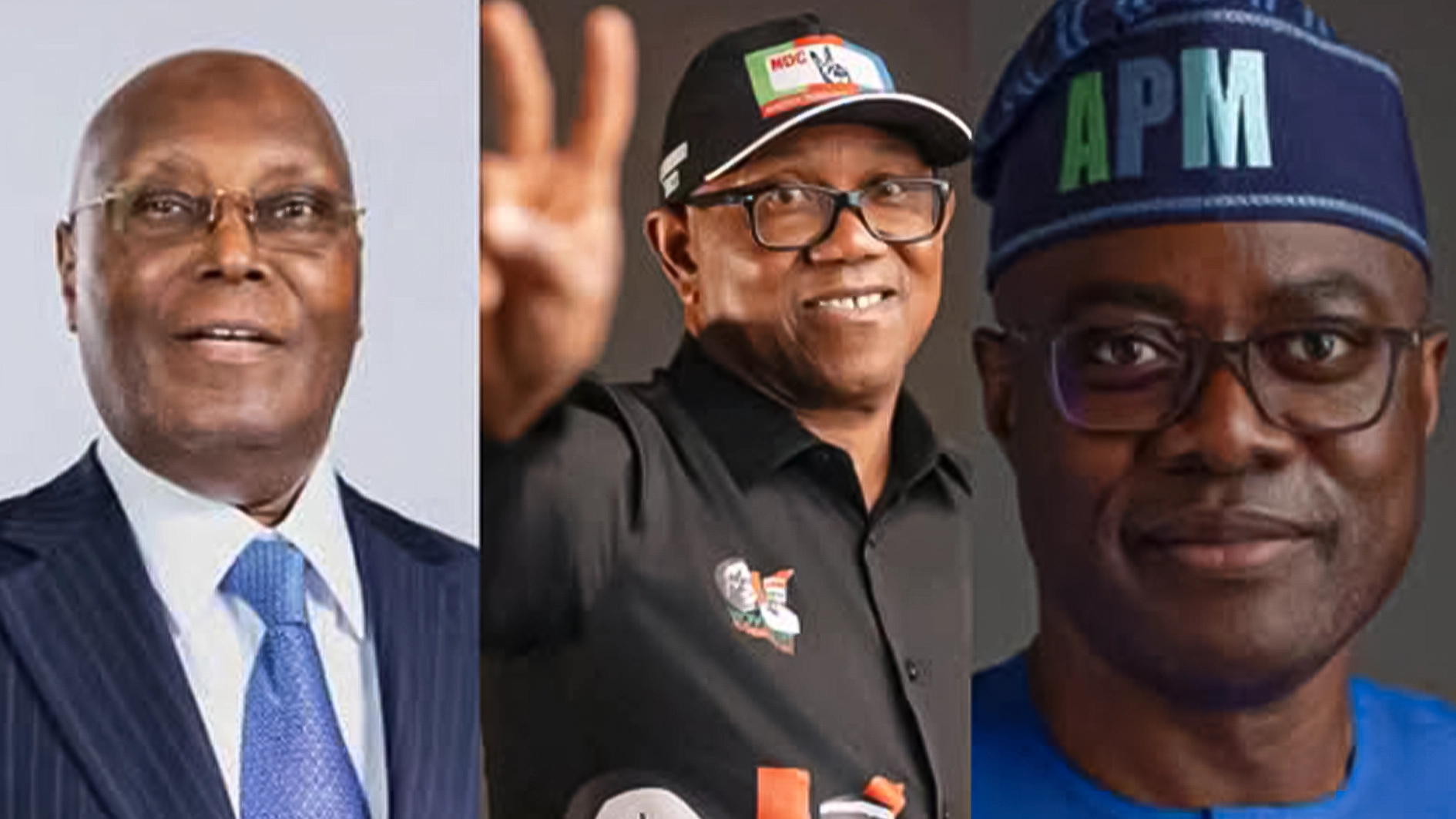
Uncertainty continues to surround efforts by opposition political parties to present a united front against the ruling All Progressives Congress (APC) ahead of the 2027 general elections, as leaders prepare for a high-stakes summit scheduled for Monday in Abuja.
The summit is expected to bring together leaders of the African Democratic Congress (ADC), Allied Peoples Movement (APM), National Democratic Congress (NDC), Peoples Democratic Party (PDP), Peoples Redemption Party (PRP) and Social Democratic Party (SDP) to discuss cooperation and possible collaboration ahead of the elections.
However, sources within the opposition parties have expressed doubts about the prospects of the meeting, citing the positions of major political actors and the apparent unwillingness of presidential candidates to withdraw their ambitions in favour of a consensus candidate.
The sources also pointed to widespread suspicion and mistrust among key political figures, noting that several presidential candidates had continued their campaigns despite agreeing to suspend activities for the summit.
The meeting is scheduled to hold at the Conference Hall of the NAF Conference Centre and Suites, Abuja.
In a statement issued on Thursday, the Head of the Coalition Secretariat, Salihu Mohammed Lukman, confirmed that the participating parties would suspend campaign activities on Monday to formalise and sign three foundational documents designed to provide a framework for cooperation and joint protection of votes.
However, the statement did not address the contentious question of whether the parties would agree on a single presidential candidate.
Efforts to build a common presidential platform have faced fresh challenges in recent days following firm declarations by the camps of some leading contenders that they would not withdraw from the race.
Last Thursday, the Makinde-Daura Presidential Campaign Organisation (MDPCO) dismissed reports that the APM presidential candidate and Oyo State Governor, Seyi Makinde, was negotiating with the ADC presidential candidate and former Vice-President, Atiku Abubakar, to step down.
The campaign organisation maintained that Makinde had gone too far in the presidential race to withdraw, insisting that he remained committed to contesting against President Bola Tinubu.
Similarly, the ADC has repeatedly rejected pressure on Atiku to step aside for a consensus candidate, maintaining that the party has the political structure to challenge the incumbent without surrendering its presidential ambition.
Speaking at different political engagements, including the inaugural G100 summit in Abuja, ADC National Publicity Secretary, Bolaji Abdullahi, warned against interpreting opposition collaboration as an arrangement requiring presidential aspirants to abandon their ambitions.
“Opposition collaboration should not be mistaken for an arrangement requiring parties or aspirants to surrender their presidential ambitions,” Abdullahi said.
He added that while the ADC supported initiatives aimed at strengthening cooperation, protecting votes and improving election monitoring, a single presidential candidacy was not a prerequisite for defeating Tinubu.
The National Leader of the NDC and former Bayelsa State Governor, Senator Seriake Dickson, has also ruled out the possibility of the party’s presidential candidate, Peter Obi, stepping down for another contender.
Dickson maintained that the NDC would participate in the 2027 election while remaining open to receiving support from other political parties, candidates and groups.
Background To The Opposition Summit
Monday’s meeting builds on resolutions reached at the inaugural Summit of Nigeria’s Opposition Political Parties held on August 31, 2026, at the Shehu Musa Yar’Adua Centre, Abuja. The meeting was facilitated by the G100 alongside members of the House of Representatives Minority Caucus.
According to documents from the earlier summit, the push for structured opposition collaboration was driven by concerns over perceived threats to electoral transparency and the growing wave of defections to the ruling APC, which organisers said could narrow democratic choices for Nigerians.
Unlike previous opposition alliances that reportedly collapsed because they relied on informal personal agreements, the six parties resolved to institutionalise their commitments through written agreements capable of surviving individual political ambitions.
To achieve this, joint working groups drawn from the participating parties spent three months preparing three foundational documents based on what organisers described as an “accommodation-first” model.
The framework allows each party to determine its level of integration while committing to non-aggression, sustained dialogue and coordinated protection of votes at polling units nationwide.
Three Documents For Adoption
The Nation gathered that the three documents scheduled for adoption and signing at Monday’s summit are the National Covenant for Democratic Renewal, the Framework for Opposition Unity and the National Reform Programme.
An opposition source described the National Covenant for Democratic Renewal as a common commitment by participating parties to democratic principles, including popular sovereignty, the rule of law and putting national interest above party considerations.
The source explained that the covenant would remain open to every registered political party willing to subscribe to its principles.
The Framework for Opposition Unity, according to the source, outlines operational guidelines for fair decision-making, internal dispute resolution and different levels of cooperation available to participating parties.
The National Reform Programme, on the other hand, sets out a governance agenda covering economic fairness, national security, education and healthcare, with provisions for citizens to assess its implementation.
The summit is scheduled to run from 10:00 a.m. to 2:25 p.m.
Its programme includes welcome remarks by the APM National Chairman, Alhaji Yusuf Mamman Dantalle, followed by a progress report titled “The Journey So Far” by the PDP National Chairman, Alhaji Kabiru Tanimu Turaki (SAN).
Goodwill messages are expected from ADC National Chairman, Senator David Mark, and NDC National Chairman, Senator Moses Cleopas.
The Minority Leader of the House of Representatives, Fred Agbedi, is scheduled to deliver the keynote address titled “From Cooperation to Victory: United to Rebuild Nigerian Democracy.”
Elder statesmen, including the Alaago of Kajola Alago, Ileshan, Oba Oladipo Olaitan; Professor Ango Abdullahi; and Chief S. N. Okeke, are also expected to speak on “The Doctrine of a Necessary Democratic Opposition.”
The PRP National Chairman, Dr Hakeem Baba-Ahmed, will present the three working documents, while Lukman will present the summit communiqué.
National chairmen, national secretaries, and presidential and vice-presidential candidates of the participating parties are expected to sign the documents.
Five presidential candidates—Atiku Abubakar of the ADC, Seyi Makinde of the APM, Peter Obi of the NDC, Donald Duke of the PRP and Prince Adewole Adebayo of the SDP—are expected to attend and publicly affirm their commitment to placing national interest above personal ambition.
Each participating party is expected to be represented by at least 50 delegates drawn from its National Working Committee and Presidential Campaign Council, alongside G100 and Minority Caucus conveners.
The SDP National Chairman, Professor Sadiq Umar Abubakar Gombe, is scheduled to deliver the closing vote of thanks.
Wike Has No Reason To Fear Makinde, Aide Fires Back
Meanwhile, the spokesperson for the Minister of the Federal Capital Territory, Nyesom Wike, Lere Olayinka, has challenged Makinde to stop blaming the minister over reports that the Oyo State governor might step down for Atiku at Monday’s opposition summit.
Olayinka was reacting to Makinde’s allegation that Wike was behind reports suggesting that he would withdraw from the presidential race in favour of Atiku.
The Wike aide questioned the governor’s accusation, recalling that Makinde had publicly acknowledged holding discussions with Atiku and former Anambra State Governor, Peter Obi, on possible political collaboration ahead of the 2027 general elections.
Speaking with The Nation, Olayinka referred to Makinde’s November 13, 2026, television interview, during which the governor reportedly confirmed discussions with the two opposition figures about working together against President Tinubu.
He said, “Was it the FCT Minister, Nyesom Wike, that pushed him to tell Nigerians that opposition parties that already have presidential candidates will work together against President Tinubu?
“Did Makinde not say on national television on November 13, 2026 that he was holding discussions with former Vice-President Atiku Abubakar over possible political collaboration ahead of the 2027 election?”
Olayinka argued that Wike had no reason to be concerned about Makinde’s political engagements, insisting that the governor’s own public statements had fuelled speculation about his intentions.
He also questioned the governor’s reported repeated visits to Atiku, who is equally seeking the presidency in 2027, asking whether such meetings could be unrelated to negotiations over a possible political arrangement.
“Or for what reason will a man be constantly visiting another with whom he is contesting for president other than to negotiate a withdrawal from the race?” he queried.
The minister’s aide further challenged Makinde to assess his presidential ambition rather than blame others for the controversy.
“Most importantly, if Governor Seyi Makinde looks himself in the mirror and tells Engr Seyi Makinde that he can win the presidential election, can he believe himself?” he asked.
“I think he should rather face the consequences of his political treachery and miscalculation and stop looking for whom to blame,” Olayinka added.
In a swift response, Makinde’s campaign organisation insisted that the APM presidential candidate remained firmly in the race.
Its Director of Strategic Communications, Richard Nnanna Ihediwa, described the reports as false and alleged that they were being circulated by a serving minister threatened by Makinde’s growing political profile.
Although Ihediwa did not mention the minister by name, his comments appeared to refer to Wike.
OK Movement Announces Withdrawal Of Support For Obi, NDC
In another development, the political relationship between the NDC and a group known as the OK Movement has come under fresh scrutiny following the group’s announcement that it had withdrawn its political structures and campaign support from the party and its presidential candidate, Peter Obi.
The group, in a statement signed by its National Director-General, Hon. John Ozyl Ughulu, announced the immediate withdrawal of its grassroots mobilisation network and operational structures from the NDC.
It attributed the decision to what it described as the determination of Obi and the party to discontinue their political relationship with the movement.
Although it described the development as regrettable, the group said it would respect the decision and redirect its political structures towards another platform ahead of the 2027 general elections.
“Following this development, the National Leadership of the OK Movement has resolved to officially discontinue all campaign, mobilisation and operational support for the NDC Party, effective immediately,” the statement said.
It consequently directed its structures at ward, local government and state levels to withdraw from the party’s campaign and mobilisation activities.
However, the NDC dismissed the announcement, describing those behind it as impostors and insisting that the authentic OK Movement remained committed to Obi and the party’s presidential ticket.
The NDC National Publicity Secretary, Osa Director, said several individuals were falsely presenting themselves as leaders of the movement.
“So many rogue elements are parading themselves as OK Movement, and they are entitled to their political delusions,” Director said.
He maintained that the genuine organisation and its leadership remained firmly behind the presidential ambition of Obi and his running mate, Senator Rabiu Musa Kwankwaso.
“We know that the genuine and authentic OK Movement and its leadership is solidly behind the Obi/Kwankwaso ticket,” he declared.
Director also expressed confidence in the NDC’s electoral prospects, saying the party’s presidential ticket enjoyed growing acceptance among Nigerians.
“Obi and the NDC will win the presidential election with the massive support and show of love by Nigerians,” he added.
The disagreement has introduced another dimension to the NDC’s political positioning ahead of the 2027 elections, with both sides making conflicting claims over the identity and allegiance of the OK Movement.
In a separate reaction, the Office of the Director-General of the NDC National Campaign Council said the development did not come as a surprise.
According to the campaign council, Obi had addressed the unauthorised formation of a parallel Presidential Campaign Council by the Ughulu-led faction during an interview on Arise Television several months ago.
The council said Obi had clarified that he was neither involved in nor aware of the creation of the parallel campaign council.
It added that the presidential candidate had directed all support groups, including the OK Movement, the Obidient Movement and Kwankwasiyya, to operate strictly as support structures for the party and its candidates.
Obi was also said to have warned that support groups must not assume the responsibilities of the political party by establishing independent campaign councils and had directed that such activities be discontinued.
“The NDC has consistently maintained this position,” the rejoinder said.
“The latest announcement by Hon. Ughulu is therefore a belated and self-serving reaction to a decision already taken and publicly communicated by the presidential candidate and the party.”
The Director-General of the NDC National Campaign Council, Ibrahim Hussain Abdulkarim, who signed the statement, accused the faction of attempting to undermine the growing momentum of the party’s presidential campaign.
“We view this statement as a calculated attempt to slow the growing momentum of the NDC presidential campaign and the Obi-Kwankwaso ticket.
“It bears the unmistakable hallmarks of a sponsored distraction, one designed by interests aligned with the ruling party to manufacture factions, sow confusion and divert public attention from the substantive issues confronting Nigerians,” he said.
Abdulkarim wished Ughulu and those aligned with him well in their decision to pursue other political platforms.
“We wish Hon. John Ughulu and those aligned with him well as they pursue other political platforms. They should go in peace,” he said.
He insisted that the authentic grassroots structures of the Obidient Movement and Kwankwasiyya remained firmly behind the NDC, Obi and Kwankwaso.
“If Hon. Ughulu believes he controls or represents those structures, we invite him to demonstrate that claim openly to Nigerians and the world. The NDC recognises and works with the legitimate leadership of these movements, not with parallel or rogue elements,” Abdulkarim said.
He added that the party, its National Campaign Council and the Obi-Kwankwaso ticket would not be distracted by the controversy.
“Our momentum continues unabated. No amount of intimidation, harassment, manufactured internal disputes or fake decampment narratives will derail the collective aspiration for a New Nigeria. We remain focused, disciplined and fully committed to winning the 2027 general elections outright,” he said.
Abdulkarim said the campaign was concentrating on organisation and grassroots mobilisation, including the upload and verification of polling unit agents nationwide, outreach to markets and communities, town hall meetings and engagements with students, young people and other demographic groups.
He maintained that the activities were progressing according to schedule.
“The NDC and its presidential ticket remain open to all genuine support groups and individuals who share the vision of competence, integrity, equity and national renewal. We will not allow personal ambition or external interference to derail the people’s project,” he added.
In its withdrawal statement, the Ughulu-led group also criticised what it described as shortcomings in the management of disagreements and internal differences within the party.
It argued that effective leadership required the ability to accommodate opposing views, manage disagreements and build consensus.
“A true leader must possess the wisdom, courage and emotional intelligence to manage disagreements, build bridges and unite people rather than encourage division or benefit from internal conflicts,” it said.
The movement further argued that political leadership should be driven by selflessness, integrity and accountability rather than personal interests or the pursuit of supremacy.
It also challenged the NDC to translate its social media popularity into tangible grassroots political support, stressing that online visibility alone could not guarantee electoral success.
“We recognise that the NDC has a considerable social media following which, if properly organised and translated into meaningful grassroots political participation, could deliver significant electoral benefits. The responsibility for converting that support into electoral strength now rests with the party and its leadership,” the statement said.
On its next political direction, the group disclosed that it had begun consultations with other political parties and potential presidential candidates whose political visions and leadership credentials aligned with its principles.
It said it would announce its preferred political platform and presidential candidate after concluding the consultations.
The organisation also described itself as an independent political force with grassroots structures and mobilisation capacity across wards, local governments and states of the federation.
“Our data are clear. Our structures speak for us. Our ideology defines us,” it declared.
It listed integrity, fairness, equity, justice, competence, accountability and national unity as principles it would not compromise for political convenience.
Reaffirming its independence, the group said no individual or political party could claim ownership of its structures or dictate its political decisions.
“The OK Movement is bigger than any individual. It was established on principles, built through collective sacrifice and remains committed to the Nigerian people and the ideals upon which it was founded,” it said.
The leadership acknowledged that its announcement might disappoint members who had developed political and emotional attachments to the NDC but maintained that individuals were free to make their political choices without intimidation or hostility.
It urged its coordinators, volunteers and supporters to remain calm and disciplined while awaiting further directives.
In a defiant closing message, the group insisted that its withdrawal should not be interpreted as an abandonment of its political ambitions.
“The OK Movement is not retreating. We are repositioning, reorganising and preparing for the next phase of our political journey,” it declared.