


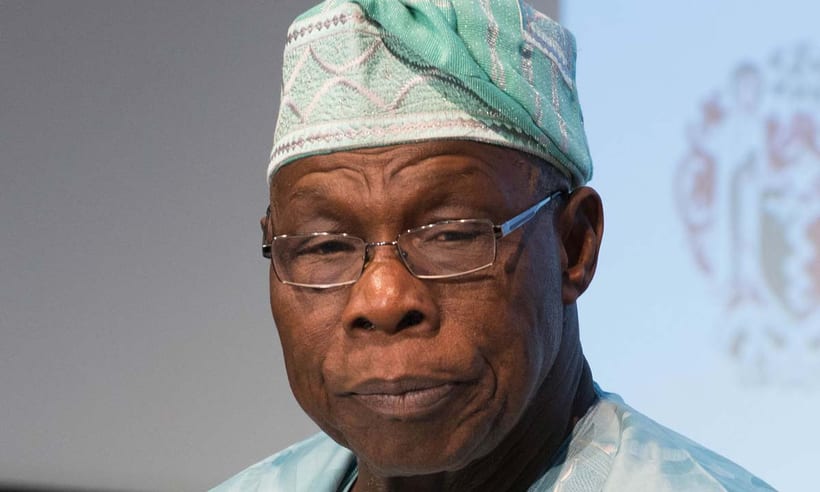
Former President Olusegun Obasanjo has warned that Nigeria may continue to experience persistent electricity shortages unless the government allows private operators to take a leading role in the power sector.
Obasanjo gave the warning on Tuesday at the Youth Governance Dialogue, themed “African Youth and Renaissance”, held at the Youth Development Centre within the Olusegun Obasanjo Presidential Library in Abeokuta, Ogun State.
He lamented that Nigeria had spent several years relying on government to resolve its electricity challenges, yet the country continued to grapple with poor power supply, frequent grid collapses and widespread dependence on generators.
The former President argued that Nigeria could achieve stable electricity supply by adopting the approach that transformed the telecommunications sector through greater private-sector participation.
Recalling the difficulties associated with government-managed telecommunications services before the sector was liberalised, Obasanjo said private investment had significantly changed the industry.
“Government has tried, just like government tried with telecommunications, until we put it in the hands of the private sector, we didn’t solve it,” he said.
“And I believe that until we put energy in the hands of the private sector, we won’t solve it,” he added.
Obasanjo described electricity as the backbone of a strong economy, noting that inadequate power supply undermines business growth, industrial production and job creation.
He expressed dissatisfaction that despite years of government promises and reforms, Nigeria had yet to achieve a reliable electricity supply.
According to him, government should reduce its control over the power sector and create greater room for private operators to drive investment, innovation and improved service delivery.
He urged the authorities to give private investors a more prominent role in the sector, arguing that the approach could produce improvements similar to those recorded in telecommunications.
The former President also challenged young Nigerians to take responsibility for developing solutions to the country’s electricity challenges, urging them to deploy their ideas and expertise in business and technology rather than depend solely on government.