


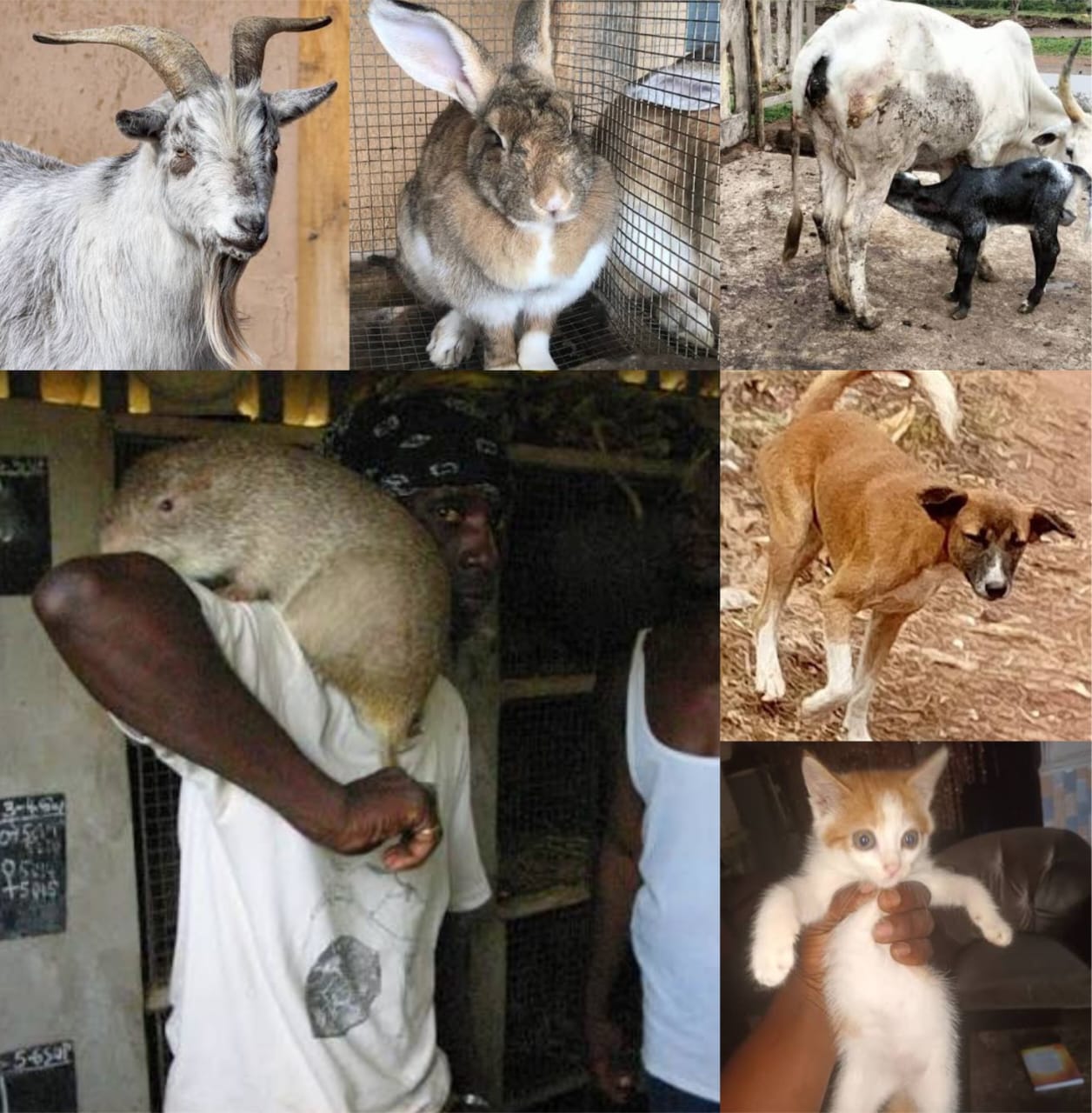
Livestock Can Spread Drug Resistant Bacteria To Humans, Stop Playing Rough With Animals — Microbiologists Warn
Healthy-looking livestock can harbour drug-resistant bacteria and transmit them to humans through contaminated food, water, direct animal contact and the environment, microbiologists have warned.
The experts explained that resistant bacteria can live harmlessly in the intestines of cattle, sheep, goats and chickens, noting that inappropriate use of antibiotics in livestock can encourage the survival and spread of resistant strains. (Punch Newspapers)
They further warned that the bacteria can be released through animal faeces and contaminate food, water and the environment, while poor hygiene during slaughter, handling and preparation of meat and other animal products can facilitate their transmission to humans. (Punch Newspapers)
Antimicrobial resistance occurs when microorganisms change in ways that make medicines used to treat infections less effective. The World Health Organisation says resistant organisms can spread between animals and humans through direct contact, food and the environment, potentially making infections more difficult to treat. (World Health Organization)
Nigeria’s Second One Health National Action Plan on Antimicrobial Resistance, 2024–2028, identified resistance among bacteria found in food-producing animals, including Escherichia coli, Salmonella, Pseudomonas, Aeromonas, Staphylococcus, Enterococcus and Campylobacter, with resistance reported against more than 50 antimicrobials.
The plan also reported that a meta-analysis found 10.9 per cent of bacteria reported in animal-health studies were multidrug-resistant, while 2.3 per cent were extensively drug-resistant.
In an exclusive interview with PUNCH Healthwise, Consultant Clinical Microbiologist at Ladoke Akintola University of Technology Teaching Hospital, Ogbomoso, Oyo State, Professor Samuel Taiwo, said the absence of visible illness in livestock did not rule out the presence of resistant bacteria.
“It is possible for animals to appear healthy and yet carry resistant bacteria,” he stated.
Taiwo explained that animals, like humans, naturally harbour large numbers of bacteria in their intestines, but said antibiotic use could alter the balance and favour resistant organisms.
“The intestines of animals and humans contain billions of normal flora,” he explained.
He said the problem became more pronounced when antibiotics were used in livestock for purposes beyond treating diagnosed infections.
“Overuse and misuse of antibiotics in animal husbandry as prophylaxis, metaphylaxis and growth promotion creates selection pressure, selecting resistant bacteria,” Taiwo stated.
He explained that selection pressure could eliminate susceptible bacteria while allowing resistant ones to survive and multiply.
“The selected resistant bacteria then populate rapidly to completely replace the sensitive bacteria,” he said.
According to the microbiologist, resistant organisms can subsequently leave animals through their faeces and reach humans through contaminated water, food and the environment. This is consistent with public-health guidance identifying animal contact, contaminated food and exposure to animal faeces as routes through which drug-resistant germs can reach people. (CDC)
Taiwo said people who acquire the bacteria might develop symptoms depending on the quantity of organisms involved, their ability to cause disease and the individual’s immune status.
“The acquired resistant bacteria can cause diarrhoea, vomiting, abdominal pain, fever and blood in the stool,” he disclosed.
He added that severe infections could progress beyond gastrointestinal symptoms.
“They can cause serious bloodstream infection depending on the dose, virulence and immune status,” he stated.
Taiwo warned that severe diarrhoea could result in significant fluid loss and serious complications.
“Severe diarrhoea can also lead to excessive loss of body water, leading to dehydration, which can be severe enough to cause acute renal failure and death,” he warned.
He further noted that some survivors could be left with damage to the brain, nerves, liver and kidneys, depending on the bacteria involved.
In a separate interview, Consultant Clinical Microbiology and Infectious Diseases at the University of Ilorin Teaching Hospital, Professor Akanbi Ajibola, said livestock could carry resistant bacteria without showing signs of illness.
“Livestock such as cattle, sheep, chickens and goats can carry resistant bacteria harmlessly as normal flora while appearing healthy,” he stated.
Ajibola stressed that exposure to resistant bacteria did not automatically mean that a person would become sick.
“Picking up these resistant bacteria does not mean the individual will fall ill. They can carry it for a while without any apparent symptoms,” he explained.
He said the outcome would depend on the bacterium involved, how it entered the body and the person’s immune status.
“The effects depend on the bacteria, the route of entry and the immune status,” Ajibola stated.
The microbiologist identified diarrhoeal disease as one possible consequence and said some organisms found in animal faeces could cause human infections.
He, however, noted that the greater treatment challenge arose when resistant organisms caused infections that required antibiotics.
“The resistant organisms can make subsequent infections difficult to treat, because antibiotics given may no longer be effective,” he explained.
Ajibola said some people could recover completely, while severe or recurrent infections could result in complications.
“Many recover fully, especially immunocompetent people, but recurrent infections and organ damage can occur,” he stated.
He added that severe diarrhoea could affect the kidneys, while treatment of resistant infections might require stronger antibiotics for longer periods.
“Resistant infections may require stronger antibiotics and prolonged use, causing significant side effects,” Ajibola warned.
Also speaking, Professor of Veterinary Microbiology at the Federal University of Agriculture, Abeokuta, Ojo Olufemi, said resistant bacteria could reach humans through several routes.
“The most common routes of transmission of resistant bacteria from animals to humans are consumption of contaminated animal-source foods such as meat, milk, eggs and products made from these foods; drinking of contaminated water; direct contact and indirect contact with the environment,” he explained.
Olufemi said direct exposure could occur on farms, in markets or during the handling and slaughter of animals, while indirect exposure could occur through surfaces, water and environments contaminated with animal faeces.
He cautioned that the presence of antibiotic resistance did not necessarily mean that every resistant organism would cause disease.
“Not all resistant bacteria are capable of causing disease, but they are still of concern notwithstanding,” he stated.
He explained that some resistant bacteria could nevertheless transfer resistance traits to other bacteria capable of causing disease.
“Although some resistant bacteria may not be able to cause disease, they may, however, be able to transfer the resistance trait to disease-causing bacteria,” Olufemi explained.
The veterinary microbiologist identified inappropriate antibiotic use as a major factor driving resistance among livestock.
“Farmers should not use antibiotics as growth promoters or for prophylaxis,” he stated.
He advised farmers to improve farm management, maintain hygiene and biosecurity, avoid overcrowding and poor ventilation, vaccinate animals and seek veterinary care when livestock become sick.
“They should consult the veterinarian before using antibiotics,” Olufemi added.
He also stressed the need for farmers to observe the withdrawal period after administering antibiotics, particularly before animals, eggs or milk are sold for human consumption.
“Farmers must observe the withdrawal period after administering antibiotics to animals. This is to allow the elimination of antibiotics from the system before selling animals for slaughter or selling eggs and milk for human consumption,” he stated.
Public-health guidance similarly recommends working with veterinarians on appropriate antibiotic use in livestock and adopting hygiene and biosecurity measures to reduce the development and spread of antimicrobial resistance.