


Tinubu Orders 30-Day ICPC Probe Into Fake Agency Scandal, Senate Distances Itself to Avoid Court Contempt
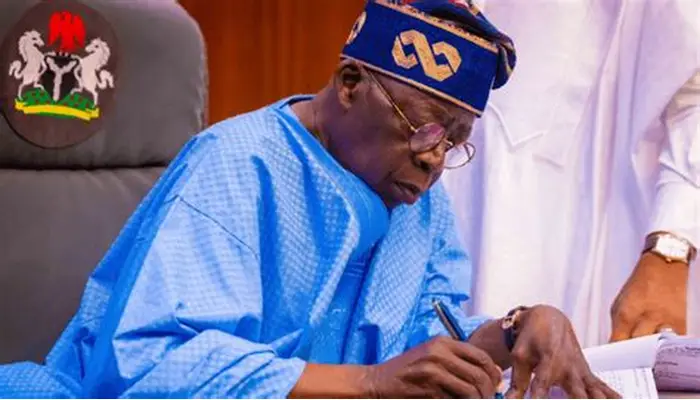
President Bola Tinubu has directed the Independent Corrupt Practices and Other Related Offences Commission to conduct a comprehensive investigation into the activities of the controversial Presidential Foreign Intervention Promotion Council, ordering the anti-graft agency to submit its report within 30 days.
The directive was contained in a statement issued on Tuesday by the President’s Special Adviser on Information and Strategy, Bayo Onanuga, who said the investigation followed the discovery that the PFIPC was a fictitious body with no legal backing, presidential approval or executive instrument establishing its existence.
According to the Presidency, the probe will focus on forged appointment letters and other official documents allegedly used by one Adeniyi Adeyemi Matthew, who presented himself as the Director-General of the council and falsely claimed to be a presidential appointee.
The investigation will also examine allegations that the suspect used the forged appointment to obtain official recognition, seek diplomatic support, facilitate visa processing and open multiple bank accounts in the names of purported government agencies.
President Tinubu further directed the ICPC to investigate the circumstances that allowed the fake council to assume an appearance of legitimacy, including the origin and use of forged official documents, the operation of related bank accounts, the movement of funds and the involvement of any public officials, financial institutions or private individuals who may have facilitated the alleged scheme.
He also ordered the commission to identify weaknesses within government institutions that were exploited and recommend immediate measures to prevent a recurrence, while directing all Ministries, Departments and Agencies to cooperate fully with investigators.
“The integrity of the Presidency and the institutions of the Federal Government must be protected against impersonation, forgery, abuse of official identity and the exploitation of weaknesses in the public service. All persons found culpable are to be treated strictly in accordance with the law,” the President said.
The directive follows growing public concern over the operations of the PFIPC after revelations that the council allegedly operated from the Federal Secretariat, appeared in the 2026 Appropriation Act with a budgetary allocation of N1.3 billion and engaged government institutions despite repeated denials by the Presidency that it ever existed.
Speaking on the development, Onanuga said police forensic experts had already examined the signature of the President’s Chief of Staff, Femi Gbajabiamila, on the disputed appointment letter and confirmed it was forged.
“The police investigated the matter and conducted forensic analysis of the Chief of Staff’s signature. They found that the signature and all the documents being paraded by the suspect were fake,” he said.
Meanwhile, the Nigeria Police Force has released the father of the suspect after questioning him over his son’s whereabouts. A neighbour, who spoke on condition of anonymity, said the elderly man was interrogated for several hours before being allowed to return home.
The arrest of the suspect’s father had drawn criticism from human rights lawyer Femi Falana (SAN), who represents Adeyemi. Falana described the action as unlawful, insisting that security agencies should not intimidate or harass relatives of suspects.
He maintained that his client had consistently appeared in court, had not absconded and would honour the next hearing scheduled for July 27.
The police began investigating the case in October 2025 over allegations of forgery, impersonation and the use of fake official documents. Adeyemi has since been arraigned before the Federal High Court in Abuja on an eight-count charge bordering on conspiracy, forgery and impersonation.
Also on Tuesday, the Senate declined to intervene in the controversy, insisting that the matter was already before the court and that no formal petition had been submitted to the National Assembly.
Chairman of the Senate Committee on Media and Publicity, Senator Yemi Adaramodu, acknowledged that the PFIPC had a budgetary allocation in the 2026 Appropriation Act but argued that the National Assembly neither created the agency nor was responsible for verifying presidential appointments.
He said the allegations remained an executive matter and would only attract legislative action if a formal petition was submitted by any of the parties involved or concerned Nigerians.
The controversy has continued to generate public debate following the discovery of the N1.3 billion allocation to the council despite repeated claims by the Presidency that the agency does not exist.
Investigations have also revealed that official correspondence from the PFIPC was processed by government institutions before its existence was publicly disowned by the Presidency.