


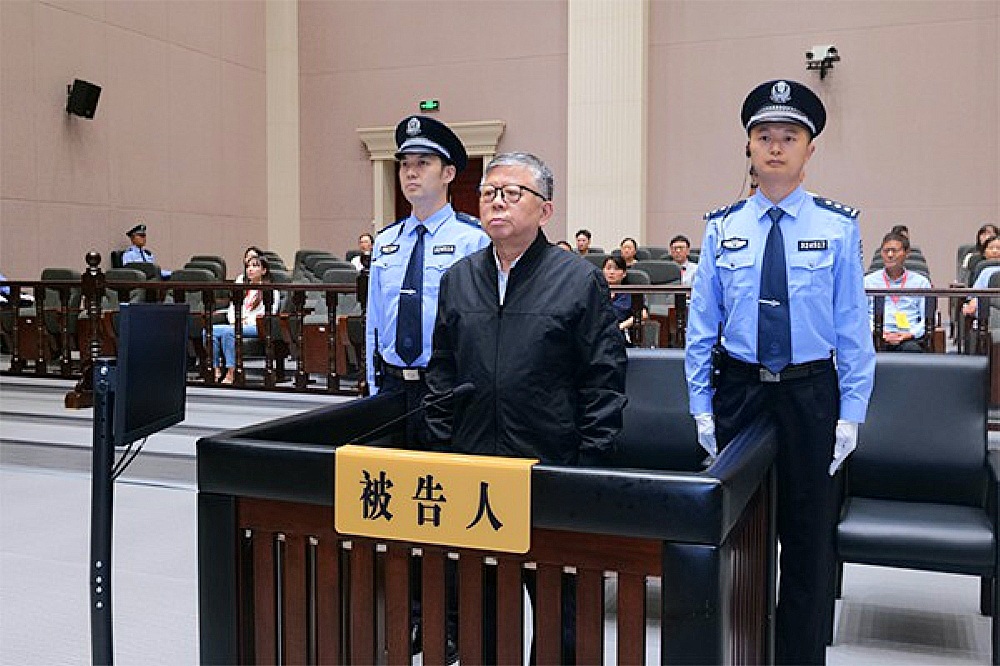
Chinese Official Sentenced to Death Over Corruption, Nigerians Advocate Same for African Leaders Found Guilty
A Chinese court has sentenced former senior public official Yang Youlin to death after finding him guilty of bribery, offering bribes, embezzlement, misappropriation of public funds, abuse of power and money laundering involving more than 2.2 billion yuan (about $324 million).
Yang, who served as Executive Deputy Director of the Nanjing Economic and Technological Development Zone Management Committee, was also ordered to pay millions of yuan in fines, while the proceeds of his crimes and accrued interest are to be confiscated and transferred to the national treasury.
According to the Changzhou Intermediate People’s Court, Yang illegally accepted money and property worth over 2.2 billion yuan between 1993 and 2023 while occupying several key government positions in Nanjing, including roles in the Construction Bureau, Municipal Engineering Company, Science and Technology Park, and Cultural Tourism Development.
“The amount of bribes was exceptionally large, the social impact was exceptionally serious, and the losses caused to the state and the people were significant,” the court said in a statement released on Monday.
The conviction is the latest in China’s sweeping anti-corruption campaign, which has seen several senior officials receive death sentences with a two-year reprieve, life imprisonment and lengthy jail terms over corruption-related offences.
The development has also sparked widespread reactions on Nigerian social media platforms, where many users praised China’s tough stance on corruption and urged African governments to adopt stricter penalties for public officials found guilty of looting public funds.
Across Facebook, X and other social media platforms, several Nigerians argued that harsh punishments for corrupt public officials could serve as a stronger deterrent against the diversion of public resources.
Some commenters said African leaders convicted of large-scale corruption should face severe sanctions comparable to those imposed in China, while others stressed the need for transparent investigations, fair trials and stronger institutions to ensure accountability.
Others, however, maintained that beyond the severity of punishment, African countries should prioritise strengthening anti-corruption agencies, judicial independence and the consistent enforcement of existing laws, arguing that certainty of punishment is more effective than its severity in combating corruption.