


Senate May Pass State Police Bill Today — Spokesperson
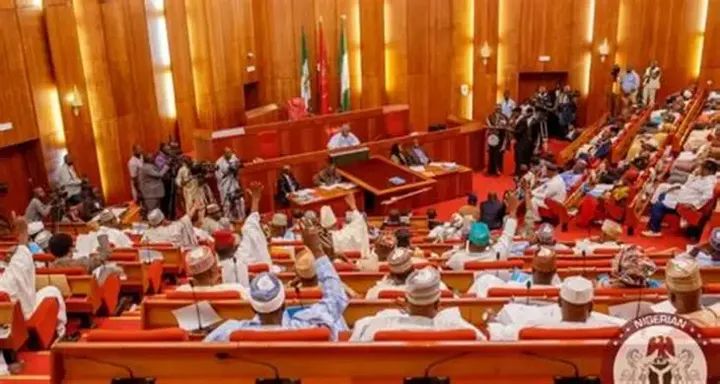
The Senate is expected to reconvene today for an emergency plenary session as lawmakers move to pass the controversial State Police Bill, a key proposal aimed at overhauling Nigeria’s security architecture.
The special sitting comes amid concerns that the constitutional amendment seeking to establish state police formations may not be concluded before lawmakers proceed on a three-week recess due to a quorum shortfall.
The bill seeks to decentralise policing by allowing state governments to establish and control their own police services. As a constitutional amendment, it requires the support of at least two-thirds of senators for passage.
Although the proposal has enjoyed broad bipartisan support, the Senate was unable to secure the constitutionally required number of lawmakers needed to complete the amendment process before proceeding on recess.
To avoid further delays, Senate leadership has intensified consultations across party lines and urged lawmakers to ensure full attendance at today’s emergency sitting.
Speaking in an interview on Monday, Senate Spokesman, Senator Yemi Adaramodu, confirmed that the State Police Bill would be among the priority issues to be considered during the session.
“The Senate will be considering matters of public interest, especially national security. The State Police legislation will undoubtedly be a priority issue,” he said.
According to Adaramodu, the Senate is expected to receive reports from the relevant committee handling the bill following its second reading.
“The Senate is desirous of partnering with other arms of government in curbing the undesirable activities of bandits, terrorists and other peace-threatening marauders,” he added.
If passed, the Senate and the House of Representatives will constitute a joint conference committee to harmonise differences in their respective versions of the legislation before transmitting it to the 36 State Houses of Assembly for approval, as required for constitutional amendments.
The emergency plenary, scheduled for 11:00 a.m. at the National Assembly Complex in Abuja, was formally communicated to senators through a memo issued by the Clerk of the Senate, Emmanuel Odo.
According to the notice, the sitting was convened at the instance of Senate President Godswill Akpabio to consider matters of urgent national importance, particularly issues relating to national security.
The decision to suspend the ongoing recess and recall lawmakers underscores growing concern over Nigeria’s worsening security situation, including persistent attacks by terrorists, bandits, kidnappers and other criminal groups across several parts of the country.
“The purpose of this emergency sitting is to enable the Senate to consider matters of urgent national importance, particularly issues relating to national security and other critical concerns that require immediate legislative attention,” the notice stated.
The recall marks a significant departure from the National Assembly’s earlier timetable. Both chambers had adjourned plenary two weeks ago and were expected to resume legislative activities on July 7 after the Democracy Day holiday and constituency engagements.
The emergency session also comes amid renewed pressure on the Federal Government to adopt more effective strategies to combat insecurity nationwide.
During his Democracy Day broadcast earlier this month, President Bola Tinubu vowed that terrorists, bandits and their sponsors would face the full weight of the law, insisting that no mercy would be shown to enemies of the state.
The President disclosed that more than 13,000 terrorists had been neutralised within the last year and claimed that terrorism-related deaths had declined significantly since 2015.
However, he acknowledged that the continued captivity of schoolchildren abducted in Oyo and Borno states remains a painful reminder of the country’s security challenges.
The emergency sitting is expected to provide fresh momentum for the National Assembly’s efforts to reform Nigeria’s security framework through constitutional amendments.
On June 11, the Senate advanced the State Police Bill by passing it for second reading and referring it to the Senate Ad-hoc Committee on the Review of the 1999 Constitution for further legislative work.
The proposed legislation seeks to move policing from the Exclusive Legislative List to the Concurrent Legislative List, thereby allowing state governments to establish their own police formations alongside the Nigeria Police Force.
To achieve this, the bill proposes amendments to Sections 197, 214 and 215 of the Constitution, among other provisions.
Leading debate on the bill, Senate Leader Opeyemi Bamidele described the establishment of state police as a crucial reform needed to strengthen Nigeria’s internal security framework amid increasingly complex security threats.
He argued that local police officers would be better positioned to gather intelligence because of their familiarity with local languages, customs and community dynamics.
Bamidele noted that Nigeria continues to face terrorism, violent extremism, banditry, mass abductions, farmer-herder clashes, cultism, armed robbery, pipeline vandalism, communal conflicts and cyber-enabled crimes.
According to him, the growing complexity and localised nature of these threats have strengthened public calls for decentralised policing.
Responding to concerns that state governors could misuse state police for political purposes, Bamidele maintained that the bill contains adequate safeguards.
Among the proposed safeguards are the establishment of State Police Service Commissions, federal oversight through the Federal Police Service Commission, legislative confirmation of senior appointments, uniform national policing standards and constitutional mechanisms for intervention where law and order collapse.
Several senators, particularly from the North, also backed the proposal during the second reading debate, arguing that decentralised policing offers a more sustainable response to the country’s persistent security challenges.
Senate Chief Whip Tahir Monguno said the legislation would provide a legal framework for regulating the growing number of vigilante groups operating across the country.
While supporters argue that state police would improve intelligence gathering, local accountability and rapid response to security threats, critics continue to express fears that governors could deploy state-controlled police forces against political opponents.
Nevertheless, with insecurity remaining a dominant national concern, today’s emergency sitting is expected to test the Senate’s resolve to push through a reform many lawmakers believe is long overdue.