


CBN Cuts Interest Rate to 26.5% as Monetary Committee Eases Policy by 50 Basis Points
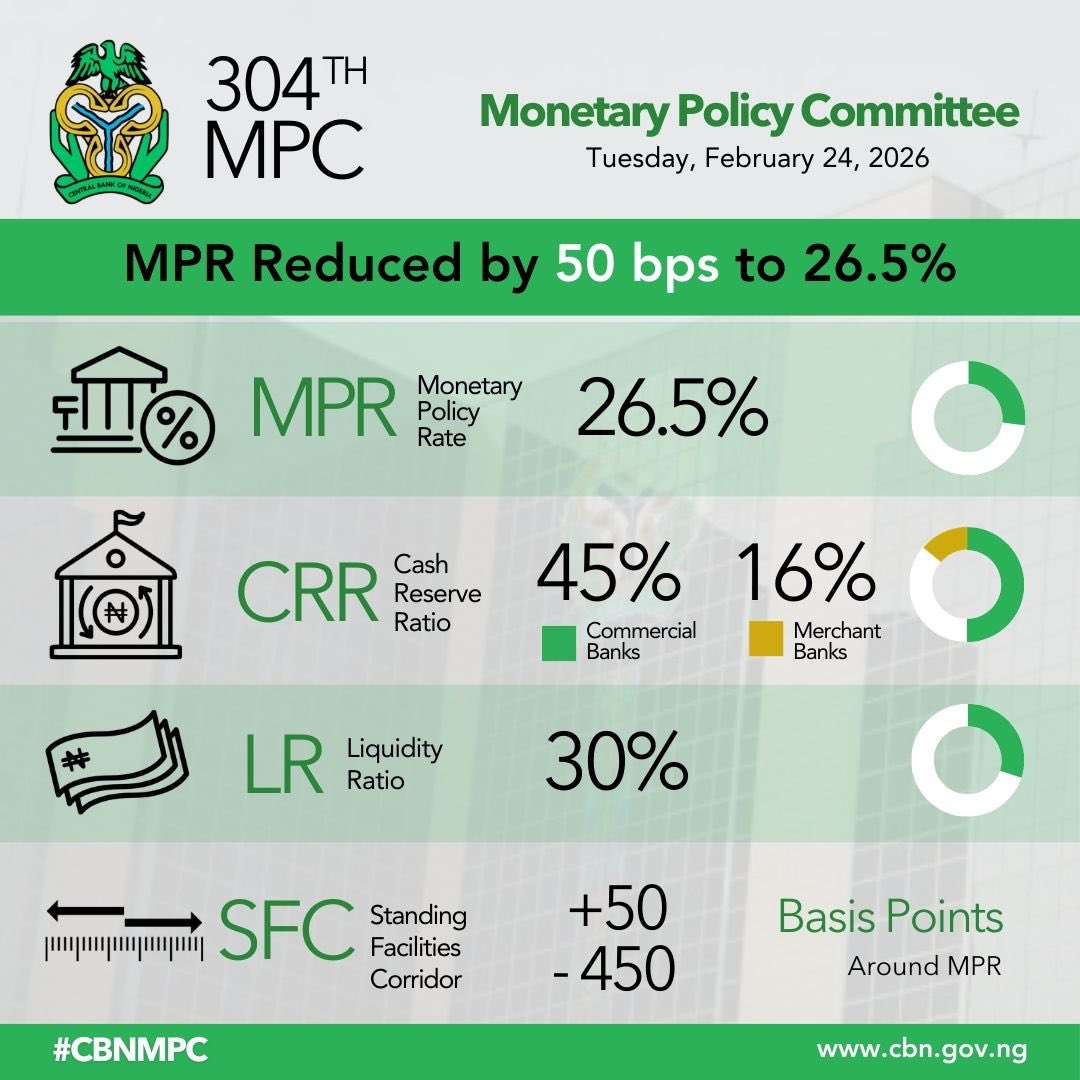
The Central Bank of Nigeria (CBN) has reduced the Monetary Policy Rate (MPR) by 50 basis points to 26.5 percent, signaling a measured shift in its monetary policy stance. The decision was announced at the end of the 304th meeting of the Monetary Policy Committee (MPC) held on Tuesday, February 24, 2026.
The rate cut brings the benchmark interest rate down from 27 percent to 26.5 percent. The MPR serves as the anchor rate that influences lending rates across the banking system and is a key tool used by the apex bank to control inflation and stabilize the economy.
Despite the reduction in the policy rate, the Committee retained other key monetary parameters. The Cash Reserve Ratio (CRR) was left unchanged at 45 percent for commercial banks and 16 percent for merchant banks, maintaining existing liquidity controls within the banking sector.
The MPC also retained the Liquidity Ratio (LR) at 30 percent. The liquidity ratio determines the proportion of liquid assets banks must hold to meet short-term obligations, and its retention suggests the Committee’s cautious approach to ensuring financial system stability.
Similarly, the Standing Facilities Corridor was maintained at +50 and -450 basis points around the MPR. This corridor sets the rates at which banks can borrow from or deposit funds with the CBN, thereby guiding short-term interest rate movements in the interbank market.
The latest decision reflects a balanced approach by the MPC, easing the benchmark rate while keeping other prudential measures intact. Analysts say the modest rate cut could support economic activity while the retention of other parameters underscores the Bank’s continued vigilance against inflationary pressures.
The outcome of the 304th MPC meeting is expected to shape financial market expectations in the coming months, as investors and businesses adjust to the slightly lower interest rate environment. The CBN reiterated its commitment to price stability and sustainable economic growth as it continues to monitor domestic and global economic developments.