


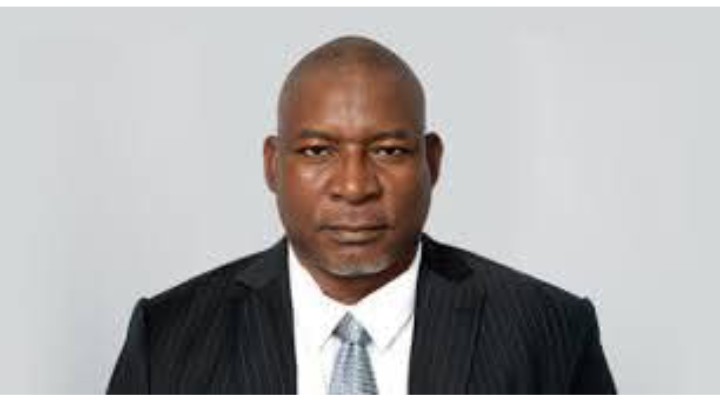
Auditor-General flags N33.75bn transfers to unverified beneficiaries
The Auditor-General for the Federation, Shaakaa Chira, has raised concerns over N33.75bn in electronic cash transfers made to more than 3.29 million households in 35 states, saying the Federal Government could not provide sufficient evidence to establish that the funds reached genuine beneficiaries.
The disclosure was contained in the Auditor-General for the Federation’s 2024 Annual Report on Non-Compliance and Internal Control Weaknesses in Ministries, Departments and Agencies of the Federal Government. The report, which reviewed transactions at the National Cash Transfer Office in Abuja for the 2023 financial year, identified eight audit queries involving billions of naira and highlighted significant weaknesses in the office’s internal control system.
According to the report, electronic transfers amounting to N33.751bn were made to 3,295,207 households and beneficiaries drawn from the National Social Register and enrolled on the National Beneficiary Register across 35 states in 2023.
However, the auditors said the payment vouchers did not contain complete details of the beneficiaries, while the Remita statement required to reconcile those who received the funds with those listed on the National Social Register and National Beneficiary Register was not presented for examination.
The report said the absence of the relevant records prevented auditors from authenticating the payments and determining whether the beneficiaries who received the funds were genuine.
It stated, “Electronic transfers amounting to N33,751,080,000.00 were made to 3,295,207 households/beneficiaries that have been mined to the NSR and enrolled on the NBR in 35 states for the year 2023.”
The auditors further stated that efforts to obtain access to the Remita statement were unsuccessful, alleging that the NTCO accounts staff obstructed access to the records needed for the audit.
The Auditor-General consequently identified possible loss of public funds and payments to ineligible or fictitious beneficiaries as risks associated with the transaction.
He recommended that the National Programme Manager account to the Public Accounts Committees of the National Assembly for the N33.75bn and provide evidence that the beneficiaries received the funds.
The report also recommended that any amount that could not be satisfactorily accounted for should be recovered and remitted to the Treasury. It added that the management of the National Cash Transfer Office failed to respond to the audit query.
In another finding, the audit queried N36.74bn in payments made without prepayment audit. The report said 215 payment vouchers relating to SS, IDA and output based transactions in December 2023, totalling N36.744bn, were processed without internal audit checks.
According to the auditors, the vouchers were not pre-audited or checked by the Internal Audit Unit as required by existing regulations. Instead, the unit conducted checks after the payments had been made.
The auditors identified possible misapplication and diversion of public funds as risks and recommended that the N36.74bn be properly accounted for before the National Assembly.
The report also raised concerns over 101 payments totalling N4.616bn made from the NTCO’s S&S/IDA Cash Book for various expenditures. The office failed to present the relevant paid vouchers for audit examination.
The auditors identified the possibility of misapplication and diversion of public funds and recommended that the amount be accounted for or recovered and remitted to the Treasury.
Another issue involved N350.18m in funds disbursed to state coordinators for the enrolment of unbanked beneficiaries.
The report said 32 payments totalling N3.09bn were made to various states for the exercise, but while documents covering N2.74bn disbursed to 34 states were presented for examination, N350.18m remained unaccounted for.
The auditors also observed that the vouchers presented were vague and did not clearly state how the funds were utilised. Supporting documents, including beneficiary lists, photographs of activities, signed attendance registers, enrolment reports and acknowledgements from beneficiaries who received payments, were not attached.
The Auditor-General recommended that the N350.18m be recovered and remitted to the Treasury if it could not be satisfactorily accounted for.
Another N393.71m in unused enrolment funds returned by nine State Cash Transfer Units also came under scrutiny.
The NTCO explained that some states were unable to conduct enrolment exercises because of insecurity, disasters and other factors and consequently returned the funds to the Treasury in 2023.
However, the audit report said the NTCO failed to provide documents confirming that the N393.71m was credited to the Consolidated Revenue Fund. It also said Remita inflow statements and relevant pay slips were not presented.
The auditors further noted that there was no evidence that the affected states subsequently conducted the enrolment exercises.
The report also queried a N280.42m mobilisation payment made to Payment Service Providers engaged to provide a platform for transferring cash to beneficiaries.
According to the auditors, the payment represented a 30 per cent advance but was made without an Advance Payment Guarantee.
The audit further found no evidence that due process was followed in selecting the service providers, noting that the relevant files did not contain prequalification documents, bidding records or technical and financial evaluation reports.
The auditors identified payment for jobs not done and diversion of funds as possible risks and recommended recovery of the N280.42m.
Similarly, the audit found that store items valued at N89.51m purchased and paid for by the NTCO were not entered in the office’s store ledger.
No Store Receipt Vouchers or Store Issue Vouchers were attached to the relevant payment vouchers, while the office had not updated its store ledger since 2020.
In another finding, N17.42m spent on diesel was provided to staff as cash advances rather than processed through contract awards, despite exceeding the N200,000 procurement threshold.
The auditors said the items purchased could neither be sighted nor traced to the stores. They also estimated that the procurement method resulted in N2.18m in foregone Value Added Tax and Withholding Tax revenue to the government.
For all eight issues, the audit report noted that the management of the National Cash Transfer Office failed to respond to the queries raised by the auditors.
The latest findings come amid the Federal Government’s continued reliance on cash transfers as part of its social intervention programme for poor and vulnerable households.
Nigeria recently drew an additional $208.29m from the World Bank under the $800m National Social Safety Net Programme Scale Up, bringing cumulative disbursements under the facility to about $744.61m, or approximately 93.1 per cent of the approved amount.
The facility, financed through the International Development Association, was designed to strengthen Nigeria’s social safety net system and provide cash transfers to poor and vulnerable households.
The programme later became an important source of funding for the Federal Government’s social intervention efforts following the removal of the petrol subsidy in May 2023, with the administration of President Bola Tinubu positioning the initiative as part of measures to cushion the effects of rising living costs.
The programme was initially structured to provide N5,000 monthly to targeted households. Following subsequent policy changes, the payment was revised to N25,000 monthly for three months, with the government targeting millions of households across the country.
The implementation of the programme, however, was affected by delays linked to administrative challenges, political transitions and controversies surrounding the Federal Ministry of Humanitarian Affairs and Poverty Alleviation.
The concerns over the cash transfer programme have also intensified following previous allegations of financial irregularities involving officials and agencies responsible for social investment programmes.
In December 2023, the Economic and Financial Crimes Commission disclosed an alleged N37.1bn fraud investigation involving the ministry under former Minister Sadiya Umar-Farouq. Her successor, Betta Edu, was also suspended by President Tinubu in January 2024 after controversy over the transfer of N585m into a private account for the payment of vulnerable groups.
Halima Shehu, who headed the National Social Investment Programme Agency, was also arrested during investigations into alleged financial impropriety involving social investment funds.
Following the controversies, President Tinubu appointed a special investigative panel headed by the then Minister of Finance, Wale Edun, to review and restructure the country’s social investment programmes, with emphasis on transparency and accountability.
The Federal Government subsequently moved to strengthen beneficiary verification by linking cash transfer records with Bank Verification Numbers and National Identification Numbers.
Earlier this year, the Minister of Humanitarian Affairs and Poverty Reduction, Dr Bernard Doro, said about 9.2 million Nigerians had benefited from the Federal Government’s Household Prosperity and Empowerment Cash Transfer Programme, with approximately N688bn disbursed over two years.
The World Bank had also previously raised concerns about the reach of Nigeria’s conditional cash transfer programme, while former Vice President Atiku Abubakar called on the Federal Government to reconcile figures on the number of households reached and publish detailed records of beneficiaries, payments, failed transactions and reversals.
I kept the story fact based and attribution driven, particularly around the audit findings and previous allegations, to reduce the risk of presenting unproven claims as established facts.