


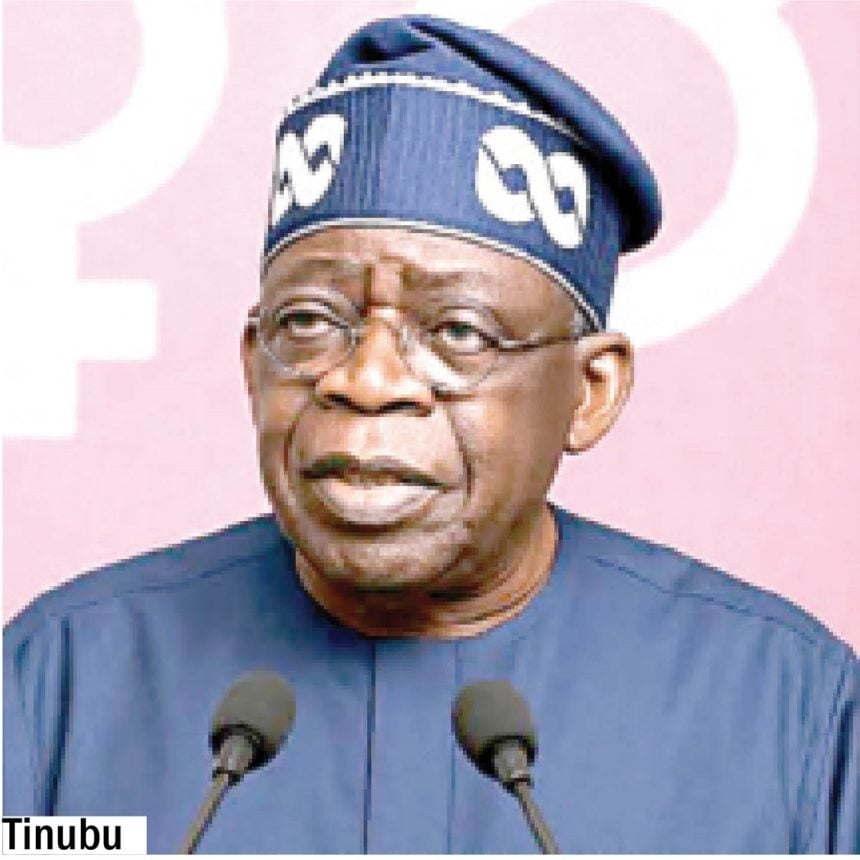
North, biggest beneficiary of my reforms — Tinubu
President Bola Tinubu has declared that Northern Nigeria is the biggest beneficiary of the economic reforms introduced by his administration, particularly the removal of fuel subsidy.
The President’s position, however, has drawn contrasting reactions from major Northern groups, with the Arewa Consultative Forum (ACF) and Middle Belt Forum (MBF) dismissing the claim, while Northern Christian leaders backed it, arguing that the region has benefited from several projects and initiatives under the administration.
Tinubu and the All Progressives Congress (APC) have repeatedly defended the removal of fuel subsidy, describing it as a difficult but necessary decision aimed at redirecting government resources towards productive sectors of the economy.
The development came as the APC rejected a proposal by former Vice President and African Democratic Congress (ADC) presidential candidate, Alhaji Atiku Abubakar, to restore the fuel subsidy regime if elected in the 2027 presidential election.
The ADC, however, reaffirmed its commitment to restoring the subsidy, describing the policy as central to its strategy for addressing the rising cost of living.
Why North is biggest beneficiary
Tinubu’s position was presented by APC National Chairman, Prof. Nentawe Yilwatda, who represented the President at the second edition of the Policy Roundtable organised by the APC Professionals Forum under its Asiwaju Scorecard Series.
The event, themed “Dissecting the Renewed Hope Deliverables and Achievements,” focused on assessing the administration’s economic reforms and other policies.
According to Tinubu, his administration inherited “fuel subsidy distortions, multiple exchange-rate windows, weak revenue mobilisation, foreign-exchange shortages, rising debt-service pressures and years of inadequate investment in critical infrastructure” when he assumed office on May 29, 2023.
He said Nigeria’s gross external reserves had risen to about $52.7 billion by August 2026, while consolidated non-oil revenue increased from approximately ₦13.63 trillion in 2023 to ₦16.4 trillion in the first two quarters of 2026.
The President also said the country’s merchandise trade position improved from a surplus of about ₦44.8 billion in 2023 to approximately ₦7.54 trillion in the first quarter of 2026, while real Gross Domestic Product grew by 4.43 per cent in the second quarter of 2026 and inflation eased to about 15.4 per cent.
He linked the figures to his administration’s ambition of building a $1 trillion economy by 2030, alongside plans for an integrated five-port maritime and logistics corridor connecting Lagos, Ondo, Ibom, Port Harcourt and Calabar.
Tinubu also cited major road and rail projects, including the Lagos-Abuja-Kaduna-Kano corridor, Sokoto-Badagry Super Highway and proposed Calabar-Maiduguri Trans-Sahara Super Highway.
He said the North would benefit significantly from improved trade links with neighbouring countries, including Niger, Chad, Burkina Faso, South Sudan, Cameroon and the Central African Republic.
“The biggest beneficiaries of this economy will be the Northern part of Nigeria, because they will now be trading with countries, trading with Niger, trading with Chad, trading with Burkina Faso, trading with Southern Sudan, trading with Northern Cameroon, trading with Central African Republic… The North is the next business destination of Nigeria,” Tinubu said.
The President also highlighted the Ajaokuta-Kaduna-Kano gas pipeline, Nigerian Education Loan Fund (NELFUND), technical and vocational training programmes and the CREDICORP credit initiative as measures designed to translate macroeconomic stability into improved living standards.
He urged Nigerians to decide in 2027 whether to consolidate the reforms or reverse them.
“For the All Progressives Congress, the answer is clear. We choose progress, productivity, investment, infrastructure, innovation, Nigerian enterprise, exports, human capital, and we choose President Bola Tinubu,” he said.
Also speaking, Chairman of the Board of Trustees of the APC Professionals Forum, Dr Isa Yuguda, who chaired the Fuel Subsidy Task Force in 2009, said the committee he led had uncovered irregularities, fraudulent practices and financial leakages associated with the subsidy regime.
Yuguda said the system had consumed huge public resources that could have been invested in education, security, agriculture, healthcare, infrastructure and other productive sectors.
He described subsidy removal as a difficult but necessary reform aimed at redirecting national resources towards long-term development, adding that Tinubu had demonstrated the political will to implement a reform previous administrations had acknowledged as necessary.
According to him, more than ₦15 trillion had reportedly been saved through the exercise.
Yuguda also cited NELFUND, increased funding and equipment for the armed forces and other security agencies as areas benefiting from the reforms.
On the 2027 presidential election, he cautioned that Atiku’s proposal to restore fuel subsidy might appear attractive to Nigerians seeking immediate relief but should be considered against the experience of the previous regime.
He said the old subsidy system was associated with leakages, fraudulent claims, inefficiency and significant pressure on public finances.
Yuguda warned that restoring the regime without addressing those challenges could reverse the fiscal space created to fund critical national investments.
He therefore called for the 2027 election to focus on issues, achievements and realistic solutions.
Fuel subsidy restoration not negotiable — ADC
The ADC, however, maintained that restoring fuel subsidy remains non-negotiable.
The party’s National Publicity Secretary, Mallam Bolaji Abdullahi, said the issue could become one of the major ideological differences that would shape efforts to build a broad opposition coalition ahead of the 2027 election.
Abdullahi said the ADC remained committed to restoring fuel subsidy as part of its strategy to address the rising cost of living.
He noted that differences over the issue could complicate any proposed merger involving opposition figures with divergent economic positions.
“So, that’s a question that the promoters of this grand coalition will have to answer, because it will now be: does the other party — like you mentioned the candidate, His Excellency Peter Obi — if he doesn’t believe in the return of subsidy, and we believe in the return of subsidy, then what will be the basis for the merger?” he said.
Abdullahi said the party’s economists were reviewing the figures supporting its position, adding that the issue could also serve as a basis for cooperation among opposition politicians who shared similar views on subsidy.
Tinubu’s claim surreal, cynical — ACF
The ACF rejected Tinubu’s claim that the North is the biggest beneficiary of his economic reforms, describing the assertion as “surreal,” “cynical” and “in sour taste.”
The forum’s spokesman, Prof. Tukur Muhammad Baba, said the claim was difficult to reconcile with the socio-economic realities confronting millions of people across Northern Nigeria.
“The statement is so surreal and even cynical and in sour taste. Well, he may be excused because he neither gave concrete and verifiable details nor said how or in what ways. Perhaps he’s mistaking Lagos for the North,” Baba said.
He cited challenges in agriculture, insecurity, infrastructure and education as evidence that the region continued to face serious difficulties.
Baba questioned whether the North could be regarded as the biggest beneficiary given the challenges confronting agricultural production, insecurity and food security in the region.
He also criticised what he described as disparities in federal appointments and infrastructure development, while pointing to the large population of out-of-school children in the North.
According to him, the region’s poverty situation further contradicts the President’s claim, as increasing numbers of Northerners continue to face economic hardship and other challenges.
“The statement, indeed, comes as most counter-intuitive and this is sad, very sad!” he said.
Baba urged the President to seek alternative sources of information if the claim was based on briefings from government officials, arguing that he needed a clearer picture of the situation in the region.
MBF faults Tinubu’s claim
The Middle Belt Forum also rejected the claim that Northern Nigeria is the biggest beneficiary of the administration’s reforms, particularly the removal of fuel subsidy.
Its National President, Dr Bitrus Pogu, described the assertion as “funny,” arguing that policies such as subsidy removal and the introduction of Compressed Natural Gas (CNG) had affected Nigerians across the country.
“It is unfortunate that a policy that affects the whole of Nigeria would be applied to the benefit, specifically, of a section of the country. Whether it is the North or South, East or West, the policy affects everybody,” Pogu said.
He argued that the reforms had not demonstrated sufficient positive impact on Nigerians, including those in the North.
“The policies he was talking about, the reforms and removal of fuel subsidy, have they impacted the people positively? Have they impacted the North positively, or the country as a whole? I don’t think so,” he said.
Pogu also questioned why the price of Nigeria’s crude oil should be determined by international market forces when the resource is produced locally.
“The crude is ours. As far as I am concerned, its price should not be determined by international market forces,” he said.
Tinubu doing better than Buhari, North benefiting — Northern Christians
Contrary to the positions of the ACF and MBF, Chairman of the Northern Christian Association (NCA), Rev. John Hayab, said the North had benefited from several projects under the Tinubu administration.
Hayab acknowledged that insecurity, hunger and poverty remained major challenges but maintained that these concerns should not prevent Northerners from recognising projects and interventions delivered by the government.
He cited major road projects, including the Akwanga-Maiduguri, Jos-Jalingo and Kaduna-Birnin Gwari-Mokwa-Lagos corridors.
“Look at the roads from Akwanga that will go as far as Maiduguri. Look at the roads from Jos that will go to Jalingo. These are very serious roads,” he said.
Comparing Tinubu’s performance with that of former President Muhammadu Buhari, Hayab said the current administration had performed better in some areas.
“Buhari didn’t perform and they are doing better than his. So, why don’t you acknowledge it? Because it’s not for free. Huge money has been invested in those projects. At least these ones are trying,” he said.
Hayab also pointed to Northern representation in the Tinubu administration, citing the APC national chairmanship and the positions of Minister of Information and Minister of Defence.
He further cited the establishment of a Federal University and Federal Medical Centre in Southern Kaduna as evidence of development in the area.
“For us in Southern Kaduna, we cannot lie that things have not improved. And today, we have it on a platter of gold. And so, we should be able to acknowledge that, at least, things have improved.
“When he is bad, we will tell him. But in this case, I think he is right… But the North cannot pretend to say that it has not benefited from this government,” Hayab said.