


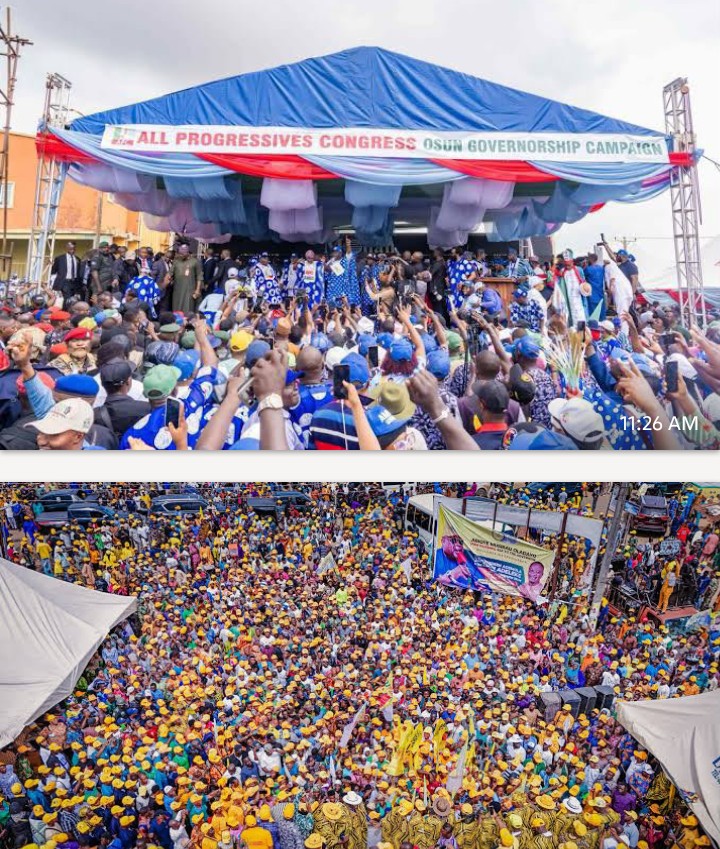
Osun 2026: Political Campaigns Lacked Issue-Based Messaging — Mubarak Abimbola
Political campaigns ahead of the 2026 Osun State governorship election were largely characterised by attacks on opponents, defence of political records, crowd mobilisation and visibility, with insufficient attention given to issue-based messaging, a media strategist, Mubarak Abimbola, has observed.
Abimbola, who made the observation while reflecting on the campaigns ahead of the election, said many candidates and political parties failed to clearly communicate the specific problems they intended to solve and how they planned to address them if elected.
He noted that while campaign rallies, posters, jingles, billboards and social media activities remained important tools for political mobilisation, much of the campaign messaging appeared to prioritise visibility over relevance.
According to him, the recurring pattern of campaign trains arriving at communities, attracting crowds and moving to the next location often left unanswered the fundamental question of what voters were actually being asked to vote for.
He cited the campaign messages of the major political camps as examples, noting that the APC’s focus on alleged nepotism in the Adeleke administration, particularly claims of disproportionate appointments and development in favour of people from Ede, could have been an effective message if research had established the issue as a major concern among voters.
Similarly, he observed that the Adeleke campaign’s emphasis on past issues involving salaries, pensions and other government obligations was a legitimate means of defending the administration’s record, but argued that the campaign also needed to communicate what the government intended to do differently in the next four years.
Abimbola stressed that effective political communication goes beyond deciding what candidates want to tell voters, saying campaigns must first understand what voters actually want to hear.
He identified audience mapping and voter segmentation as critical components of modern political campaigns, noting that voters across different communities do not necessarily share the same priorities.
According to him, the concerns of voters in Masifa, Ogbomoso, could differ significantly from those of voters in Ogbere-Tioya, Ibadan, while the priorities of voters in Ibadan could also differ from those in Iseyin, Saki or Oyo town.
He further pointed out that even within the same local government area, different wards could have distinct concerns, making it ineffective for political campaigns to rely on a single message for all voters.
He said a serious campaign should identify the major concerns of voters in each locality, determine the messages that resonate with them, identify trusted messengers and select the most effective communication channels for reaching them.
Abimbola said the distinction was between “campaigning at people and campaigning to people,” stressing that the former focuses on broadcasting a candidate’s agenda, while the latter begins with understanding the audience before developing and delivering a message.
Looking ahead to the 2027 general election, he urged political parties and candidates to move beyond rallies, posters, jingles, billboards and social media impressions and place greater emphasis on research-driven communication.
He maintained that a campaign with the biggest budget or widest visibility was not necessarily the most effective, arguing that political campaigns must be built around a deeper understanding of voters’ needs and realities.
He therefore called on political actors to properly map and segment their audiences, identify their concerns, develop messages around those issues and deliver them through appropriate channels, stressing that the right message must reach the right people through the right channel.
Mubarak Abimbola
Mbabimbola@gmail.com
09039515849