


US, Iran trade fresh strikes as Hormuz conflict escalates
The United States and Iran exchanged fresh military strikes on Thursday, intensifying hostilities around the strategic Strait of Hormuz as the renewed Middle East conflict entered its sixth day despite a preliminary peace agreement reached in June.
The US military said it carried out coordinated strikes on Iranian military positions, including facilities in the coastal city of Bandar Abbas, to weaken Tehran’s ability to threaten international shipping through the Strait of Hormuz. The US Central Command (CENTCOM) said additional attacks targeted coastal defence systems and cruise missile sites on Greater Tunb Island in the Gulf.
Iranian state news agency IRNA reported explosions in several parts of the country, including Lorestan in the west and Semnan in the north, while air defence systems were activated in parts of Tehran. Shortly after the attacks, US allies in the Gulf reported retaliatory actions, with Kuwait announcing it had intercepted Iranian drones and Bahrain activating air raid sirens.
The Strait of Hormuz, one of the world’s most important oil and gas shipping routes, has become the focal point of the conflict. Iran imposed a blockade on the waterway after the war erupted following US-Israeli strikes on February 28, using the strategic passage as leverage. Although the route was briefly reopened after last month’s US-Iran agreement, Tehran recently vowed to close it again until what it described as US aggression ceases.
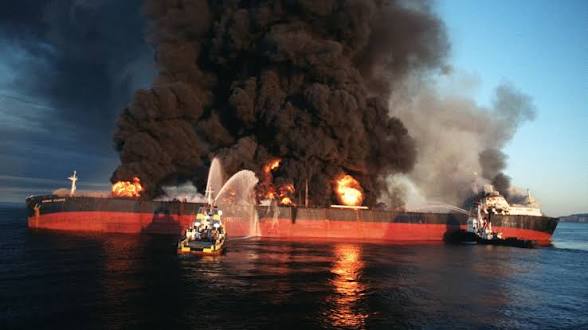
Iran’s military also claimed responsibility for drone attacks on US military facilities in Jordan, describing the operation as retaliation for American strikes. Meanwhile, the US military said it disabled an empty oil tanker attempting to breach the naval blockade around Iranian ports.
In Iraq, Kurdish security forces said the US-led coalition intercepted eight explosive-laden drones over Erbil, the capital of the Kurdistan region, where explosions and smoke were reported near the US consulate. Iraqi Prime Minister Mohammed Shia al-Sudani later condemned the drone attacks without identifying those responsible.
Despite the renewed violence, diplomatic efforts have not completely collapsed. US President Donald Trump warned Iran to return to negotiations, threatening to target critical infrastructure, including power plants and bridges, if talks fail.
“Next week it gets really bad for them,” Trump said during an interview with Fox News, signalling a possible escalation of military operations.
Iran’s top negotiator, Mohammad Bagher Ghalibaf, insisted the existing memorandum of understanding would only remain valid if all parties honoured its terms.
“If Iran is not to derive any benefit from the memorandum of understanding, we have no reason to adhere,” Ghalibaf said in a statement.
Maritime activity through the Strait of Hormuz has declined significantly amid the crisis. Shipping tracker Kpler reported only 21 vessel transits on Tuesday, while global oil prices rose following the latest escalation. The United States has also reimposed a blockade on Iranian ports.
The humanitarian toll continues to mount. Iranian government spokesperson Fatemeh Mohajerani said at least 30 people have been killed since renewed US strikes began last week, while the military confirmed that nine service members died in Wednesday’s attacks. Authorities also evacuated a hospital in Ahvaz after nearby airstrikes, transferring patients to safer medical facilities.
Residents across the region expressed growing fears over the conflict. Khadijeh, a 31-year-old artisan from Qasr-e Shirin, said children in her community had become traumatised by constant explosions, while Mustafa Mohamed, a Sudanese accountant living in Kuwait, said uncertainty over further escalation had become part of daily life.
Meanwhile, Trump confirmed that an American citizen, identified by her lawyer as Dena Karari, had left Iran after being detained since December 2024. The US President described her release as a “gesture of goodwill” by Tehran, even as military confrontation between the two countries continued.