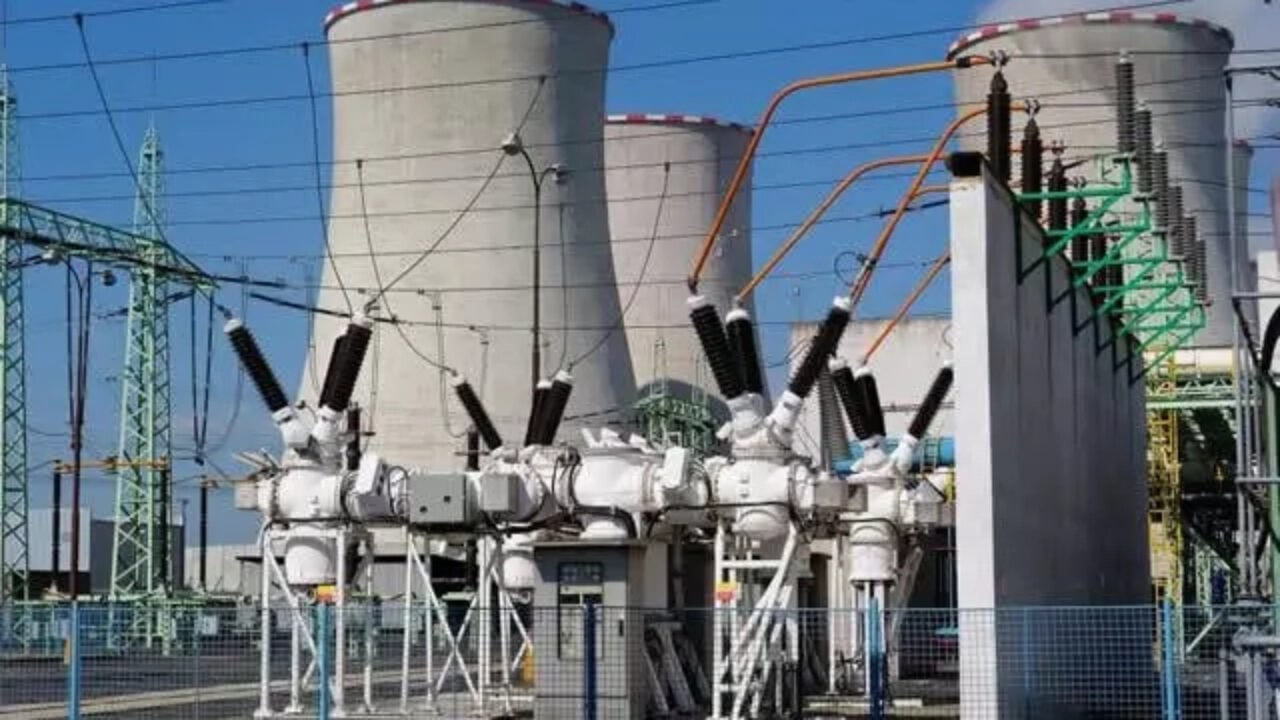

Band A Electricity Users Risk Blackout as GenCos Face Partial Shutdown Over #3.3 Trillion Gas Debt
Nigeria’s power generation companies (GenCos) Operations across the country could face a severe disruption as gas suppliers plan to halt deliveries to thermal power plants over an estimated ₦3.3 trillion debt.
Joy Ogaji, Chief Executive Officer of the Association of Power Generation Companies (APGC), disclosed this during an interview, raising fresh concerns about the sustainability of electricity generation in Nigeria.
According to Ogaji, the root of the crisis lies in the persistent failure of the Nigerian Bulk Electricity Trading (NBET) Plc to fully pay GenCos for electricity generated since the privatisation of the power sector in 2013.
She revealed that the Federal Government currently owes power generation companies about ₦6.8 trillion, with roughly 70 percent of the debt linked to thermal power plants, which rely on gas to produce electricity.
This portion of the debt amounts to ₦4.76 trillion, of which about ₦3.3 trillion is owed directly to gas suppliers.
“NBET was established to buy power from GenCos and sell to distribution companies (DisCos) with the expectation that payments would be made in full,” Ogaji said. “But since 2013, full payments have never been made, and the debt has continued to grow.”
She explained that the debt rose to ₦4 trillion between 2015 and December 2024, while in 2025 alone the sector recorded a monthly shortfall of about ₦200 billion, adding ₦2.4 trillion to the outstanding liabilities.
By January 2026, the debt had increased to ₦6.6 trillion, rising further to ₦6.8 trillion in February. If the trend continues, the figure could hit ₦7 trillion by the end of March 2026.
Ogaji noted that the bulk of the unpaid obligations affects thermal plants because they produce the majority of electricity supplied to the national grid and depend heavily on gas.
Out of the 30 power plants currently connected to the grid, about 30 percent are hydro plants, including the recently commissioned 700MW Zungeru hydro plant. The remaining 70 percent are gas-fired thermal plants, making them highly dependent on gas supply.
“For every ₦100 invoiced by thermal plants to NBET, roughly ₦70 belongs to gas suppliers,” she explained. “That is why a significant portion of the outstanding debt is tied to gas payments.”
She warned that the deepening debt crisis is already contributing to electricity shortages nationwide.
“It is correct to say that the debt is the reason why we are experiencing darkness,” Ogaji said.
According to her, gas producers have begun insisting on upfront payments before supplying gas to power plants.
“Gas suppliers have told us clearly that if we want gas in the pipeline, we must put money on the table,” she said. “They have been patient for years, but they are now saying that without payment, there will be no gas for thermal power plants.”
Ogaji also pointed out that the situation has worsened the financial strain on GenCos, many of which are still servicing bank loans obtained during the 2013 privatisation of the power sector.
Industry observers warn that if gas suppliers follow through on their threat, Nigeria could face a major electricity crisis, potentially leading to widespread outages including disruptions for Band A customers who currently enjoy extended power supply hours.
Band A Electricity Users Risk Blackout as GenCos Face Partial Shutdown Over #3.3 Trillion Gas Debt

Byadmin
Mar 13, 2026