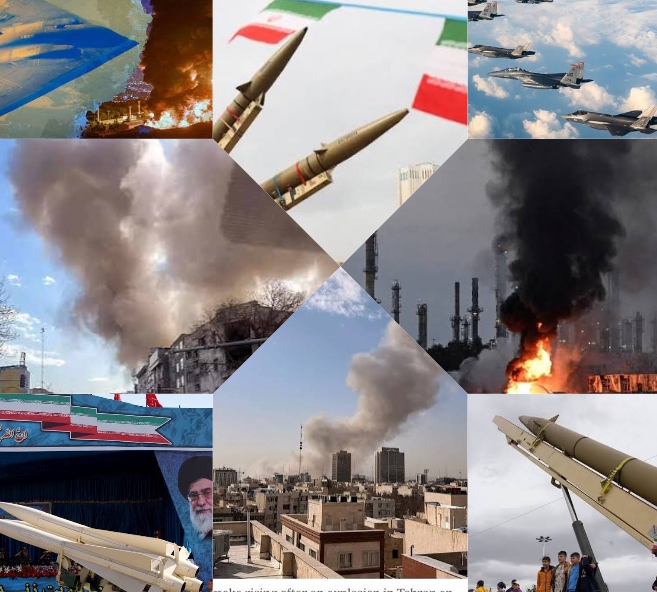

US/Israel Vs Iran Battle Raises Fears of World War 3 as Missiles Hit Qatar, Kuwait, United Arab Emirates
As fighting between the United States, Israel and Iran intensifies, countries across the Gulf are scrambling to contain the fallout, amid growing fears that the conflict could spiral into a far broader war.
Qatar, Kuwait and the United Arab Emirates moved swiftly to close their airspace after reports of missile activity and explosions in the region. The measures disrupted regional aviation and signalled deep concern that the confrontation was no longer confined to the primary combatants.
In Qatar, the Ministry of Defence said an Iranian missile was intercepted by the country’s Patriot air defence system. Authorities urged residents to remain indoors and avoid military sites as a precaution.
An explosion was reported in Abu Dhabi, the capital of the United Arab Emirates, heightening anxiety in a nation that hosts key international business and diplomatic hubs. While officials did not immediately confirm the source of the blast, the incident underscored how quickly the crisis is radiating outward.
In Kuwait, sirens sounded across parts of the country following reports of explosions. The government activated emergency protocols, reflecting fears that strategic sites across the Gulf could be at risk if missile exchanges continue.
Beyond the Gulf, international airlines suspended flights across multiple Middle Eastern destinations, and several countries revised travel advisories. Global markets reacted nervously, with energy analysts warning that any sustained disruption in the region could affect oil supplies and shipping routes.
Diplomatic reactions have also been swift. Officials in Europe and Asia called for immediate de-escalation, warning that further strikes could destabilise an already fragile international security environment. In Moscow, Dmitry Medvedev accused Washington of escalating the crisis under the guise of failed negotiations, adding to sharp rhetoric between major powers.
The closure of airspace in Qatar, Kuwait and the UAE highlights a central concern for neighbouring states: even if they are not direct participants in the conflict, their geographic proximity and strategic partnerships make them vulnerable to spillover.
With missiles reportedly intercepted, explosions heard and regional defences activated, governments across the Middle East and beyond are now bracing for what could become a prolonged and unpredictable confrontation one that risks drawing in more nations and deepening fears of a wider global war.
US/Israel Vs Iran Battle Raises Fears of World War 3 as Missiles Hit Qatar, Kuwait, United Arab Emirates

Byadmin
Feb 28, 2026