


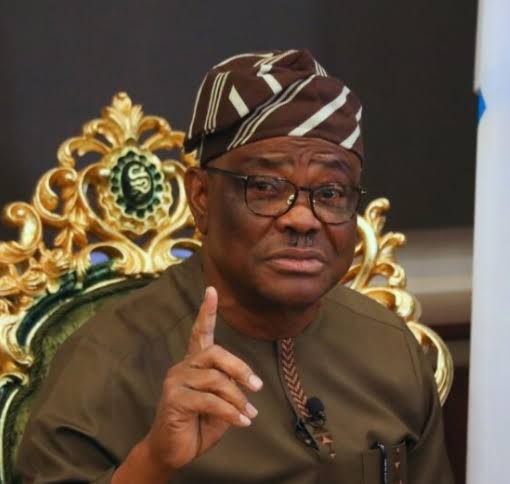
The Senior Special Assistant on Public Communications and Social Media to the Minister of the Federal Capital Territory (FCT), Nyesom Wike, Lere Olayinka, has cautioned workers’ unions at the University of Abuja (UNIABUJA) against what he described as irresponsible conduct in their agitation over the reduction of the institution’s land from 11,824.04 hectares to 4,685 hectares.
Olayinka, in a statement issued on Thursday, November 19, 2026, said unionism and activism should not be used as a licence for reckless conduct, urging the union leaders to exercise restraint in their comments and actions over the land dispute.
He particularly faulted the alleged utterances of the Chairman of the Academic Staff Union of Universities (ASUU), Professor Sylvanus Ugoh, describing them as unbecoming of people operating in an academic environment where knowledge is expected to be imparted to future leaders.
The FCT Minister’s aide also faulted the Joint Action Committee (JAC) for allegedly accusing Wike of forging the 2016 report of a joint committee set up by the Federal Capital Territory Administration (FCTA) and UNIABUJA on land and sundry issues.
He described the allegation as an act of recklessness and irresponsibility, arguing that the 2016 committee was not the only panel constituted to examine the land-related issues involving the university.
According to him, another committee was constituted on December 17, 2020, following a visit by the university management to the FCT Minister on October 13, 2020.
Olayinka cited part of the December 2020 committee’s recommendations, which proposed that 1,922.66 hectares be retained by the university, while the remaining land would be planned for compatible uses, including institutional and research districts.
The committee reportedly based its recommendation on the National Universities Commission’s stipulated 100-hectare benchmark for a university campus and the need to address the continuous expansion of villages within the university’s land.
It also maintained that the proposed land size would be sufficient for the university’s development, including demonstration farms and other auxiliary facilities, while promoting compact urban development and optimum land utilisation.
Olayinka said the issues presented by the university to the 2016 joint committee included the issuance of Certificates of Occupancy for its main and mini campuses, as well as properties in Kado and Jahi districts.
Other concerns, he said, included Area Council layouts within the university’s campuses, indigenous and illegal settlements on the main campus land, and the re-issuance of the title document for the mini campus, which was reportedly burnt during the 1994 students’ uprising.
He further stated that the December 2020 committee, which visited the university and settlements within its over 11,000 hectares of land, found that 805.7 hectares had been occupied by villages, while the Nigerian Army Welfare Limited Guarantee Housing Estate occupied 9.91 hectares.
He added that approximately 500 hectares had already been approved for a main sewage treatment plant.
Olayinka described as strange the allegation that the FCT Minister forged an official government document arising from the work of a committee constituted by his predecessor.
He argued that the FCT Minister, in exercising his powers under the Land Use Act No. 6 of 1978, as contained in the Laws of the Federation of Nigeria 2004, did not require a committee report to make decisions concerning land administration.
He also questioned the involvement of workers’ unions in the government’s decision to reduce the land allocated to the university, arguing that the primary responsibility of the unions should be the welfare of their members.
He said, “Government established a university, gave land to it and later saw the need to reduce the land to what it opined can be better managed and utilised by the university. Workers’ unions with primary responsibility for the welfare of their members are protesting. What exactly is their business? Were they consulted before the university was established and the land allocated in the first place? Of what effect is land occupied by the university to its workers and students?”
Olayinka further argued that the university was owned by the government and that the land in question also belonged to the government, questioning why employees and students should challenge the government’s decision on the size of land allocated to the institution.
He also claimed that some union leaders had children studying in private universities in Nigeria, asking how many of those institutions occupied more than 100 hectares of land.
The FCT Minister’s aide further disclosed that UNIABUJA had utilised only 1,426.67 hectares of land in its 38 years of existence, with 49.56 hectares reportedly used for staff quarters.
He questioned the need for the university to retain more than 11,000 hectares when, according to him, less than 1,500 hectares had been utilised over nearly four decades.
Olayinka also questioned why the university had allocated portions of the land to individuals and corporate organisations, including the Economic and Financial Crimes Commission (EFCC), if the entire land was required for its operations.
Describing the unions’ protest as misplaced, he said it was strange that workers in a university would focus their agitation on land matters while universities elsewhere were increasingly adopting virtual operations.