


The Federal Government is considering a gradual withdrawal of the military from internal security operations across the country as part of efforts to strengthen the Nigeria Police Force and restore its capacity to handle domestic security challenges.
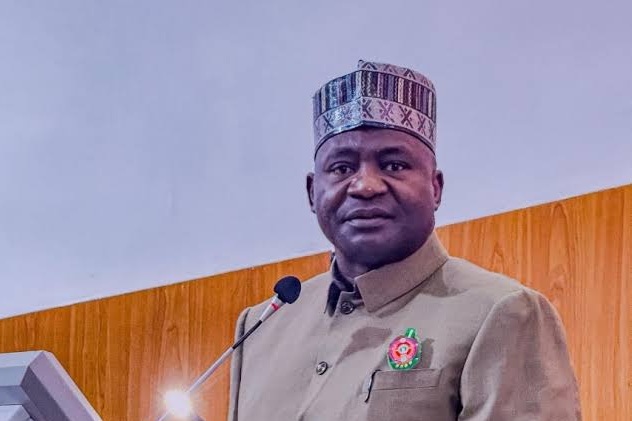
The Minister of Defence, General Christopher Musa (retd.), disclosed this while speaking at the Abuja Roundtable, themed “Promise to Proof: The Renewed Hope Conversation”, organised by the APC Progressive Strategy Roundtable and convened by Ismaeel Ahmed, Chairman and Chief Executive Officer of the Presidential CNG Initiative and Electric Vehicles.
Musa said prolonged military involvement in internal security operations had overstretched the armed forces, stressing that the government was investing in police recruitment, training, equipment and institutional reforms to enable the police to assume their constitutional responsibilities.
He explained that military deployment had become necessary in areas where security threats had overwhelmed conventional law enforcement agencies but maintained that such involvement should not become a permanent substitute for effective policing.
According to him, the ultimate objective is to build a police institution capable of independently managing internal security, allowing the military to concentrate on its primary responsibilities.
The minister also called for the reintroduction of tollgates on major highways, supported by modern surveillance and vehicle identification technology, as part of measures to improve road security and curb criminal activities.
He argued that electronic tolling systems could identify vehicles through their registration numbers and process payments without requiring motorists to stop, while providing useful information to security agencies.
Musa said integrating such systems with modern surveillance infrastructure would help security operatives identify suspicious vehicles and track the movements of criminals along major transport corridors.
He further advocated the deployment of facial recognition systems, fingerprint identification and personal identification numbers to strengthen Nigeria’s security architecture, noting that technology had become indispensable to effective law enforcement.
On the country’s security situation, the defence minister disclosed that troops had killed more than 300 terrorists and bandits, including over 10 commanders, in operations conducted during the preceding week.
He attributed the reported operational gains to improved intelligence gathering, coordinated operations, increased defence spending and the acquisition of modern surveillance and combat equipment.
Musa said the Federal Government had allocated ₦5.4 trillion to defence in the 2026 budget and was recruiting an additional 12,000 military personnel to strengthen manpower and operational coverage.
He added that the government was investing in modern weapons, surveillance technology and operational platforms to improve troops’ mobility, intelligence capabilities, firepower and rapid response.
On border security, the minister identified Nigeria’s extensive and porous borders, particularly those adjoining Niger Republic, as major vulnerabilities exploited by terrorists, bandits and arms traffickers.
He said the government was strengthening border surveillance and expanding intelligence-sharing arrangements with neighbouring countries and international partners.
Despite the withdrawal of Niger, Burkina Faso and Mali from the Economic Community of West African States (ECOWAS), Musa said Nigeria had continued to maintain security cooperation and military training relationships with the three countries.
He warned that instability in the Sahel posed serious threats to the wider West African region, emphasising the need for sustained cooperation to prevent further deterioration of the security situation.
The minister also urged Nigerians to support security agencies with credible intelligence, noting that criminal groups often operated within communities and relied on local networks for survival.
He highlighted the importance of civilian joint task forces, forest rangers and other community-based security structures in protecting vulnerable communities and agricultural settlements.
On the protection of whistleblowers, Musa acknowledged the need to safeguard citizens who provide sensitive information to security agencies.
He disclosed that the Ministry of Defence and military service headquarters were exploring the establishment of an emergency reporting line to improve intelligence gathering and communication with members of the public.
Addressing military welfare, the minister said the Federal Government had substantially improved the remuneration and working conditions of personnel.
He disclosed that the monthly salary of a private soldier, previously about ₦49,000, was initially increased to approximately ₦100,000 and subsequently to nearly ₦200,000.
Musa added that military personnel and their families enjoyed free medical treatment, while soldiers requiring specialised healthcare could be referred abroad.
He also explained that military personnel underwent psychological preparation before deployment and post-operation assessments to identify trauma-related conditions, including post-traumatic stress disorder.
According to him, returning soldiers could spend between two and three weeks undergoing psychological assessment and support before rejoining their families or military units.
He reaffirmed the government’s commitment to the welfare of injured personnel and families of fallen soldiers through salaries, allowances, healthcare and educational support for their children up to university level.
On defence industrialisation, Musa disclosed that Nigeria was strengthening local military equipment manufacturing through legislative reforms and partnerships with international producers.
He said the country’s first African International Military Defence Exhibition attracted participation from 63 countries and created opportunities for domestic manufacturers to establish technology and investment partnerships.
The minister also invited Nigerians with expertise in cybersecurity, drone technology and other defence-related innovations to collaborate with the Defence Industries Corporation of Nigeria.
He welcomed proposals for stronger collaboration between security agencies and private electricity providers to address power supply challenges affecting local defence manufacturers.
Musa, however, urged Nigerians to rise above religious, ethnic and regional differences in confronting insecurity, stressing that national security required the collective commitment of government, security agencies and citizens.
He maintained that the ultimate evidence of progress in the country’s security campaign would be farmers returning safely to their farms, motorists travelling without fear, markets reopening and businesses operating in secure environments.
Meanwhile, the Executive Secretary of the Nigerian Police Trust Fund, Alhaji Mohamed Sheidu, disclosed that the Federal Government had approved approximately ₦100 billion for the rehabilitation of police training institutions nationwide.
Sheidu said years of inadequate funding had undermined police training, infrastructure, equipment and personnel welfare, weakening the force’s capacity to discharge its constitutional responsibilities.
He explained that the Trust Fund was implementing interventions covering training facilities, operational vehicles, protective equipment, police stations and welfare programmes.
According to him, improving police training institutions was essential to producing officers equipped with the professional skills and psychological preparation required for effective law enforcement.
On personnel welfare, Sheidu disclosed plans to provide 1,000 housing units per state for police officers through partnerships with relevant government institutions.
He said a groundbreaking ceremony had already been conducted for approximately 250 housing units in Nasarawa State.
The executive secretary explained that the Trust Fund was collaborating with Family Homes Funds and the Rural Electrification Agency to provide housing and electricity infrastructure for police personnel.
He added that some smart police stations had been equipped with off-grid solar systems to guarantee uninterrupted operations.
Sheidu also disclosed that the Fund had introduced welfare buses to transport officers from communities, including Mararaba and Zuba, to their duty posts in Abuja.
He said the initiative, supported by donations of 40-seater and 50-seater buses, was designed to reduce transportation expenses for police personnel.
The Fund, he added, was considering the introduction of compressed natural gas buses to lower operating costs and sustain the programme.
Sheidu further revealed a partnership with the National Agricultural Land Development Authority to provide agricultural opportunities for dependants of police officers.
He said preliminary discussions had commenced with the governors of Kano and Niger states to facilitate access to farmland and additional livelihood opportunities for police families.
On the proposed establishment of state police, the executive secretary expressed support for the reform but stressed that it must be accompanied by sustained investment in the existing federal police structure.
He argued that countries operating decentralised policing systems also maintained strong federal police institutions, adding that Nigeria must strengthen both levels of law enforcement.