


Nigeria, China to Hold High-Level Political Talks in July
The Federal Government of Nigeria and the People’s Republic of China are set to convene a high-level political consultation in July 2026 as both nations seek to deepen their comprehensive strategic partnership and expand cooperation across critical sectors of the economy.
This was disclosed in a statement issued on Saturday in Abuja by the spokesperson of the Ministry of Foreign Affairs, Kimiebi Imomotimi Ebienfa.
According to the statement, the Permanent Secretary of the Ministry of Foreign Affairs, Ambassador Dunoma Umar Ahmed, reaffirmed Nigeria’s commitment to strengthening bilateral relations with China, describing the partnership as one of significant importance to the country’s foreign policy and economic development goals.
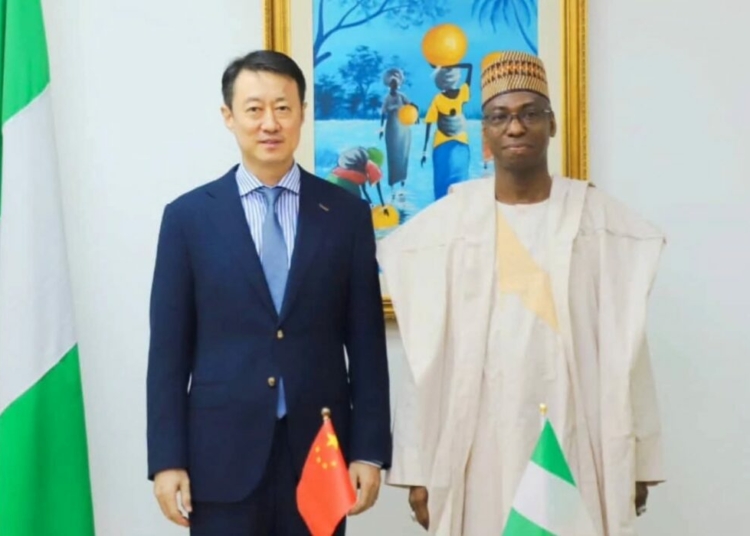
Ambassador Ahmed made the remarks during a meeting with the Chinese Ambassador to Nigeria, Yu Dunhai, where both sides reviewed preparations for the forthcoming political consultation and the Nigeria-China Sub-Committee Meeting.
He stressed the importance of sustained dialogue and closer coordination between both countries ahead of the engagements, noting that the meetings would provide an opportunity to align priorities and deepen cooperation in areas of mutual interest.
Speaking during the meeting, Ambassador Yu reaffirmed Beijing’s commitment to strengthening its comprehensive strategic partnership with Nigeria. He stated that the July consultations would assess the implementation of agreements reached during President Bola Ahmed Tinubu’s state visit to China in September 2024, as well as subsequent bilateral engagements.
The Chinese envoy highlighted notable progress in Nigeria-China relations, particularly in infrastructure development, trade, industrialisation, power generation, and railway modernisation.
Yu also lauded China’s zero-tariff policy for eligible Nigerian exports, which came into effect on May 1, 2026, noting that the initiative has already begun boosting Nigerian exports to the Chinese market. He expressed optimism that the policy would further stimulate investment, industrial growth, and job creation in Nigeria.
Beyond economic cooperation, the ambassador expressed China’s readiness to expand collaboration with Nigeria in areas such as regional peace and security, counter-terrorism, artificial intelligence governance, education, cultural diplomacy, and youth development.
He further commended the efforts of the Federal Government and Nigerian security agencies in addressing security challenges affecting foreign nationals and investments, stressing the need for sustained measures to maintain a safe and conducive business environment.
In response, Ambassador Ahmed reiterated Nigeria’s commitment to the One-China Policy and pledged deeper cooperation in key sectors, including industrialisation, agriculture, information and communication technology (ICT), transportation, education, healthcare, and human capital development.
He also reaffirmed the government’s commitment to promoting value addition, manufacturing, and technology-driven growth as part of its broader economic transformation agenda.
Both countries reaffirmed their commitment to continuous engagement and stronger bilateral cooperation, expressing confidence that the Nigeria-China strategic partnership would continue to grow and deliver mutual benefits in the years ahead.