


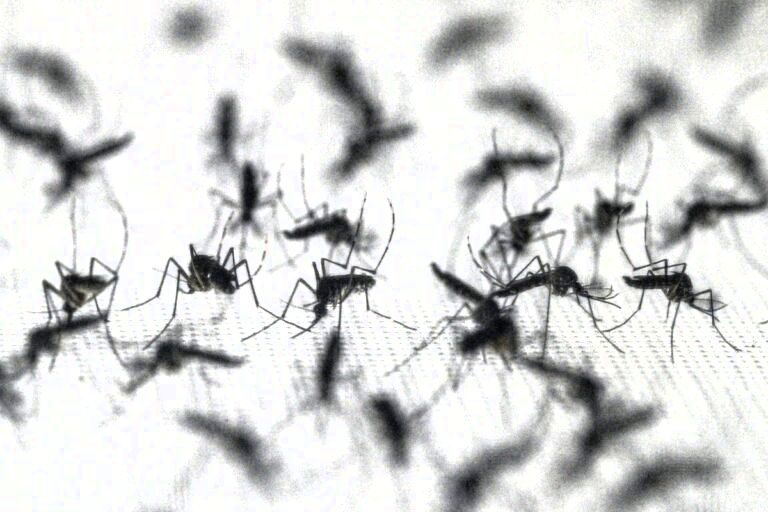
Mosquitoes Kill 760,000 People Yearly, Boost Business for Casket Dealers, Pharmacies
Mosquitoes remain the deadliest animals to humans, killing an estimated 760,000 people globally every year through the spread of diseases such as malaria, dengue, yellow fever, chikungunya, and Zika.
According to research platform Our World in Data, mosquito-borne illnesses account for about 17 per cent of all infectious diseases worldwide, making the tiny insects one of the biggest public health threats globally.
Beyond the health implications, experts say the growing burden of mosquito-related diseases has continued to fuel business activities for pharmacies, hospitals, diagnostic centres, and even casket dealers in many parts of the world, particularly in developing countries heavily affected by malaria.
As climate change expands mosquito habitats and prolongs breeding seasons, scientists warn that infections could spread further into new regions, potentially worsening the economic and social impact.
Only a few mosquito species are dangerous
Researchers note that not all mosquitoes pose a threat to humans.
Out of approximately 3,500 mosquito species worldwide, only around 100 bite humans, while just five species are responsible for nearly 95 per cent of mosquito-borne infections.
Hilary Ranson, a vector biologist at the Liverpool School of Tropical Medicine, said eliminating those few dangerous species could significantly reduce deaths and economic losses linked to mosquito-borne diseases.
She explained that the disappearance of a handful of mosquito species “could be tolerated” considering the scale of devastation they cause globally.
Dan Peach, a mosquito entomologist at the University of Georgia, agreed broadly with the position but stressed that more scientific evidence is still needed to fully understand the environmental consequences.
Concerns over environmental impact
Experts say disease-carrying mosquitoes have evolved to live closely around humans, breeding near homes and feeding on people.
Ranson argued that eliminating such species may not seriously disrupt ecosystems because other less harmful mosquitoes could quickly occupy the same ecological space.
However, Peach cautioned that scientists still lack complete understanding of the ecological importance of many mosquito species.
Mosquitoes contribute to ecosystems by transferring nutrients from aquatic habitats and serving as food for fish, insects, and other animals. Some species also assist in pollination, although researchers say that role remains poorly understood.
Scientists explore new solutions
One of the leading technologies being explored is gene-drive modification, which alters mosquitoes genetically so they pass certain traits to their offspring.
Scientists previously modified female malaria-carrying Anopheles gambiae mosquitoes to become infertile, successfully wiping out laboratory populations within a few generations.
The Gates Foundation-backed Target Malaria project has tested the technology in several African countries, although Burkina Faso later suspended testing after concerns raised by civil society groups.
Another method involves infecting Aedes aegypti mosquitoes with Wolbachia bacteria, which either suppresses their population or limits their ability to spread diseases such as dengue fever.
Focus shifts to making mosquitoes harmless
Rather than eradicating mosquitoes entirely, some researchers are working on preventing them from transmitting diseases.
In Brazil’s city of Niteroi, the release of Wolbachia-infected sterile mosquitoes reportedly led to an 89 per cent reduction in dengue cases.
Scott O’Neill, founder of the World Mosquito Program, said more than 16 million people across 15 countries have benefited from the technology without major negative consequences.
Meanwhile, the Transmission Zero project is also exploring gene-drive technology aimed at stopping Anopheles gambiae mosquitoes from spreading malaria.
Experts call for broader health solutions
Despite scientific breakthroughs, experts insist that technology alone cannot end mosquito-borne diseases.
Ranson called for improved healthcare systems, wider vaccine access, better diagnosis, and improved living conditions in affected communities.
Humanitarian organisations have also warned that cuts in international aid could slow progress in the fight against mosquito-related diseases, especially in low-income countries heavily burdened by malaria.