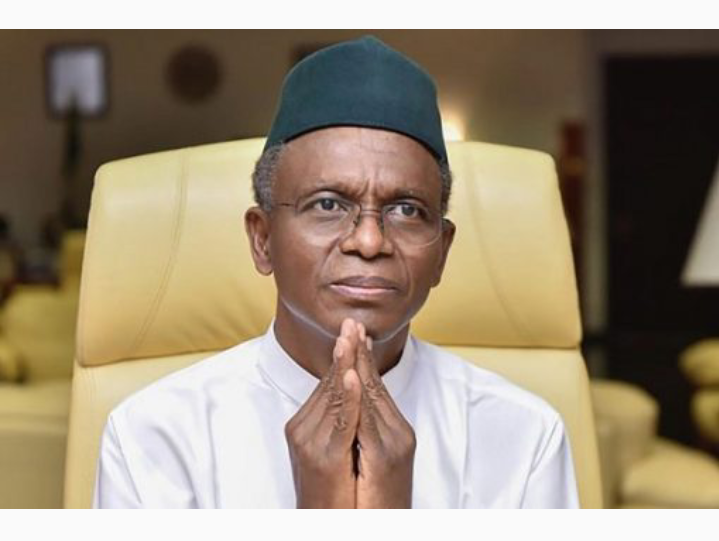

After Admitting Offering Money to Insurgents Because He Will Give Accounts to God, El-Rufai Denies Ever Negotiating with Terrorists 9 Years Later
Former Nasir El-Rufai is facing renewed scrutiny following the resurfacing of statements he made in 2017 admitting that his administration offered to pay money to Insurgents, contrasted with a firm denial in a 2026 interview that he ever negotiated with terrorists.
The conflicting remarks have reignited debate over his government’s approach to insecurity while he led Kaduna State.
In 2017, El-Rufai openly acknowledged that his administration offered money to certain armed groups operating in Kaduna during the period.
He explained at the time that the payments were aimed at halting attacks on communities and preventing further destruction of lives and property.
According to him, the decision was driven by a sense of responsibility to protect citizens under difficult circumstances.
The former governor had defended the move as a temporary and pragmatic measure to restore peace.
He stated that he would one day stand before God to give account of his actions and believed that safeguarding human lives justified the controversial step.
His comments drew mixed reactions nationwide, with some supporting the effort to stop bloodshed and others warning it could encourage criminality.
However, in a 2026 interview, El-Rufai categorically denied ever negotiating with terrorists.
He rejected the idea of engaging armed groups in talks and distanced himself from policies involving repentant terrorists. He maintained that he never supported or welcomed negotiations with criminal elements.
The apparent contradiction between the 2017 admission and the 2026 denial has triggered fresh public discourse.
Critics argue that offering money to armed groups constitutes negotiation, while supporters suggest that the context and circumstances of the earlier remarks may differ from how negotiations are commonly defined.
Security challenges, including banditry and insurgent activities, have long troubled parts of northern Nigeria, making the issue of whether to negotiate or adopt a strictly military approach highly sensitive.
El-Rufai’s differing statements have therefore become part of the broader national conversation about strategies for addressing insecurity.
Credit to Agba Jalingo TV, Arise TV, Channels TV & NewsRegister
After Admitting Offering Money to Insurgents Because He Will Give Accounts to God, El-Rufai Denies Ever Negotiating with Terrorists 9 Years Later

Byadmin
Feb 15, 2026