


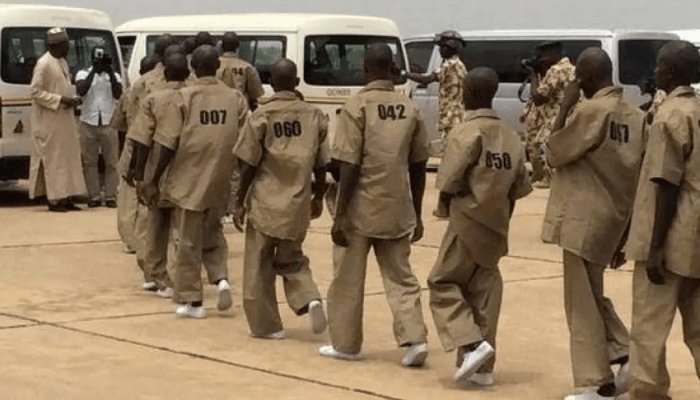
Borno Government Reintegrates 9,680 Repentant Terrorists in Five Years — Official
The Borno State Government has successfully reintegrated 9,680 repentant insurgents into society between July 2021 and June 2026 as part of its rehabilitation, deradicalisation, and reintegration programme aimed at restoring peace in the state.
The Special Adviser on Security to Governor Babagana Zulum, Ishaq Abdullahi, disclosed this on Friday in Maiduguri during the graduation ceremony of 720 rehabilitated former insurgents.
Abdullahi described the latest beneficiaries as low-risk individuals and minor clients, noting that they constitute Batch Nine of the state’s rehabilitation initiative. According to him, the former insurgents took an oath on the Holy Quran before being released to reunite with their respective communities across Borno State.
He said the programme represents a major milestone in the government’s non-kinetic approach to tackling insurgency in the North-East.
According to Abdullahi, the initiative was launched on July 5, 2021, under the administration of Governor Zulum and has continued to attract large numbers of former fighters who voluntarily surrendered and embraced peace.
“It has been a success story since July 5, 2021, when the good people of Borno State, under the leadership of Governor Babagana Umara Zulum, agreed to forgive and accept their sons who were willing to lay down their arms and embrace peace,” he said.
He added that the Borno Model has gained recognition as one of the most effective non-kinetic counter-insurgency programmes globally, with more than 350,000 individuals voluntarily leaving insurgent camps and surrendering to security forces.
Abdullahi revealed that with the graduation of the latest 720 beneficiaries, the total number of reintegrated former insurgents across Batches One to Nine has reached 9,680.
He further disclosed that the programme has also catered for 992 spouses and 2,050 children linked to the repentant insurgents, ensuring a holistic reintegration process for affected families.
Explaining the process, Abdullahi said participants first surrendered voluntarily and reported to designated military facilities, where they underwent profiling, screening, and disarmament before being admitted into rehabilitation camps.
He noted that the former insurgents participated in structured deradicalisation programmes that included Islamic teachings, psychological counselling, hygiene education, drug abuse awareness campaigns, and various vocational training schemes designed to prepare them for productive lives after rehabilitation.
“The camp administrators engaged them in a series of programmes aimed at deradicalisation and equipping them for life after the camp,” he said.
According to him, Tuesdays and Thursdays were dedicated to Islamic studies and lectures on hygiene, drug abuse prevention, and other social issues, while Mondays, Wednesdays, and Fridays focused on vocational training.
The skills acquisition programmes covered a wide range of trades, including metal fabrication, carpentry, tailoring, pottery, bricklaying, barbing, cap-making, mobile phone repairs, solar installation, vulcanising, and motorcycle maintenance.
The Borno State Government maintains that the rehabilitation and reintegration programme remains a key component of its strategy to promote lasting peace, encourage defections from insurgent groups, and support the rebuilding of communities devastated by years of conflict.